


Heat Lamp Rental Checklist: 6 Questions to Ask a Supplier
Short answer: rent when you need lamps for fewer than about 10 events a year — a 250 W unit rents for roughly $15–25 per event against $60–120 to buy. Before signing, confirm six things: quantity, wattage, mounting type, bulb condition, cleaning terms and damage liability. Compare units in our heat lamp range.
Why Rent Heat Lamps Instead of Buying?
The decision between renting and buying heat lamps depends on several factors unique to your operation. For one-time events or occasional catering jobs, rental costs typically range from $15 to $50 per lamp per day, depending on the model and your region. Purchasing a quality heat lamp can cost $100 to $500 per unit, meaning you'd need to use it dozens of times before the purchase price pays off. For restaurants and hotels that run daily breakfast buffets or banquet services, buying becomes more economical. However, even established venues benefit from renting additional units during peak seasons — holiday parties, wedding season, and corporate event surges often create demand that exceeds permanent inventory. Event planners who work across multiple venues benefit most from rentals. Transporting fragile heating equipment between locations risks damage, and maintaining a fleet of heat lamps requires storage space, cleaning protocols, and repair budgets. A rental relationship with a local supplier eliminates these overhead costs while ensuring you always have access to well-maintained equipment.Types of Heat Lamps Available for Rent
Understanding the different styles helps you order the right equipment for your venue setup. Pendant-style heat lamps hang from ceiling mounts or temporary rigging above the buffet line. They provide focused downward heating without taking up counter space, making them ideal for elegant ballroom setups or outdoor tent events. The rose gold finish models have become particularly popular for upscale weddings and corporate galas, combining functional heating with aesthetic appeal. Most pendant units feature adjustable cord lengths to accommodate different ceiling heights and table configurations. Countertop heat lamps sit directly on your serving station and work best for smaller gatherings or when ceiling mounting isn't practical. They typically use infrared heating elements and include thermostatic controls to maintain consistent temperatures. These units are portable and easy to reposition as your buffet layout changes during an event. Freestanding heat lamp stands offer maximum flexibility for open-plan venues or outdoor events where neither ceiling nor counter mounting works. The adjustable arm positions the heating element exactly where you need it, and wheels allow easy repositioning between service stations.What to Look for When Renting Heat Lamps
Before you call a rental supplier, consider these technical specifications to ensure you get equipment that meets your needs. Wattage and heating coverage: Most commercial heat lamps range from 250W to 500W per lamp head. A single 375W infrared lamp effectively maintains food temperature in a 12-inch radius beneath it. For a six-foot buffet table with four chafing dishes, you typically need two to three lamps positioned at even intervals. Underpowered setups result in uneven heating — food at the ends of the table stays cold while food near the lamp overheats and dries out. Temperature control: Entry-level rental lamps operate at a fixed temperature, while premium units include thermostatic controls. For delicate items like carved meats or sauces that require specific temperature ranges, adjustable units prevent over-heating. Some models combine infrared lamp heating with a thermostatic base plate that provides gentle bottom warming — particularly useful for items in covered pans. Safety certifications: Look for rental equipment with current safety certifications such as CE marking or ETL listing. These indicate the equipment has been tested for electrical safety and fire prevention. Reputable rental companies inspect and certify their equipment annually, but always verify the certification currency before accepting delivery. Cord management: Events require careful cable management to prevent trip hazards. Quality heat lamps include cord organizers or use retracting coiled cords that keep excess wiring contained. Ceiling-mounted units with matte black canopy finishes hide cables more effectively than visible wire runs.Calculating How Many Heat Lamps You Need
The number of heat lamps required depends on your food volume, service duration, and ambient temperature. For indoor events in climate-controlled venues, estimate one heat lamp for every two chafing dishes or food wells. If you're serving 100 guests with a four-dish buffet, two heat lamps positioned over the serving area should maintain safe temperatures for the full service period. Outdoor events in cooler weather require more aggressive heating. Wind and lower ambient temperatures accelerate heat loss, so plan for one lamp per chafing dish in these conditions. For temperatures below 60°F, consider using heat lamps in combination with heated holding cabinets or insulated covers when food will be displayed for extended periods. Food type also matters — dense foods like braised meats and stews retain heat longer than lighter items like grilled vegetables or fried foods. Plan additional heating capacity for events featuring primarily surface-area-intensive dishes.Where to Find Heat Lamp Rentals Near You
Start with caterers you already know — most have established relationships with rental suppliers and can often arrange equipment as part of their service packages. National chains and local restaurant supply stores maintain rental inventories, though specialty catering equipment may require ordering from dedicated event rental companies. Online rental platforms have expanded access to catering equipment in recent years, allowing you to compare prices and availability across multiple suppliers. However, specialized equipment like heat lamps benefits from direct communication with the rental company to confirm specifications and condition before delivery. For venues that host events regularly, building a relationship with one rental supplier often yields better pricing, priority access during peak seasons, and the ability to request specific models you've used successfully in the past.Maintenance and Care During Your Rental
Proper handling during your event protects both the equipment and your guests. Never touch the heating element or lamp glass — infrared elements reach surface temperatures exceeding 400°F and cause severe burns. Allow units to cool completely before repositioning or packing. Keep heat lamps away from flammable materials including cloth table covers that may drape over lamp heads, paper products, and decorations. Maintain minimum clearance distances specified by the manufacturer, typically 12 inches from any combustible material. If a lamp malfunctions during your event — unusual smells, flickering, or inconsistent heating — disconnect it immediately and contact your rental supplier for a replacement. Don't attempt to repair electrical equipment yourself.Rent or buy, by events per year
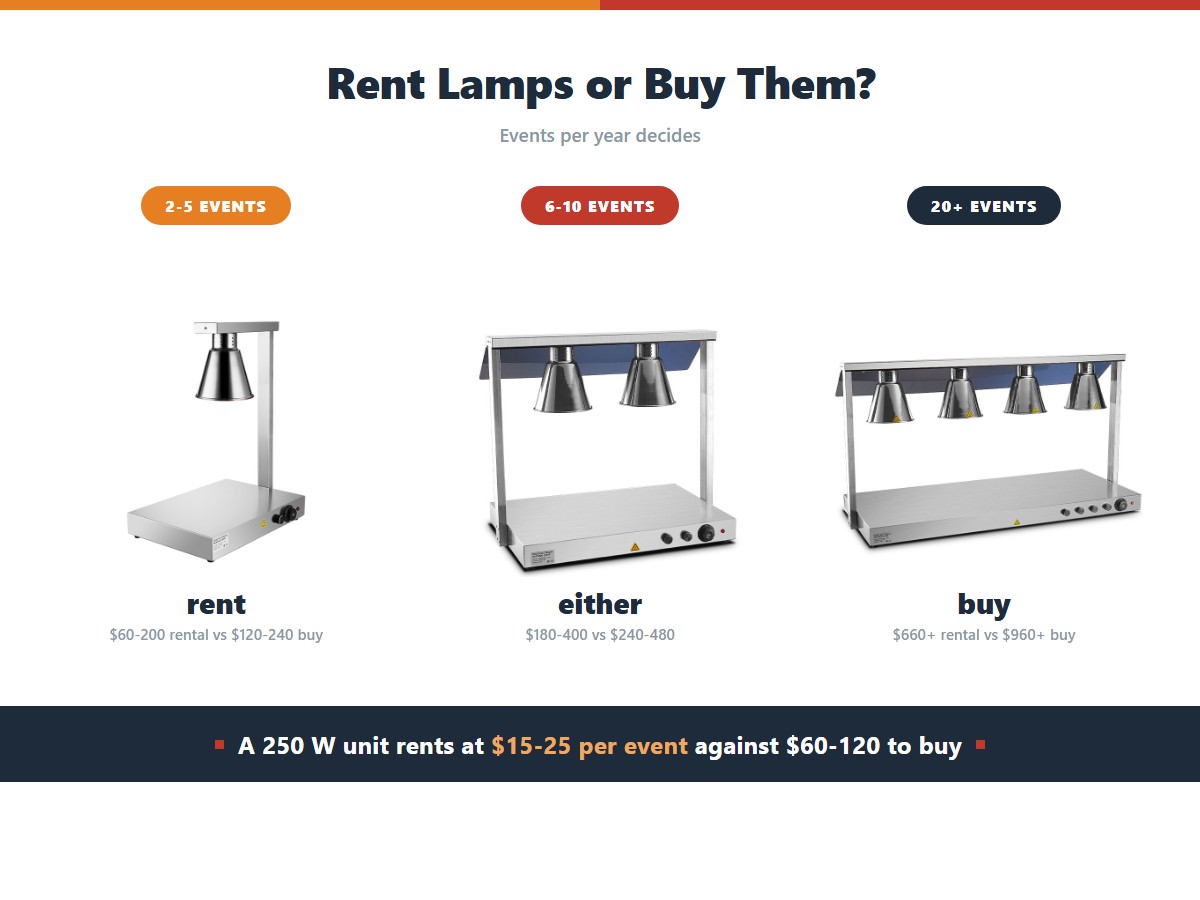
| Events per year | Rental cost | Purchase cost | Verdict |
| 2–5 | $60–200 | $120–240 plus storage | Rent |
| 6–10 | $180–400 | $240–480 | Either; buy if you need consistency |
| 11–20 | $330–800 | $480–960 | Buy two and rent the overflow |
| 20+ | $660+ | $960+ | Buy |
Frequently Asked Questions
How much does it cost to rent a heat lamp?
About $15–25 per unit per event for a 250 W countertop lamp, with delivery and collection often charged separately.
What deposit is normal?
Usually the replacement value of the unit, refunded on return. Get the damage schedule in writing before you sign.
Are bulbs included?
Usually yes, but check the condition. A tired bulb that fails mid-event is your problem unless the contract says otherwise.
Can I rent ceiling-mounted lamps?
Rarely. Rental fleets favour countertop and floor-standing units because they need no installation. For pendants, you usually buy.
What happens if a lamp is damaged?
You pay the repair or replacement cost per the schedule. Photograph every unit at collection — that is the only defence against a disputed charge.
Related reading
- Food Heat Lamp Rental: Cost, Sizing and Venue Rules
- Food Heat Lamp Rental Cost: How Much to Rent for Events
- Heat Lamp vs Chafing Dish: Which One Does Your Food Need?
- Heat Lamps for Food Holding Solutions
- 6 Heat Lamp Mistakes That Dry Out Your Food
- Food Heat Lamp vs. Microwave: Best for Reheating Food?