




Food Heat Lamps for Concession Stands: Ideal for Outdoor Vending
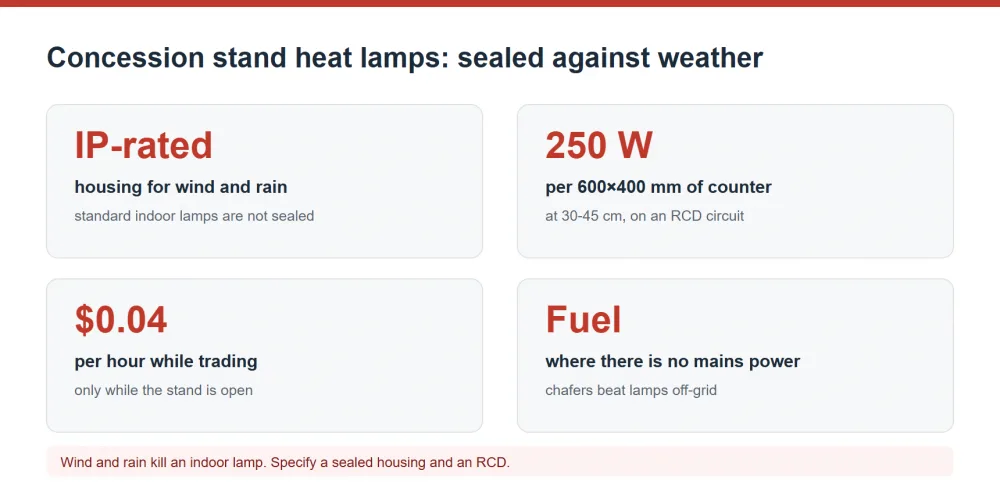
Short answer: a concession stand needs one 250 W lamp per 600×400 mm of counter, 30–45 cm above the food, in a housing that tolerates wind and rain, on a circuit protected by an RCD. Running cost is about $0.04 per hour; where there is no mains power, use fuel chafers instead. See outdoor-ready units in our heat lamp range.
Concession stands at outdoor events, fairgrounds, sporting venues, and street markets face unique food safety and quality challenges that indoor food service operations never encounter. Variable weather conditions, limited infrastructure, high customer volumes during peak periods, and the need for rapid service create an environment where proper food warming equipment becomes essential rather than optional. Food heat lamps specifically designed for concession stand use address these challenges through portable, efficient, and reliable warming solutions that maintain food quality throughout your service period while meeting health code requirements for hot holding.
The Concession Stand Environment
Outdoor food vending presents challenges that fundamentally differ from restaurant kitchen operations. A concession stand at a summer music festival operates in direct sunlight, temperatures exceeding 90 degrees Fahrenheit, and variable wind conditions that dramatically affect food cooling rates. The same stand at an autumn farmers market might face cool morning temperatures that slow food cooling initially but create a different challenge as afternoon temperatures drop. Effective food warming equipment must adapt to these environmental variables while maintaining consistent holding temperatures regardless of external conditions.
Concession operators also face infrastructure constraints that restaurants do not encounter. Most outdoor vending locations offer limited electrical access, often just a single 20-amp circuit or a portable generator with constrained output capacity. Water availability may be limited for cleaning, and the absence of climate control means that heating equipment must compensate for ambient temperature variations throughout the service day. These constraints make equipment selection particularly critical for outdoor vending success.
Key Features of Concession-Grade Heat Lamps
Portability and Setup Efficiency
Concession stands at outdoor events must often set up and break down daily or even multiple times per week as they follow the event circuit. Heat lamps designed for concession use feature lightweight construction, collapsible or modular designs, and quick-connect mounting systems that reduce setup time significantly compared to permanent installation equipment. The best concession heat lamps can be unpacked, assembled, and operational in under ten minutes, allowing operators to maximise selling time at multi-day events.
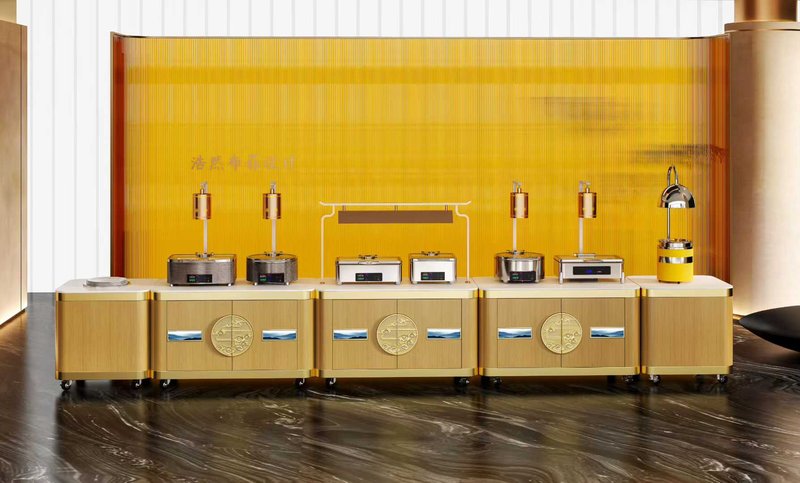
The Single-Head Rose Gold Buffet Heat Lamp exemplifies the portability-first design philosophy appropriate for concession applications. Its compact profile allows easy transport between venues while the adjustable arm mechanism provides the positioning flexibility needed to warm food in various concession counter configurations. When your revenue depends on maximising selling hours across multiple events, equipment that speeds your setup directly impacts your bottom line.
Electrical Efficiency
Concession electrical supply often comes from portable generators with limited capacity, making electrical efficiency a critical selection criterion. Heat lamps for concession use should provide effective warming output relative to their power consumption, enabling operators to run multiple warming stations simultaneously without exceeding generator limits or tripping breakers during service. Look for heat lamp wattage specifications alongside warming coverage area to evaluate true efficiency.
Generator management becomes particularly important at outdoor events where power sharing with other vendors is common. A heat lamp that draws 250 watts while effectively warming a single food pan offers better efficiency than a 400-watt unit that covers the same area with marginal additional performance. When you are running your entire concession operation from a 3000-watt generator shared between warming equipment, refrigeration, and point-of-sale systems, every watt counts toward reliable event coverage.
Durability for Repeated Transport
Equipment that spends its life transported between events experiences different wear patterns than stationary kitchen equipment. Vibration from vehicle transport, exposure to dust and moisture during storage, and repeated assembly and disassembly demand construction quality that exceeds standard catering equipment specifications. Stainless steel construction with reinforced joints, sealed electrical components, and protective carrying cases extend equipment lifespan despite the demanding lifestyle of concession operations.
Types of Heat Lamps for Concession Applications
Single-Head Adjustable Arm Units
Single-head heat lamps with adjustable arms represent the most versatile option for concession stands with variable menu offerings. These units can be repositioned to focus warming on whichever item currently requires temperature maintenance, adapting to menu changes throughout the service day. The compact footprint of single-head units leaves counter space available for food preparation, order assembly, and customer interaction without sacrificing warming capability.
Multi-Head Station Systems
Concession stands offering multiple hot food items benefit from multi-head heat lamp stations that provide simultaneous warming coverage without requiring multiple single-head units. The Three-Head Rose Gold Buffet Heat Lamp Station demonstrates this approach, providing three independent warming heads from a single base unit that requires only one power connection and one mounting setup. For concession operators whose menu includes multiple hot items, a three-head station often replaces three separate warming units while simplifying both equipment list and electrical requirements.
Dual-Function Warming Stations
Some concession applications benefit from combining overhead infrared warming with heated lower surfaces, maintaining both the top temperature of food items and the base temperature of food in chafing dishes or steam tables. Dual-function stations maximise the warming capability within limited concession counter space, though they typically require higher power consumption than single-function alternatives.
Power Solutions for Outdoor Concession Heat Lamps
Electrical power availability fundamentally shapes heat lamp selection for concession applications. Understanding your power situation at each venue prevents equipment mismatches that could compromise food safety or service quality.
Dedicated Event Power
Many outdoor events provide dedicated vendor power through distribution panels at each booth location. These setups typically offer 20-amp or 30-amp circuits at standard voltage, providing reliable power suitable for multiple heat lamps alongside other concession equipment. Confirm power availability and circuit capacity with event organisers before selecting equipment, as mismatches between equipment demand and available power create service failures during critical sales periods.
Portable Generator Power
Events without dedicated vendor power require portable generator support, introducing additional complexity to equipment selection. Generator wattage capacity, fuel availability, noise restrictions in residential areas, and exhaust management all affect viable heat lamp options. Inverter generators provide clean power suitable for sensitive electronics but offer limited wattage output, while conventional generators provide more power but require careful load management to prevent overload.
Food Safety for Concession Heat Lamp Operation
Health regulations for outdoor food vending vary by jurisdiction but consistently require that hot foods be maintained at 135 degrees Fahrenheit or above throughout the holding period. Heat lamps achieve this requirement by adding thermal energy to food surfaces that continuously lose heat to the surrounding environment. In outdoor conditions with wind, variable temperatures, and high customer traffic, monitoring food temperatures becomes more challenging and more critical than in controlled indoor environments.
Establish a temperature monitoring routine appropriate for your specific operating conditions. In stable indoor vending environments, checking food temperatures every two hours may satisfy regulatory requirements. At outdoor concession stands with variable ambient conditions, hourly or even more frequent temperature verification provides better food safety assurance. Use calibrated probe thermometers and document your readings to demonstrate regulatory compliance if inspected.
Menu Planning for Concession Heat Lamp Use
Effective concession menu planning considers heat lamp capacity alongside preparation workflow and expected sales volume. Menu items that require similar holding temperatures simplify heat lamp positioning and temperature management, while menu diversity that demands different holding temperatures may require additional warming equipment or creative counter arrangement.
Consider which menu items genuinely require active heat lamp warming versus those that can be held safely at ambient temperature or in heated drawers. Minimising the number of items requiring active warming reduces both equipment requirements and electrical demand, improving operational efficiency and reducing the risk of temperature-related food safety issues during peak service periods.
Maintenance and Equipment Care
Regular maintenance extends concession heat lamp lifespan despite the demanding transport and storage conditions these units experience. Inspect heat lamp bulbs before each event, as vibration from transport can loosen bulbs and reduce warming effectiveness or create electrical connection issues. Check all electrical connections for signs of wear or corrosion, particularly in humid environments where moisture accelerates connector degradation.
Clean heat lamp heads and reflectors regularly to remove grease accumulation that reduces warming efficiency and creates fire hazards. Store heat lamps in protective cases or coverings during transport and between events to prevent damage from dust, moisture, and physical impact. Replace worn components immediately rather than risking equipment failure during service hours when every minute of lost selling time directly impacts revenue.
Conclusion
Successful outdoor concession operation depends on warming equipment that maintains food quality and safety despite environmental challenges that indoor food service never faces. Portable heat lamps designed for concession applications address these challenges through lightweight construction, electrical efficiency, and durable designs built for the demanding lifestyle of outdoor vending. Whether you are operating at weekend farmers markets, seasonal festivals, or year-round sporting venue concessions, investing in quality heat lamp equipment ensures that your hot food items maintain the quality that keeps customers returning throughout every event.
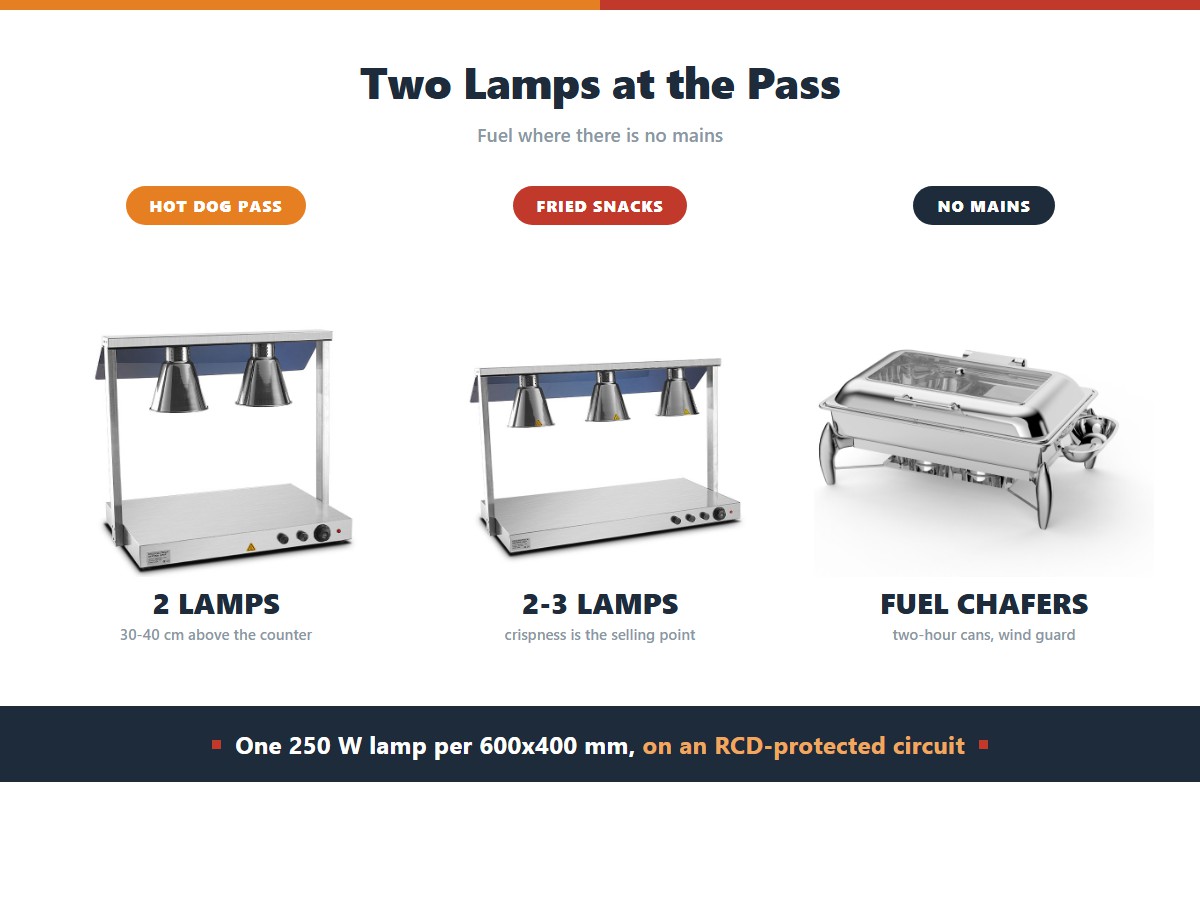
Concession stations and lamp count
| Stand | Lamps | Power | Note |
| Hot dog / burger pass | 2 | Mains 250 W each | Keep 30–40 cm above the counter |
| Fried snacks display | 2–3 | Mains | Crispness is the selling point |
| Popcorn / pretzel warmer | 1 | Mains or 12 V | Dedicated warmer, not a lamp |
| Field stand, no power | 0 | Fuel chafers | Two-hour cans, wind guard |
Frequently Asked Questions
Can heat lamps be used outdoors?
Only with an IP-rated housing, a covered position and RCD protection. Rain on a 300°C bulb shatters it, so the housing is not optional.
What if the stand has no power?
Use fuel chafers with a wind guard. A 250 W lamp needs mains or a generator; a two-hour can costs $1.20–3.00 and needs nothing.
How windy is too windy?
If the flame or the lamp housing moves, the warming zone moves with it. Wind guards and weighted bases matter more than extra wattage.
How do I keep food safe at a stand?
Hold above 57°C, probe hourly, and limit lamps to food sold within 30–40 minutes. Anything longer needs a chafer or a discard schedule.
What maintenance does an outdoor lamp need?
Wipe the reflector daily, check the cord weekly and replace bulbs on schedule. Salt air and grit shorten socket life, so inspect the base monthly.
Related reading
- Cheap vs. Premium Food Heat Lamps: Is It Worth the Upgrade?
- Best Heat Lamps for Restaurants: Wattage and Height
- Food Heat Lamp Stands: Adjustable & Sturdy Mounting Options
- Waterproof Heat Lamps: What IP Rating You Actually Need
- Replace a Heat Lamp Bulb Safely: 8 Steps, No Burns
- Commercial vs. Residential Food Heat Lamps: Key Differences