


Dual Dry-Wet Heating Chafing Dish: One Dish, Two Modes
Short answer: a dry-wet chafer switches between a water bath (57–74°C, moist heat) and dry heat (no steam, crisp surface). Use wet for sauces, rice and vegetables; dry for fried and baked items. A three-layer base spreads heat so dry mode does not scorch, at about $0.05–0.07 per hour on a 400 W element. See models in our chafing dish range.
Traditional chafing dishes force you to choose: add water for moist food, or skip it for crispy results. One mode only. One compromise.
The BAVA dual dry-wet heating chafing dish fixes that. One dish. Two modes. Switch in seconds.
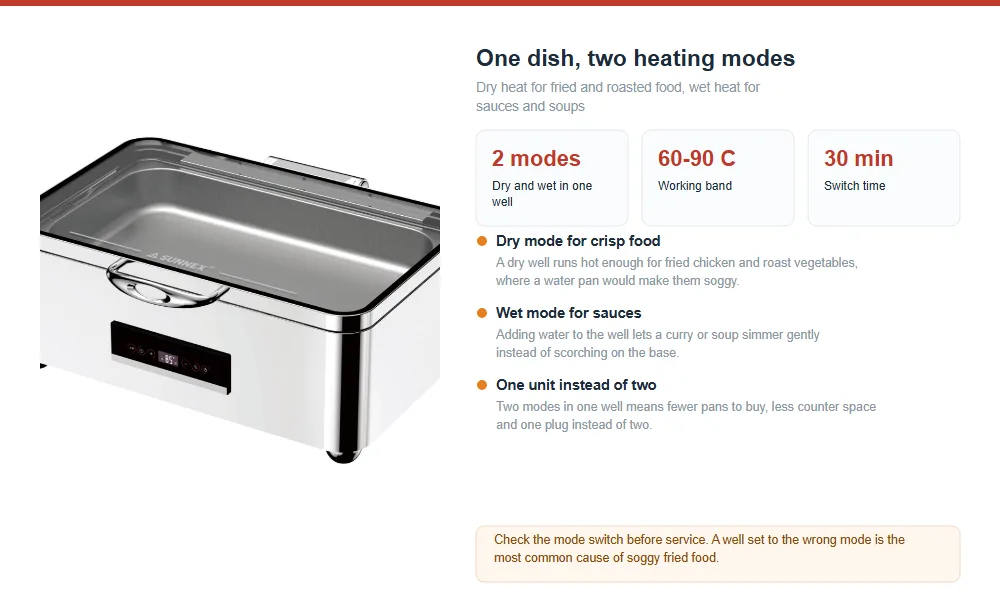
PRO TIP: Wet mode for sauces, dry mode for fried.
Wet mode keeps vegetables and meats juicy for 2-4 hours. Dry mode keeps fried and roasted items crispy. Switch based on what you're serving. No more soggy fries.
KEY TAKEAWAY: One dish. Two modes. Auto-switch safety.
Wet mode = add water = moist food. Dry mode = no water = crispy food. Auto-switch = when water runs out, switches to air heating. No burn risk. No food waste.
Wet Mode vs Dry Mode
| Feature | Wet Mode (Steaming) | Dry Mode (Dry Heat) |
|---|---|---|
| Water | Add water to water pan | No water needed |
| Food texture | Moist, juicy, tender | Crispy, golden, dry |
| Best for | Vegetables, meats, sauces, curries | Fried items, roasted potatoes, bacon |
| Holding time | 2-4 hours | 1-2 hours |
| Typical use | Brunch, formal events | Breakfast stations, casual |
Auto-Switch Safety
Traditional chafing dishes have a problem: when the water boils dry, the pan gets red hot. Food burns. Risk of fire. You have to watch it constantly.
BAVA dual-mode solves this with auto-switch. When water runs out, the system automatically switches to air heating. No dry-burn. No fire risk. No burnt food. Just set it and forget it.
See our fuel types guide for heating options.
Who Needs This?
| Venue | Why It Matters |
|---|---|
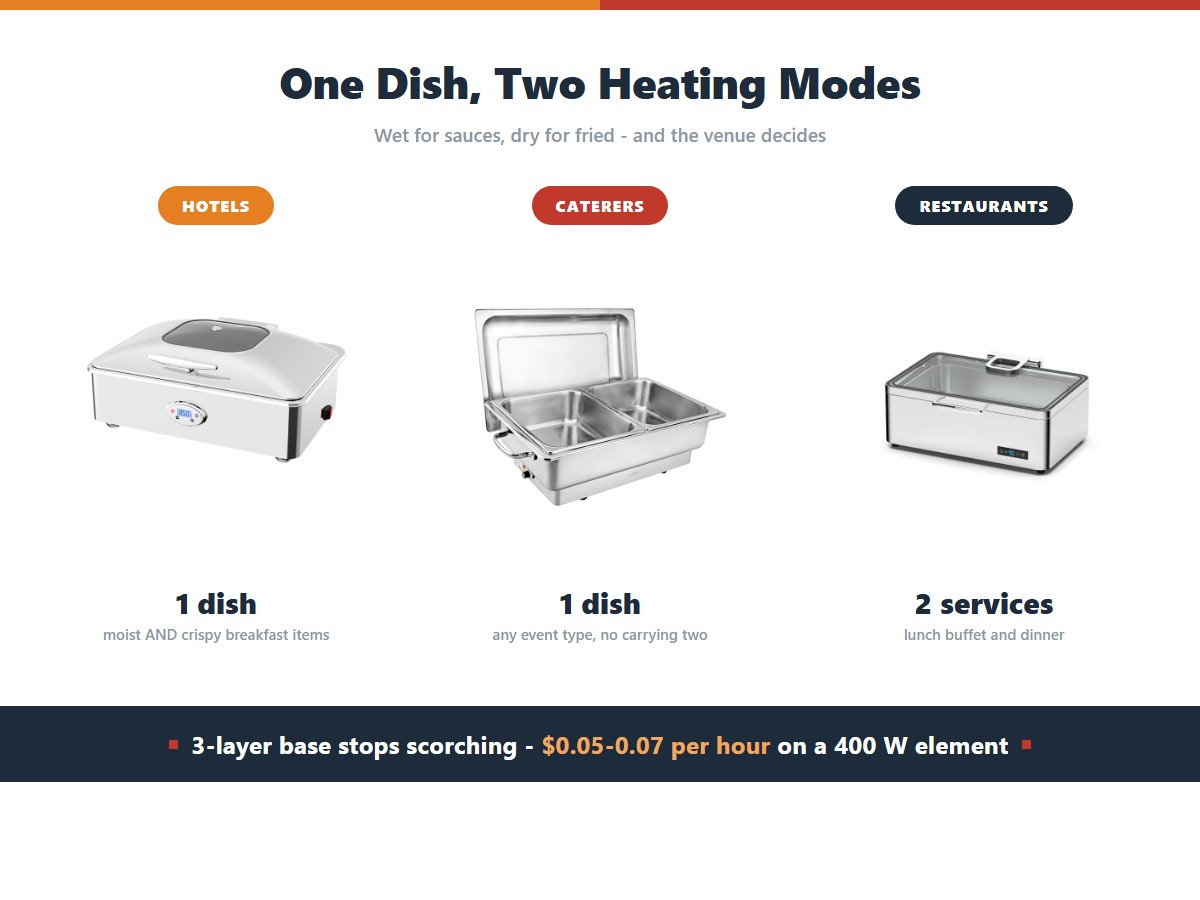
| Hotels | Serve both moist and crispy breakfast items in one dish |
| Caterers | One dish for any event. No need to carry two types. |
| Restaurants | Versatile. Use for lunch buffet and dinner service. |
Dry-Wet Heating Terms to Know
- dual dry-wet heating chafing dish
- chafing dish temperature guide
- chafing dish fuel types
- electric chafing dish with dry heat
- keep food warm without drying
The Bottom Line
Wet mode for moist food. Dry mode for crispy food. One dish, two modes. Auto-switch safety means no burnt food when water runs out. Hotels, caterers, restaurants love it. One dish instead of two. Saves storage space. Saves money.
Looking for Dual-Mode Chafing Dishes?
BAVA manufactures dual dry-wet heating chafing dishes for commercial buffets. All products CE/FDA certified, OEM/ODM available.
When dry mode actually wins
Dry mode is not a gimmick for people who forgot the water. It solves a specific problem: a fried or baked item that goes soft within 15–20 minutes once steam reaches it. Run the pan dry and the surface stays crisp for 25–40 minutes — enough for a lunch rush, not enough for an all-day buffet.
The trade is evenness. Without water to buffer the heat, base temperature climbs faster and any thin spot shows up as a scorch mark within about 20 minutes. That is why dry mode pairs with a three-layer base and a thermostat rather than a bare flame, and why the setting should sit at 60–70°C instead of maximum.
A simple rule: wet for anything with sauce or high water content, dry for anything fried, roasted crisp or baked. If you are unsure, wet is the safer default — nobody has ever complained that a stew was too moist.
Frequently Asked Questions
Can any chafer run dry?
Only one with a thick, multi-layer base and a thermostat. A thin single-layer pan warps within minutes of dry firing.
Does dry mode use less energy?
Slightly, because there is no water to evaporate. The difference is small compared with switching the unit off between services.
What temperature for dry mode?
60–70°C. Higher dries the food faster and accelerates scorching at the pan edges.
Does dry mode affect food safety?
Only if you let the surface drift below 57°C. Probe the food, not the pan base, and keep lids closed between guests.
Which mode for pastries?
Dry. Steam softens laminated dough within 15 minutes; dry heat keeps the crust for about 30.
Related reading
- Automatic Heating on Buffet Stoves: How It Works
- Why Is My Chafing Dish Not Heating Up? 7 Causes and Fixes
- Why Chafing Dishes Rattle (And How to Silence Them in 5 Minutes)
- 2026 Hotel Buffet Equipment Trends: Guest Experience & Efficiency
- 6 Heat Lamp Mistakes That Dry Out Your Food
- Triple Cereal Dispensers & Dry Food Stations for Hotel Buffets
- Chafing Dish Lids: Compatible Lids for All Chafing Dish Types
- Double Compartment Chafing Dish for Diversified Buffet Menus