


Best Food Heat Lamps 2026: What Restaurants Actually Need
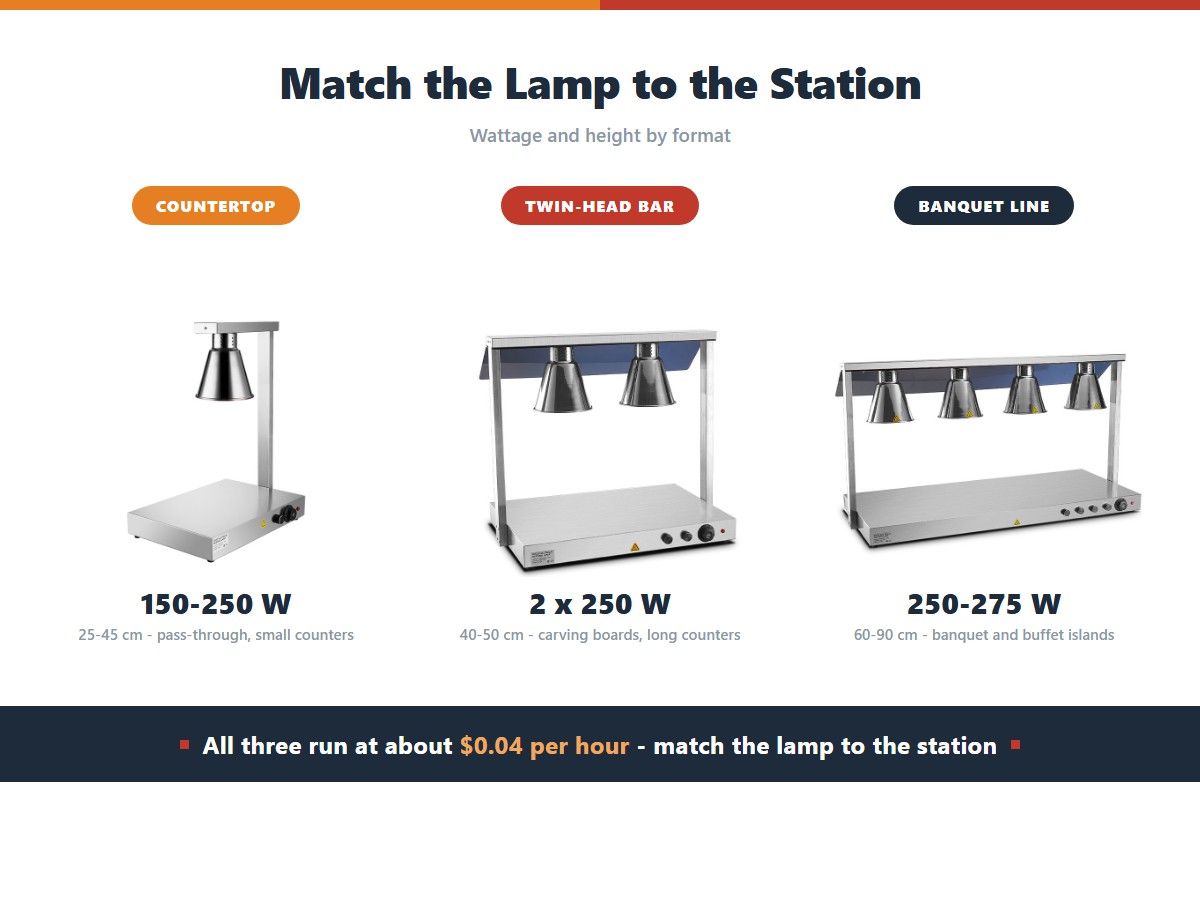
Short answer: match the lamp to the station — 250 W countertop at 30–45 cm for pass-through work, 275 W bar lamps at 45–60 cm for carving, and ceiling-mounted units at 60–90 cm where counter space is scarce. All three run at roughly $0.04 per hour. Compare formats in our heat lamp range.
Running a successful restaurant or catering operation means keeping food at the perfect serving temperature throughout every service. Food heat lamps are the workhorses that make this possible, providing consistent infrared warmth that keeps dishes at ideal serving temperatures without overcooking. Whether you operate a busy hotel breakfast buffet, a fine dining establishment, or a high-volume catering company, the right heat lamp directly impacts both food quality and customer satisfaction.
Why Food Heat Lamps Matter in Commercial Kitchens
Food heat lamps serve a critical function that goes beyond simple warming. In a commercial kitchen, timing is everything, and heat lamps bridge the gap between when food comes out of the oven or prep line and when it reaches the customer. A quality heat lamp maintains food at safe serving temperatures (above 140F / 60C) without the drying effects that direct heat can produce. This matters enormously for dishes that require plating in advance, for buffet service where food sits for extended periods, and for catering operations where kitchen-to-venue transit time is unpredictable.
The difference between professional and consumer-grade heat lamps becomes immediately apparent in a busy commercial environment. Consumer units designed for occasional home use simply cannot handle the continuous operation, temperature consistency, and durability requirements of a restaurant setting. Investing in commercial-grade heat lamps pays dividends through consistent food quality, reduced waste from temperature loss, and equipment longevity that justifies the higher initial investment.
Key Features to Evaluate When Selecting Heat Lamps
Heat Output and Coverage Area
Heat lamps come in various configurations, from single-head units for focused warming to multi-head stations for larger coverage areas. Single-head lamps are ideal for small preparation areas, individual plating stations, or compact spaces where a focused heat zone is sufficient. Multi-head stations serve larger areas effectively but require more mounting space and electrical capacity. Assess your actual serving configuration and choose heat output accordingly — an underpowered lamp creates food safety risks, while an overpowered unit wastes energy and can overheat delicate items.
Finish and Aesthetic Considerations
In visible serving areas, the appearance of your heat lamps affects the overall presentation. Stainless steel finishes provide a clean, professional look that suits most commercial environments. More decorative finishes like gold plating or matte black create visual appeal for upscale dining settings where equipment aesthetics matter. The finish also affects durability — polished surfaces show scratches more readily than matte finishes, which can impact the long-term appearance of equipment in busy kitchen environments.
Mounting and Installation Flexibility
Commercial kitchens have varied spatial configurations, and heat lamp placement flexibility is essential. Look for units that offer adjustable mounting options, whether ceiling-mounted, pole-mounted, or freestanding configurations. The ability to position heat lamps precisely over serving areas without complex installation requirements simplifies both initial setup and reconfiguration as your operation changes.
Durability and Maintenance
Commercial heat lamps face continuous use in demanding environments. Stainless steel construction with quality heating elements designed for extended operation provides the durability commercial kitchens require. Easy-clean surfaces reduce the maintenance burden on kitchen staff, and accessible component design simplifies bulb replacement when needed. Factor in ongoing maintenance requirements when evaluating total cost of ownership rather than just initial purchase price.
Common Applications for Food Heat Lamps
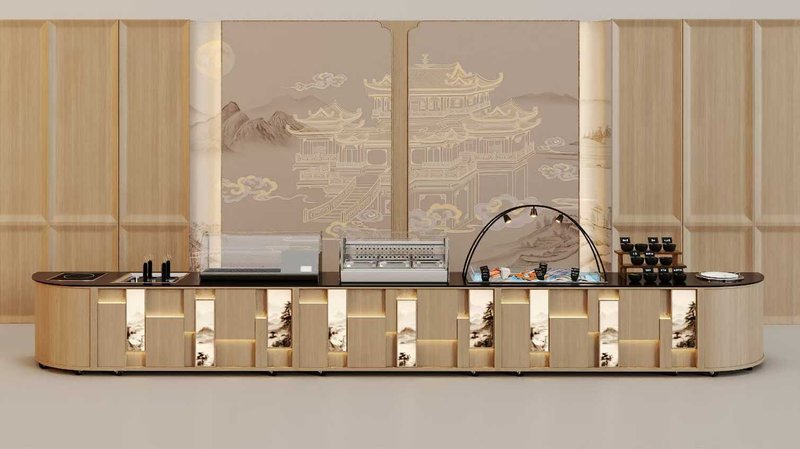
Food heat lamps serve diverse applications across the commercial food service industry. In hotel breakfastbuffets, they maintain pancakes, eggs, and breakfast meats at perfect serving temperatures throughout extended service windows. In catering operations, they bridge the gap between kitchen completion and guest service, ensuring every plate arrives at the table at the ideal temperature regardless of kitchen-to-venue logistics. In fine dining, they protect delicate proteins during plating while the rest of the course is being assembled. In delis and sandwich shops, they keep assembled items warm without drying out bread or wilting toppings.
Conclusion
Selecting the right food heat lamps for your restaurant or catering business requires balancing heat output, coverage area, durability, and aesthetic requirements against your specific operational needs. Commercial-grade heat lamps deliver the consistent performance and longevity that demanding food service environments require. By investing in quality equipment designed for continuous commercial operation, you ensure reliable food temperature maintenance that supports food safety standards, reduces waste, and helps your team deliver consistently excellent dining experiences.
Browse the full heat lamp range for current models and configurations.
Lamp formats by service
| Format | Wattage | Height | Best for |
| Countertop single head | 150–250 W | 25–45 cm | Pass-through, small counters |
| Twin-head bar | 2 × 250–275 W | 40–50 cm | Carving boards, long counters |
| Retractable stem | 250 W | 45–70 cm adjustable | Changing portion heights |
| Ceiling pendant | 250–275 W | 60–90 cm fixed | Banquet and buffet islands |
Frequently Asked Questions
How many heat lamps does a restaurant need?
One 250 W head per 600×400 mm of holding surface. A 1.8 m hot counter typically needs three.
Which mounting suits a low ceiling?
A countertop or retractable unit. A pendant needs 60–90 cm of drop, which a low ceiling cannot give without putting the lamp too close to the food.
What wattage for carved meat?
Two 250–275 W heads over a 1 m board, at 40–50 cm. A single head leaves the ends of the joint cold.
How long do commercial lamps last?
The housing lasts 5–8 years; the bulb is the consumable at 5,000–7,000 hours. Buy a model with a replaceable bulb and a standard socket.
What does one lamp cost to run per service?
About $0.32 for an eight-hour service at 250 W and $0.15/kWh. A fuel chafer covering the same station costs $2.40–6.00.
Related reading
- Food Heat Lamps for Catering Events: Perfect for Buffet Service
- Top 10 Food Heat Lamps for Small Businesses (2026 Review)
- Food Heat Lamps for Sale: Best Deals for Catering Companies
- Food Heat Lamps for Restaurants: Keep Meals Fresh & Hot
- 6 Heat Lamp Mistakes That Dry Out Your Food
- Best Heat Lamps for Restaurants: Wattage and Height