


Heavy Duty Chafing Dishes: Durable Options for High-Volume Use
Short answer: heavy-duty means a 304 housing, a 1.0–1.2 mm welded frame, a 0.6–0.8 mm food pan and a replaceable 400–600 W element — 5–8 years in daily service against 2–3 for a domestic build. Expect $90–180 wholesale. See heavy-duty units in our chafing dish range.
When your catering operation runs multiple events back-to-back, or your hotel buffet feeds hundreds of guests per service, the equipment you rely on has to work as hard as you do. Standard chafing dishes are designed for light to moderate use—but when volume is everything, you need heavy duty chafing dishes that can take the heat, the hours, and the repeated cleaning cycles without showing wear. In this guide, we'll walk you through what defines a truly heavy duty commercial chafing dish, how to select the right one for your operation, and which BAVA models are built to handle the most demanding foodservice environments.
What Makes a Chafing Dish "Heavy Duty"?
Not all chafing dishes are created equal. The term "heavy duty" in the commercial foodservice world refers to equipment that is engineered for sustained, high-frequency use in demanding environments such as hotel banquet halls, contract catering companies, convention centers, and large-scale event venues. Several key factors separate heavy duty chafing dishes from their light-duty counterparts:
Material Construction
The single most important indicator of a heavy duty chafing dish is the material it's made from. Premium-grade 304 stainless steel is the gold standard—this food-grade austenitic stainless steel contains chromium and nickel, giving it exceptional resistance to corrosion, staining, and the acidic foods that are common in buffet service. Unlike lower-grade 201 stainless steel or aluminum alternatives, 304 stainless steel maintains its structural integrity and polished appearance even after hundreds of wash cycles. BAVA's entire chafing dish range is built from 304 stainless steel, ensuring that every unit that leaves the factory is equipped for commercial-grade durability.
Heating Performance
Heavy duty commercial kitchens run on consistency. A chafing dish that loses heat after 30 minutes is not heavy duty—no matter what the marketing says. Look for units that can maintain food-safe temperatures (above 60°C / 140°F) for a full 4–6 hour service without constant monitoring. Electric models with higher wattage ratings typically outperform their fuel-heated counterparts in sustained temperature maintenance, especially in large banquet halls where ambient air conditioning can draw heat away from open chafing dishes.
Capacity and Pan Size
Heavy duty chafing dishes are almost universally built around the GN 1/1 (Gastronorm 1/1) food pan standard, which measures 530 x 325 mm. This standardized size allows kitchens to prep food in central production areas using standard hotel pans, then transfer directly to the chafing dish without intermediate vessels. Larger capacity—typically 8 to 13 liters for full-size models—means fewer refills during peak service, which translates directly to labor savings and consistent food quality.
Safety Features
In a high-volume kitchen, safety cannot be an afterthought. Look for dry-heating protection that automatically shuts off power if the water reservoir runs low, preventing scorched food and fire hazards. Overheat protection and anti-dry flash alarms are additional features found on BAVA's premium electric chafing dishes, adding critical safeguards in busy banquet environments where staff may not be able to monitor every unit continuously.
Why Heavy Duty Chafing Dishes Matter for High-Volume Operations
Hotel banquet kitchens can serve anywhere from 200 to 2,000 guests at a single event. In these environments, every piece of equipment operates on a scale that amplifies even small inefficiencies. A chafing dish that requires refilling every 90 minutes instead of every 4 hours means more staff time spent on food management and less time on guest-facing service. A unit that develops rust spots after six months of daily use represents a replacement cost that adds up quickly across a 20-unit fleet.
Heavy duty chafing dishes address these challenges head-on. Built to withstand daily assembly, disassembly, transportation, and cleaning, they deliver a lower total cost of ownership over their lifespan—even if the initial purchase price is higher than a light-duty alternative. More importantly, they protect the reputation of your catering operation by ensuring that food is always at safe serving temperatures, always presented beautifully, and always ready when your guests are ready to eat.
Comparing Key Specifications
| Feature | Electric Chafer | W07 Electric Chafing Dish | HC380Z Fuel Chafing Dish |
|---|---|---|---|
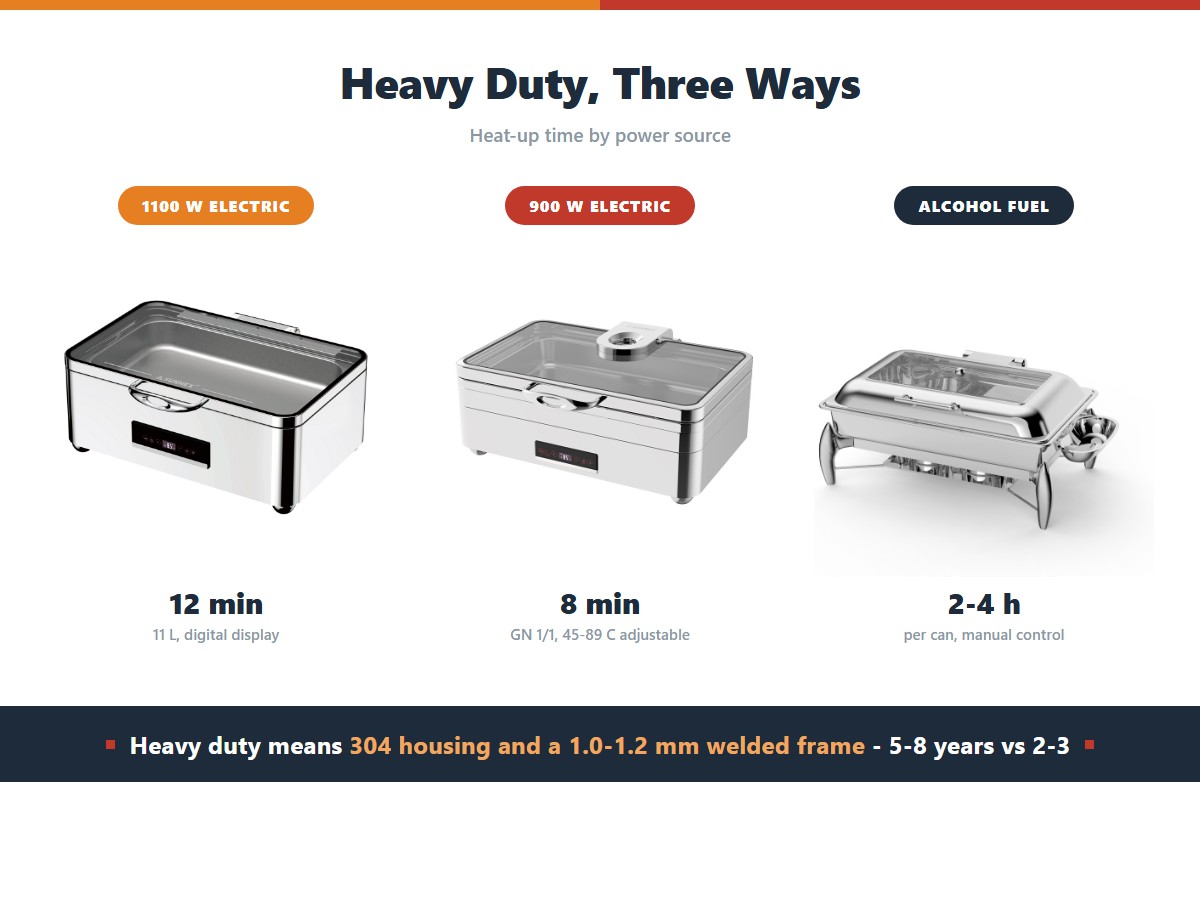
| Power / Fuel | 1100W Electric | 900W Electric | Alcohol Fuel (Gel/Liquid) |
| Capacity | 11 Liters (Full Size) | GN 1/1 Compatible | GN 1/1 Compatible |
| Heat-Up Time | 12 minutes | ~8 minutes to 60°C | 2–4 hours per fuel can |
| Temp Control | Digital Display + Smart Mode | 45–89°C Adjustable | Manual (fuel-based) |
| Safety Features | Dry Burn Protection | Anti-Dry Alarm + Auto Shut-Off | Hinged Glass Lid |
| Material | Polished SS + Tempered Glass | 304 Stainless Steel | Polished SS + Tempered Glass |
Maintenance Tips for Heavy Duty Chafing Dishes
Investing in heavy duty equipment is only the first step—the return on that investment depends heavily on proper maintenance. Here are the most important practices for keeping your heavy duty chafing dishes in peak condition:
Daily Cleaning: After every service, empty and clean the water reservoir to prevent mineral buildup, especially in areas with hard water. Wipe down the exterior with a stainless steel-safe cleaner to maintain the polished finish. Never use abrasive scrubbers on polished stainless steel surfaces, as they will leave microscopic scratches that accelerate corrosion over time.
Regular Inspection: Check the condition of lids, hinges, and heating elements before each use. On electric models, verify that power cords and connectors are undamaged. On fuel models, inspect the fuel holder for any signs of corrosion or damage. Catching these issues early prevents failures during critical service hours.
Proper Storage: Store chafing dishes with lids slightly ajar to allow air circulation, preventing the trapped moisture that causes musty odors and premature corrosion. Stack carefully with protective padding between units if space is tight.
Choosing the Right Heavy Duty Chafing Dish for Your Operation
The right choice depends on your specific operating environment. Electric models like the and W07 are ideal for hotel ballrooms, convention centers, and indoor banquet halls where reliable electrical supply is available at every station—they offer precise temperature control and hands-off operation. The HC380Z fuel model excels in outdoor venues, tented events, and mobile catering scenarios where electrical access is limited or impractical.
For mixed operations—catering companies that serve both indoor and outdoor events—maintaining a fleet with a variety of heating types ensures you have the right tool for every job. BAVA's heavy duty chafing dish range covers all these scenarios with consistent 304 stainless steel quality, giving you the confidence that every unit in your fleet will perform when it matters most.
Final Thoughts
Heavy duty chafing dishes are not a place to cut costs. The difference between equipment that lasts two years and equipment that lasts five is almost always traced back to build quality—specifically the grade of stainless steel, the heating technology, and the safety systems built in from the start. BAVA's commercial chafing dish range delivers on all three fronts, with models trusted by hotel chains, contract caterers, and event professionals around the world. Whether you're running a 50-unit fleet or equipping a single high-volume banquet hall, choosing heavy duty from the start means fewer replacements, safer food service, and more confidence every time you set up for a new event.
Browse the full chafing dish range for current models and configurations.
Frequently Asked Questions
What makes a chafer "heavy duty"?
Frame gauge, pan gauge, welded corners and a replaceable element. Finish is cosmetic.
How long should it last?
Five to eight years at daily use with 304 steel and a 1.0 mm frame.
Is heavy duty worth it for a small operation?
Only above about 100 uses a year. Below that the premium never pays back.
What fails first?
The element, then the hinge. Both should be replaceable from the base.
How do I verify the claims?
Ask for alloy and gauge per part, plus a spare-parts list. A supplier who cannot state them is selling the thin build.
Related reading
- Food Heat Lamps for Fast Food Chains: Bulk & Durable Options
- Heavy-Duty Chafing Dish for 24/7 Hotel Buffets
- Chafing Dish Fuel Can: Refill Options for Food Warmers
- High-Volume Events: Stove Count and Backup Plan
- Why Chefs Hate Roll-Top Chafing Dishes (And What They Use Instead)
- Chafing Dishes for Buffet Lines: High-Volume Commercial Solutions