




Chafing Dish Stand: Durable Stands for Buffet Tables
Short answer: Serving height should sit 76–91 cm (30–36 in) from the floor, so a stand usually adds 10–20 cm to a standard table. The stand must carry at least 1.5 times the loaded weight and sit flat. Folding stands are portable; fixed frames are steadier. See chafing dishes with stands.
Chafing dish stands provide the elevation and stability that professional buffet presentation requires, creating the proper serving height while ensuring equipment remains secure throughout service. The stand selection affects both the visual presentation that guests experience and the operational stability that safe service demands. Understanding stand options helps operators select appropriate supports for their specific event requirements.
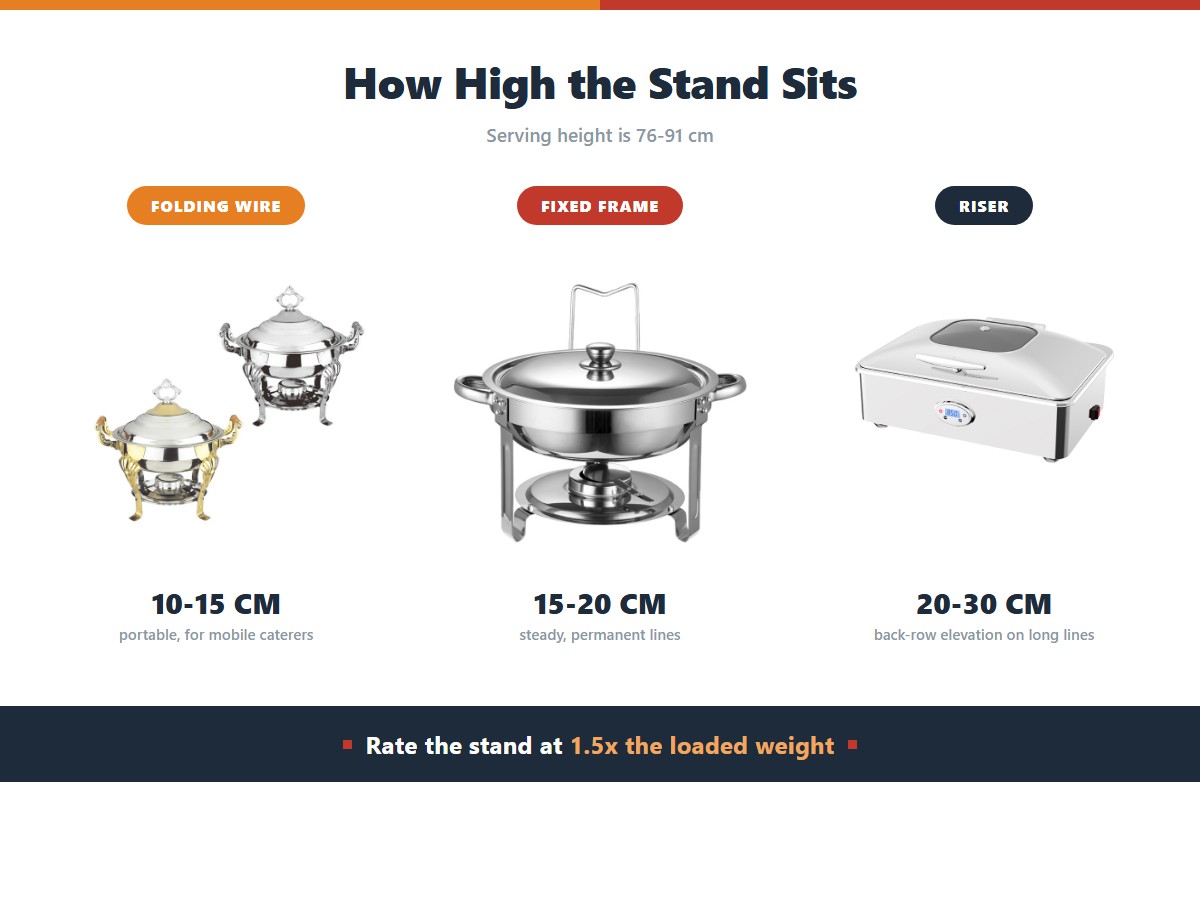
Stand Height Considerations
Standard serving height places chafing dishes at approximately 30 to 36 inches from floor level, providing comfortable access for standing guests while maintaining visual prominence on the buffet line. This height range works for most adult populations and creates the elevated presentation that professional buffets require. Height selection should consider guest demographics and service style.
Adjustable stands offer flexibility for different venue configurations and guest populations, with height modifications that adapt to specific event requirements. Events with children or seated service may benefit from lower settings, while standing cocktail receptions typically use standard heights. Adjustable features add cost but provide versatility for diverse event types.
Low-profile stands serve applications where reduced height improves presentation or where space constraints require compact arrangements. These stands work well for smaller events or intimate settings where grand buffet presentations would feel overwhelming. Low profiles may also suit venues with ceiling height limitations.
Stability Features
Base design determines the stability that stands provide, with broad bases offering superior resistance to tipping while narrower bases may be more susceptible to accidental displacement. The base footprint should be proportional to the height and weight that the stand supports, with adequate margin for the dynamic loads that service creates. Stability investment protects against accidents and equipment damage.
Leveling mechanisms compensate for floor irregularities that could otherwise create wobble or instability during service. Quality stands include adjustable feet that enable precise leveling on surfaces that are not perfectly flat. The leveling capability proves essential for outdoor events and older venues with uneven floors.
Weight distribution through the stand structure affects how the assembly handles both static loads and the dynamic forces that service activity creates. Well-designed stands distribute weight evenly through the support structure, avoiding stress concentrations that could cause failure. Design quality affects both safety and longevity.

Material and Construction
Stainless steel construction provides the durability and appearance quality that professional catering demands, withstanding repeated use and transport without degradation. Stainless steel resists corrosion from food spills and cleaning chemicals while maintaining the professional appearance that upscale events require. The material investment pays returns through extended service life.
Chrome-plated options offer visual appeal at potentially lower cost but may not provide the durability that solid stainless steel delivers. Chrome plating can chip or degrade under heavy use, exposing the underlying material to corrosion and diminishing appearance quality. Plated stands may be appropriate for light-duty applications.
Welded construction creates joints that resist the loosening and failure that mechanical fasteners can experience under repeated assembly and disassembly. Quality welds maintain structural integrity throughout years of service, while poor welds may crack under stress. Construction quality directly affects safety and longevity.
Portability Features
Folding designs enable compact storage and transport, with stands that collapse for efficient packing between events. Folding mechanisms should lock securely in the deployed position while allowing quick conversion between setup and storage modes. The folding capability significantly reduces storage space requirements and transport volume.
Weight considerations affect both the effort required for setup and the shipping costs that transport involves. Lighter stands reduce labor for setup crews while potentially sacrificing some stability. The balance between weight and stability should match typical usage patterns and crew capabilities.
Carrying handles or cases facilitate transport and protect stands during storage between events. Integrated handles or dedicated carrying cases make setup more efficient while protecting stands from damage. Transport accessories should be considered in the total equipment investment.
Multi-Unit Configurations
Connected stands create continuous buffet lines with coordinated presentation that individual stands cannot achieve. Linking mechanisms keep stands properly aligned while maintaining the appearance cohesion that professional presentation requires. Connected configurations work well for large events with extensive buffet offerings.
Tiered arrangements using stands of different heights create visual interest and presentation variety that flat arrangements cannot provide. Rising and falling elevations guide guest attention and create focal points within the buffet line. Tiered designs require careful planning to ensure smooth guest flow.
Module compatibility enables expansion or reconfiguration as event requirements change, with stands that work together in various combinations. Modular systems provide the flexibility that diverse event portfolios require while maintaining consistent appearance quality. The system approach allows incremental investment as business grows.
Surface Protection
Table protection features prevent the damage that stand weight and heat transfer can cause to underlying surfaces. Quality stands include pads, feet, or other protective elements that preserve table surfaces while maintaining stability. Surface protection is especially important for rental equipment and venue-owned tables.
Heat insulation between stand and table surface prevents the heat transfer that could damage table finishes or create safety hazards. This protection becomes more important for extended service periods where heat builds up over time. Insulation quality affects both surface protection and fire safety.
Non-slip features prevent the gradual movement that vibration and service activity can cause, keeping stands properly positioned throughout events. Non-slip feet or pads maintain placement without marring surfaces, providing both security and surface protection. The non-slip investment prevents the repositioning that unstable stands require.
Browse the full chafing dish range for current models and configurations.
Stand Types Compared
| Type | Added height | Stability | Portability | Best for |
|---|---|---|---|---|
| Folding wire stand | 10–15 cm | Moderate | Excellent | Mobile caterers, tight vans |
| Fixed tubular frame | 15–20 cm | High | Poor | Permanent buffet lines |
| Riser / plinth | 20–30 cm | High | Moderate | Back-row elevation on long lines |
| Leg extensions | 5–10 cm | Depends on fixings | Good | Adjusting one table to match another |
Height is not the only variable. A stand that puts the pan rim above 95 cm forces shorter servers to reach upward with a loaded pan, which is where most lifting injuries happen.
Stand selection: what to check before you buy
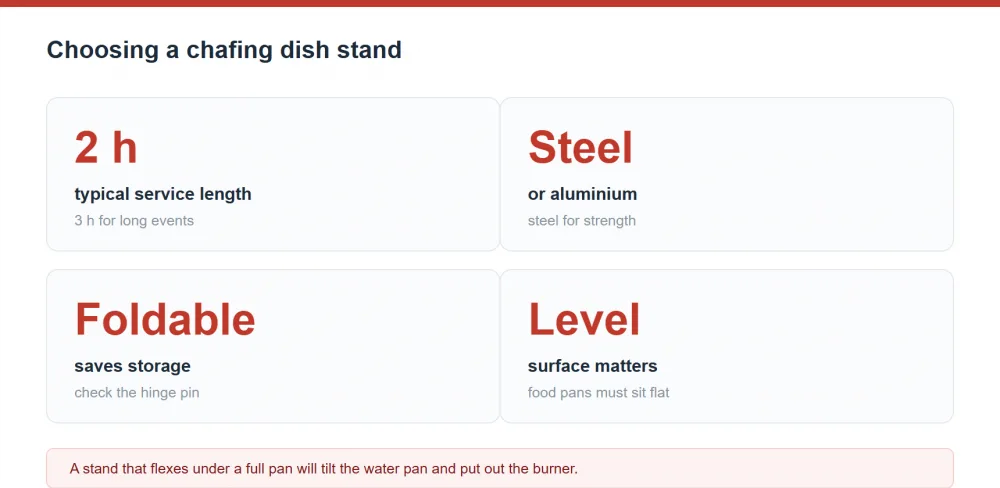
A stand is a structure that carries a loaded pan for hours. Most cheap failures are joints, not steel.
| Check | Acceptable | Reject if |
|---|---|---|
| Material | Stainless or plated steel | Thin aluminium with plastic joints |
| Hinge or pin | Steel pin, tight fit | Loose hinge, visible wobble |
| Foot pads | Rubber or nylon, all four | Bare metal on a wet floor |
| Fold mechanism | Locks open, holds a full pan | Collapses when a pan is loaded |
| Load rating | Rated above your service load | Unrated or unstated |
| Surface | Flat, no twist when folded | Bowed frame, uneven feet |
Frequently Asked Questions
How high should a chafing dish stand be?
The pan rim should land 76–91 cm from the floor, which is standard counter height. On a 75 cm folding table a stand adding 10–15 cm gets you there; on a lower table you need 20 cm or a riser.
Do I need a stand at all?
Not if the table is already at serving height. A stand earns its place when the table is low, when the dish sits at the back of a long line, or when the frame has no legs of its own.
How much weight should a stand support?
At least 1.5 times the loaded weight. A full-size chafer with water, food and a lid runs 12–18 kg, so the stand should be rated for 20–25 kg. Folding stands with plastic joints are the usual failure point.
Can a stand be used on a tablecloth?
Yes, with a pad. Bare metal legs on a cloth slide when a guest leans on the frame, and a sliding chafer full of hot water is a burn risk. Rubber feet or a nonslip mat solve it cheaply.
Are taller stands better for buffet presentation?
Only to a point. Elevation improves sight lines, but above about 95 cm the food is out of comfortable reach for shorter guests and staff. The practical rule is to keep the pan rim within 15 cm of standard counter height.
Related reading
- Commercial Grade Chafing Dishes: Durable for Restaurant Use
- Heavy Duty Chafing Dishes: Durable Options for High-Volume Use
- Food Heat Lamps for Fast Food Chains: Bulk & Durable Options
- Standard vs Commercial Buffet Stove: What Changes
- Best Chafing Dish Brands in 2026: China, Turkey, Italy Compared
- Cake Stand Materials Compared: Acrylic vs Stainless vs Glass