




Buffet Warmer Trends in 2026: What Operators Are Buying
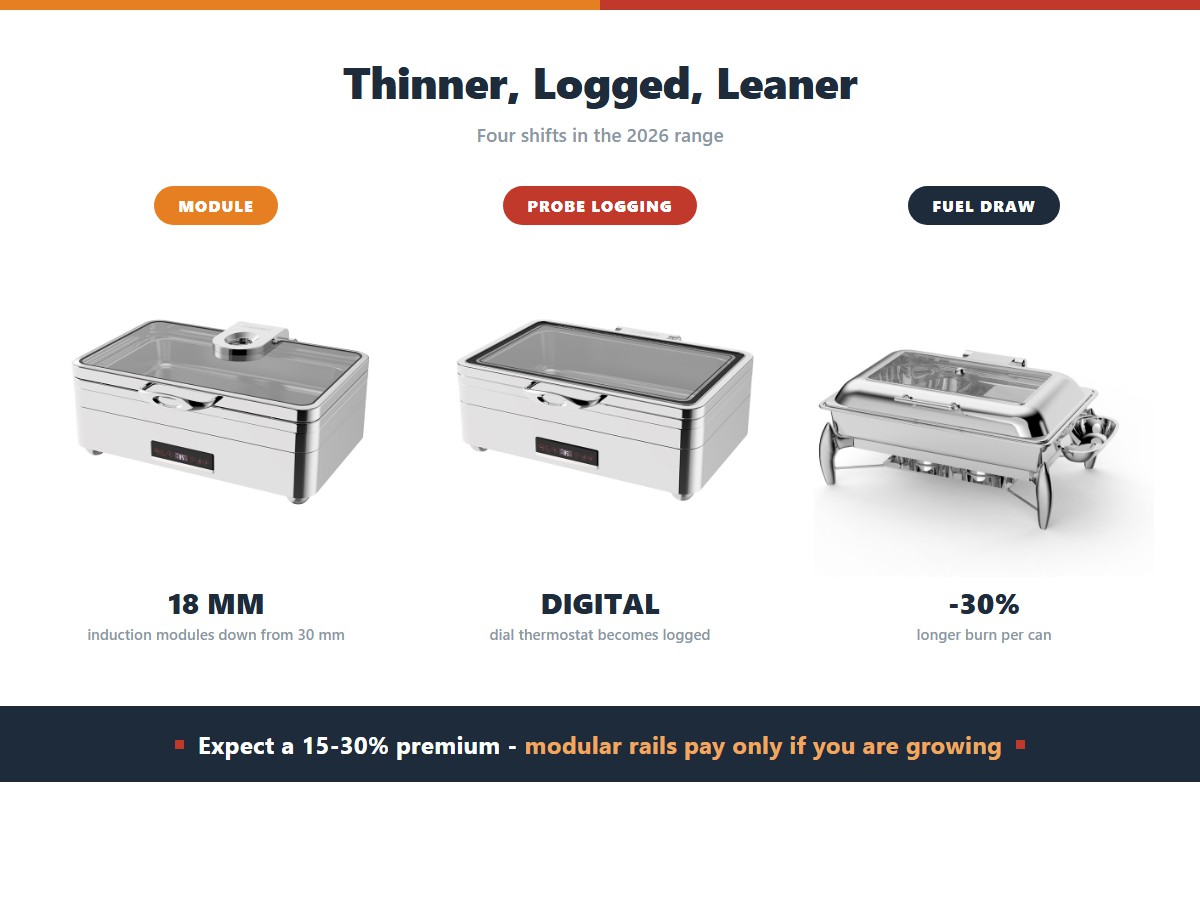
Short answer:Four shifts define buffet warmer design in 2026: inductive modules that drop from 30mm to 18mm, smart thermostatic control with probe logging, 30% lower fuel draw per holding hour, and modular rails that let a four-station line become an eight-station one. Expect to pay a 15–30% premium over 2023 pricing for a genuinely modular unit, and close to nothing for a unit that only adds a digital display. See buffet station equipment for current models.
The hospitality and food service industry has evolved dramatically over the past decade, and buffet service remains one of the most popular dining formats for everything from hotel breakfasts to wedding banquets and corporate events. As we approach 2026, buffet warmer technology and design are continuing to adapt to changing consumer expectations, sustainability requirements, and operational needs. Understanding these emerging trends is critical for restaurant owners, hoteliers, and caterers who want to stay competitive and deliver exceptional dining experiences. In this article, we'll explore the most significant buffet warmer trends that will define the industry in 2026 and beyond.

1. Smart Technology and Digital Temperature Control
One of the most prominent trends shaping buffet warmers in 2026 is the widespread adoption of smart technology and precise digital temperature control. Gone are the days of guessing whether your food is being held at a safe and appetizing temperature – modern buffet warmers now come with connected features that allow operators to monitor and adjust temperatures remotely via mobile apps or central control systems.
Key advancements in this area include:
- Digital thermostats with precision temperature regulation within 1-degree increments, ensuring food stays within the safe holding temperature range of 140°F to 160°F (60°C to 71°C)
- Wi-Fi connectivity that sends real-time alerts if temperatures go outside the safe range, preventing food waste and safety issues
- Programmable heating schedules that match service times, reducing energy consumption during off-peak hours
- Data logging capabilities that automatically track temperature records for health inspection requirements
This shift to smart technology not only improves food safety but also reduces operational costs by cutting down on unnecessary energy use and minimizing food waste from overheating or temperature fluctuations.
2. Sustainability Focus and Energy Efficiency
Sustainability continues to be a top priority for the food service industry, and buffet warmers are no exception. In 2026, energy efficiency and environmentally friendly design are no longer optional features – they're expected standards. Manufacturers are developing new buffet warmer models that use significantly less energy than older units without compromising on performance.
Common sustainable design features include:
- Improved insulation materials that reduce heat loss, cutting energy consumption by up to 30% compared to traditional models
- Energy-efficient heating elements that deliver consistent heat while using less power
- Use of recyclable materials in construction, reducing the environmental impact at the end of the product's lifecycle
- Designs that allow for easy repair and part replacement, extending the overall lifespan of the warmer and reducing waste
For businesses, these sustainable features not only lower utility bills but also appeal to environmentally conscious consumers who increasingly prefer to patronize businesses that prioritize sustainability.
3. Versatile Modular Design
As buffet formats become more flexible and diverse, modular buffet warmer systems are growing in popularity. In 2026, we're seeing more businesses move away from fixed, one-size-fits-all buffet setups towards modular systems that can be easily rearranged to suit different event sizes and types.
Modular buffet warmers offer several advantages:
- Flexibility to create custom buffet layouts for small private dinners or large-scale banquets
- Ability to mix and match different types of warmers – including chafing dishes, soup warmers, and heat lamps – to create a diverse spread
- Easy storage when not in use, saving valuable space in commercial kitchens
- Scalability to add more units as your business grows, without needing to replace the entire system
This versatility is particularly valuable for hotels and catering companies that host a wide range of events with varying guest counts and menu types.
4. Aesthetic Design and Brand Integration
Buffet warmers are no longer just functional equipment – they've become an important part of the overall dining aesthetic. In 2026, design plays a critical role in buffet warmer selection, with more options available to match different venue styles and brand identities.
Popular design trends include:
- Premium finishes like rose gold, black stainless steel, and matte black that complement modern restaurant and hotel interiors
- Glass lids and transparent windows that allow guests to see the food clearly without opening the lid, reducing heat loss
- Sleek, low-profile designs that don't block sightlines across the buffet table
- Custom branding options that allow businesses to add their logo or color scheme to warmers
A well-designed buffet setup enhances the overall dining experience, making food look more appetizing and creating a more professional, inviting atmosphere for guests.
5. Enhanced Food Safety Features
Food safety has always been a top priority in buffet service, and 2026 brings new innovations that make it easier than ever to maintain high safety standards. In addition to precise temperature control, modern buffet warmers include a range of features designed to prevent cross-contamination and keep food safe for longer periods.
Key food safety advancements include:
- Antimicrobial surfaces on handles and lids that inhibit the growth of bacteria
- Sealed heating elements that are easy to clean and prevent food particles from getting trapped
- Automatic shutoff features that turn off the warmer if it overheats or runs out of water, preventing safety hazards
- Improved lid designs that reduce condensation, which can dilute food and create an environment for bacterial growth
These features not only keep guests safe but also protect businesses from liability and reputational damage associated with foodborne illness incidents.
Conclusion
As we look ahead to 2026, the buffet warmer industry is embracing innovation that balances functionality, sustainability, and aesthetics. From smart temperature control to modular designs and enhanced safety features, these trends are helping food service operators deliver better dining experiences while reducing operational costs and environmental impact. Whether you're planning to upgrade your current buffet setup or outfitting a new venue, choosing buffet warmers that align with these trends will help you stay competitive and meet the evolving expectations of both guests and regulators. By investing in high-quality, modern buffet warming equipment, you can ensure that your food stays at the perfect temperature, looks appealing, and remains safe for guests to enjoy.
Recommended Products
Full Size 11L Electric Chafer

This commercial-grade electric buffet warmer features 1100W power that delivers 12-minute rapid heating, precision digital temperature control, and spacious 11L capacity perfect for large events. It aligns perfectly with 2026 trends of smart control and energy efficiency.
View Details →Electric Chafing Dish Food Warmer (Digital Thermostat)

This 400W electric chafing dish combines 304 stainless steel construction with precise digital temperature control, offering excellent energy efficiency and food safety features ideal for commercial food service operations.
View Details →Browse the full chafing dish range for current models and configurations.
What Has Actually Changed Since 2023
| Feature | 2023 baseline | 2026 mainstream | Price impact | Worth paying for |
|---|---|---|---|---|
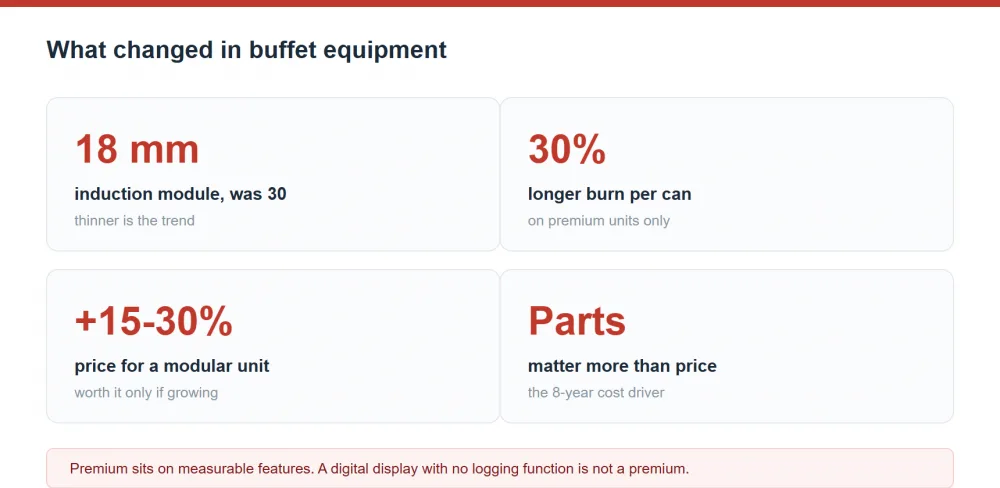
| Induction module thickness | 30 mm | 18–20 mm | +8–15% | Yes, if you re-pan |
| Temperature control | Dial thermostat | Digital with probe logging | +10–20% | Yes, for audits |
| Fuel efficiency | Baseline | 30% longer burn per can | Premium unit only | Yes, on long service |
| Rail system | Bolt-on frame | Daisy-chain modular rail | +20–30% | Yes, if growing |
| Enclosure material | Painted steel | Brushed 304 stainless | +5–10% | Durability only |
| Controls | Mechanical | Touch panel, no mechanical backup | +15% | Careful |
Cost Per Guest Over a Four-Hour Service
| Unit type | Purchase | Fuel and power | 4-hour cost | Cost per guest at 40 covers |
|---|---|---|---|---|
| Entry fuel warmer | $95 | $2.10 | $2.10 | $0.05 |
| Mid electric warmer | $240 | $0.90 | $0.90 | $0.02 |
| Smart electric with probe | $395 | $0.90 | $0.90 | $0.02 |
| Propane cabinet | $520 | $3.20 | $3.20 | $0.08 |
| Modular rail, 6-station | $2,600 | $5.40 | $5.40 | $0.02 |
The unglamorous trend is the one with the biggest effect: fewer brands now publish fuel consumption figures, and more of them publish panel wattage. A buyer who tracks consumption per holding hour, rather than sticker price, ends up with a unit that costs $2 less per service and will still be running in eight years.
Frequently Asked Questions
What are the main buffet warmer trends in 2026?
Thinner induction modules, digital temperature control with probe logging, improved fuel efficiency, modular rail systems and 304 stainless enclosures. The first three affect service quality directly; the last two affect how the line is assembled and how long it lasts.
Are smart buffet warmers worth the extra cost?
The logging and probe features are worth it if you are audited or multi-site, because you can evidence that food sat above 60°C. A touch panel with no logging function is not worth a premium, because it loses the mechanical backup you relied on before.
Should I replace working equipment to follow trends?
No. A sound fuel warmer with a replaceable burner can run for a decade. Replace only when a part is unavailable or when the line needs to grow, which is the moment a modular rail genuinely pays for itself.
How much more do modern buffet warmers cost?
Roughly 15–30% more than equivalent 2023 units for a genuinely modular or smart design, and no more at all for a simple unit with a digital display bolted on. Premiums sit on measurable features, not on the word smart.
Is stainless steel worth paying more for?
For volume commercial service, yes. Brushed 304 stainless survives daily wiping with strong degreaser, whereas painted steel pits and then traps residue behind the paint. In low-volume service the difference rarely justifies the money.
Related reading
- Top Features to Look for in a Buffet Warmer
- Buffet Warmer Accessories You Should Consider
- Induction vs Electric vs Fuel: Which Warmer Heats Fastest?
- 2026 Hotel Buffet Equipment Trends: Guest Experience & Efficiency
- Free Buffet Setup Checklist (Printable PDF)
- 2026 Healthcare Catering Trends: Infection Control Gear