




Buffet Stoves for Small Restaurants: What Actually Fits
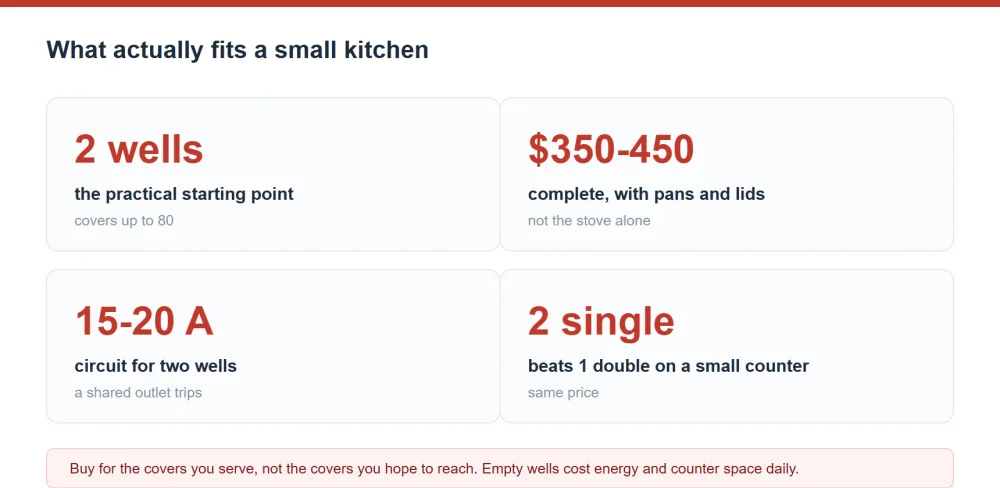
Short answer: A restaurant serving under 60 covers a day should start with two single-well electric units at $240–320, not a four-well line. Total cost including pans and lids is $350–450, and it covers up to 80 covers. Add a third well only once guest numbers exceed 60 a day. See buffet station equipment for the entry models.
Running a small to medium-sized restaurant comes with a unique set of challenges. Unlike large hotel buffets with expansive kitchens and limitless budgets, smaller establishments must balance quality, efficiency, and cost-effectiveness in every equipment purchase. One of the most critical pieces of equipment for any self-service or buffet-style restaurant is the buffet stove—a device that keeps food at safe, appetizing temperatures throughout service. Choosing the wrong model can lead to wasted energy, inconsistent food quality, and frustrated customers, while the right one can streamline operations, reduce labor costs, and boost your bottom line. In this guide, we'll break down the best buffet stoves for small to medium-sized restaurants, key selection criteria, and how to maximize your investment.

Small and medium-sized restaurants (SMRs) typically seat between 30 and 150 guests, with buffet setups that range from a few self-service stations to a full spread of hot and cold dishes. Space is almost always at a premium: you might have a compact kitchen with limited counter space, or a buffet line that needs to fit into a narrow dining area. Budget constraints also play a major role—you can't justify spending $5,000 on a high-end unit designed for a 500-guest hotel banquet. Instead, you need a buffet stove that delivers reliable performance, fits your space, and offers a strong return on investment (ROI) over time.
When evaluating buffet stoves for SMRs, start with your daily operational needs. How many guests do you serve per meal? What types of dishes do you keep warm (soups, entrees, sides, desserts)? Do you need electric or fuel-powered units? Electric models are ideal for indoor use, with precise temperature control and no open flames, while fuel-powered (alcohol or gel) units offer portability for outdoor events or pop-up setups. For most small restaurants, electric buffet stoves are the go-to choice for their safety and consistency.

Electric Chafing Dish Food Warmer
This 400W commercial-grade electric chafing dish is tailor-made for small restaurants, with a compact GN 1/1 size food pan that fits most standard buffet setups. Its adjustable temperature range (60–93°C) lets you keep everything from delicate sauces to hearty stews at optimal serving temperatures, while the 304 food-grade stainless steel construction ensures durability even with daily use. The digital temperature control eliminates guesswork, and the 2.5L water tank provides consistent heat without frequent refills. It's CE, ETL, and RoHS certified, with a rapid 15-minute heat-up time to 60°C—perfect for busy lunch rushes.
Next, consider capacity. A small cafe with a limited breakfast buffet might only need a 5.5L unit, while a medium-sized restaurant serving dinner for 100 guests will require 11L or larger models. Many modern buffet stoves offer modular designs, letting you stack or link units to expand capacity as your business grows. For example, the Electric Chafing Dish-W07 features a 900W heating element that reaches 60°C in just 8 minutes, with a 45–89°C adjustable range and built-in dry-heat protection to prevent accidents. Its OLED display makes it easy for staff to monitor temperatures at a glance, even during peak hours.

Electric Chafing Dish-W07
Designed for high-traffic small restaurants, this 900W electric chafing dish combines rapid heating with smart safety features. The intelligent temperature control system maintains your desired heat level automatically, while the anti-dry heat flash alarm and overheat protection eliminate fire risks. Its 304 stainless steel body resists corrosion and stains, and the GN 1/1 size pan is compatible with all standard food inserts. At just 12–15kg net weight, it's easy to move between buffet stations or clean at the end of the shift. This model is a favorite among café owners and boutique restaurateurs for its balance of power and affordability.

Safety should never be an afterthought for small restaurant owners. Look for units with automatic shut-off, dry-burn protection, and cool-touch exteriors to protect your staff from burns. The Electric Chafing Dishes-W20 takes safety a step further with an OLED touchscreen that lets you set precise temperatures and receive alerts if the water level drops too low. Its 3-layer base distributes heat evenly, eliminating hot spots that can overcook food or damage the unit over time. For restaurants that serve both hot and cold dishes, consider a dual-zone model that can handle both warming and holding tasks in one compact footprint.
Below is a comparison of our top 3 recommended buffet stoves for small to medium-sized restaurants, highlighting key specs to help you choose the best fit:
| Model | Power | Capacity | Heat-Up Time to 60°C | Temperature Range | Key Features |
|---|---|---|---|---|---|
| Electric Chafing Dish Food Warmer (871) | 400W | GN 1/1 (530×325mm) | 15 minutes | 60–93°C | Digital control, 2.5L water tank, CE/ETL certified |
| Electric Chafing Dish-W07 (865) | 900W | GN 1/1 (530×325mm) | 8 minutes | 45–89°C | Anti-dry alarm, OLED display, overheat protection |
| Electric Chafing Dishes-W20 (864) | 900W | GN 1/1 (530×325mm) | 8 minutes | 45–90°C | OLED touchscreen, 3-layer base, even heat distribution |
Maintenance is another critical factor for small restaurants with limited staff. Choose buffet stoves with removable food pans and water tanks for quick cleaning—most 304 stainless steel models can be wiped down with mild detergent and sanitized in minutes. Avoid units with hard-to-reach crevices where food residue can build up and harbor bacteria. The Electric Chafing Dish BA series offers multiple capacity options (5.5L–13.5L) with a hinged glass lid that lets you check food levels without lifting, reducing heat loss and contamination risks.

Electric Chafing Dishes-W20
This premium 900W model is built for medium-sized restaurants that need high performance without the bulk. The OLED touchscreen lets you adjust temperatures with a single tap, while the 3-layer stainless steel base ensures even heat distribution across the entire food pan. Its sleek, polished finish complements any buffet decor, and the dry-burn protection automatically shuts off the unit if water levels drop too low. With CE and ETL certifications, it meets strict safety standards for commercial kitchens. It's an investment that pays for itself in reduced food waste and labor costs within 6–12 months of regular use.
Choosing the best buffet stove for your small to medium-sized restaurant doesn't have to be overwhelming. Start by assessing your space, budget, and daily service needs, then prioritize models with reliable temperature control, safety features, and easy maintenance. The three models we've highlighted above are proven performers in real-world restaurant settings, offering the perfect balance of power, affordability, and durability. Remember: a high-quality buffet stove isn't just a kitchen appliance—it's a tool that helps you deliver consistent, delicious food to your guests, build a loyal customer base, and grow your business over time. Take the time to evaluate your options, and you'll find a unit that fits your needs and exceeds your expectations.
Browse the full chafing dish range for current models and configurations.
What Actually Fits a Small Restaurant
| Daily covers | Wells needed | Equipment | With pans and lids | Circuit | Staff |
|---|---|---|---|---|---|
| Under 30 | 1–2 | $120–260 | $200–340 | 10–15 A | Existing cook |
| 30–60 | 2 | $240–320 | $350–450 | 15–20 A | Existing cook |
| 60–100 | 3 | $360–520 | $480–700 | 20–25 A | One extra pair of hands |
| 100–160 | 4 | $480–800 | $640–1,100 | Dedicated 20 A | Two on the line |
| Over 160 | 5+ | $620+ | $850+ | Dedicated 30 A | Hire for it |
Small Kitchen Realities
| Constraint | Typical small restaurant | How to work with it | Cost or effect |
|---|---|---|---|
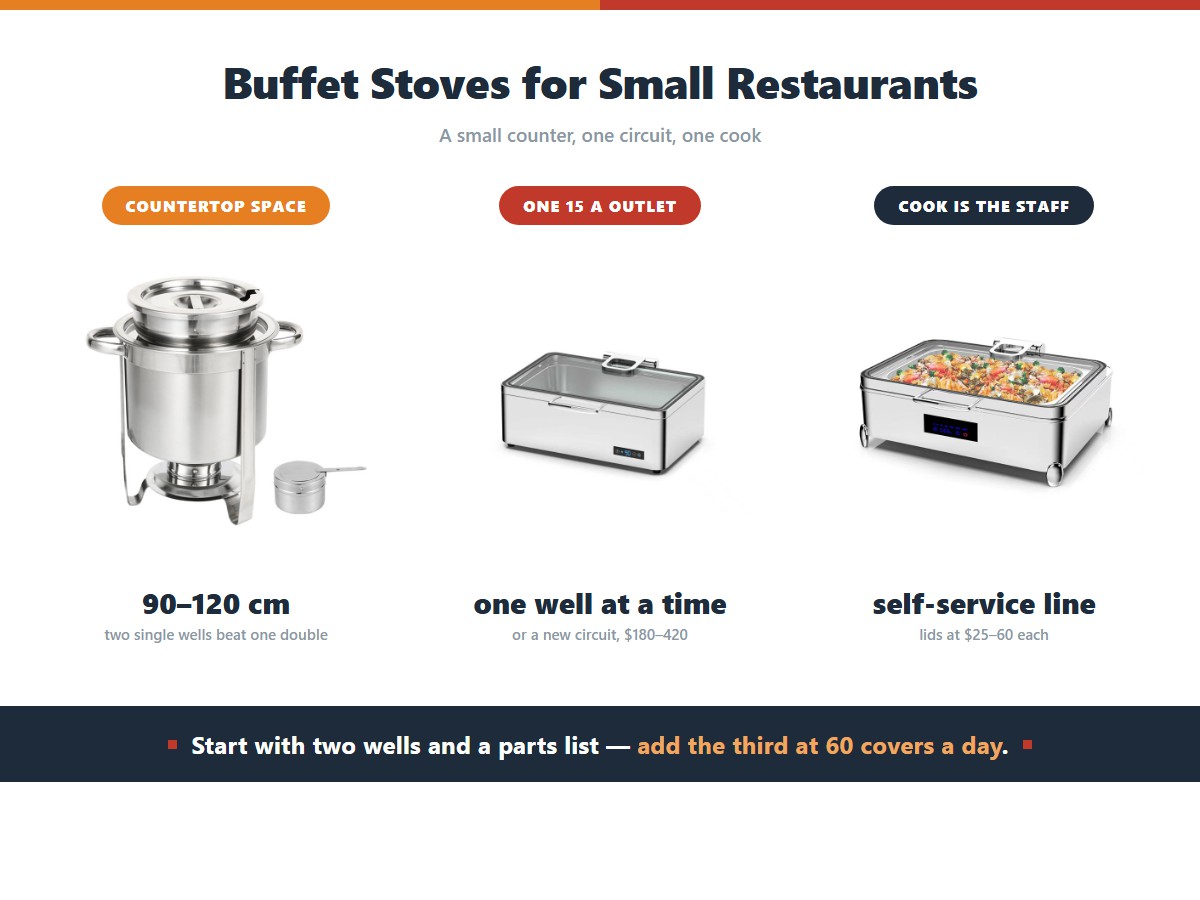
| Countertop space | 90–120 cm total | Two single wells beat one double | No extra cost |
| Circuit available | One 15 A shared outlet | One well at a time, or a new circuit | $180–420 for a circuit |
| Cook is the only staff | No second pair of hands | Self-service line with lids | Lids $25–60 each |
| Menu breadth | Two or three dishes | Match wells to dish count, not covers | Usually smaller than expected |
| Budget | $400–1,500 total | Start with two wells and a spare part list | Do not buy four |
The most common mistake in a small kitchen is buying for the covers they hope to reach rather than the covers they actually serve. A 60-cover restaurant that buys a six-well line will run four empty wells every day, and the empty wells still cost energy, counter space and cleaning time.
Frequently Asked Questions
What is the minimum buffet stove setup for a small restaurant?
Two single-well electric units at $240–320, or one two-well unit at the same price. With pans and lids that is $350–450 total, and it covers up to 80 covers comfortably.
How many guests can one buffet stove well serve?
Roughly 35–40 guests with two or three dishes on the line. A 60-cover restaurant typically needs two wells, not three, because each guest takes 250–350 g spread across dishes.
Can I run a buffet stove off a normal wall outlet?
One well, yes, at 1,500 W. Two or more need a dedicated 15–20 A circuit, and sharing with a coffee machine or dishwasher will trip the breaker during peak service.
Should a small restaurant buy gas or electric?
Electric, without exception indoors. It needs no ventilation, costs a third as much to run, controls temperature far better, and a small kitchen is exactly where carbon monoxide complaints start.
When should a small restaurant add more wells?
When guests regularly wait at one station for more than three minutes, or when the far end of the line drops below 65°C. Both mean capacity, not equipment, is the constraint.
Related reading
- Buffet Stoves and Food Waste: What Actually Helps
- Buffet Stoves in Restaurants: Pros and Cons, Unfiltered
- Are Buffet Stoves Worth It? Payback by Event Volume
- Buy Chafing Dishes in Bulk: Wholesale Prices for Restaurants
- 10 Wedding Buffet Ideas Guests Actually Remember
- Electric Buffet Warmer with Adjustable Thermostat for Restaurants