


Buffet Stoves for Banquets: Pros, Cons, Real Limits
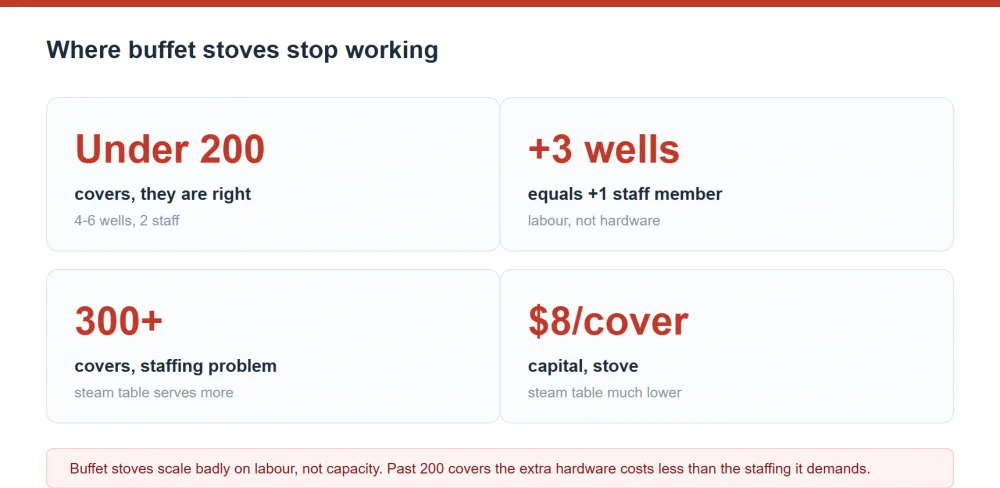
Short answer: Buffet stoves suit banquets of up to about 200 covers where food arrives chilled and the venue has a dedicated circuit. Beyond 300 covers they become a staff problem rather than a capacity problem, and a steam table or a kitchen cook line is the better answer. A four-well line at $480–900 handles 120–160 covers; size it too far and you need $1,200 of labour you did not budget. See buffet station equipment.
The Pros and Cons of Buffet Stoves for Large Events and Banquets
When planning large-scale events like weddings, corporate galas, or hotel banquets, choosing the right food warming equipment can make or break the guest experience. Buffet stoves (also known as commercial chafing dishes) have become a staple in high-volume catering, but are they the right fit for every large event? In this guide, we break down the key advantages and disadvantages to help you make an informed decision for your next big gathering.

What Are Buffet Stoves?
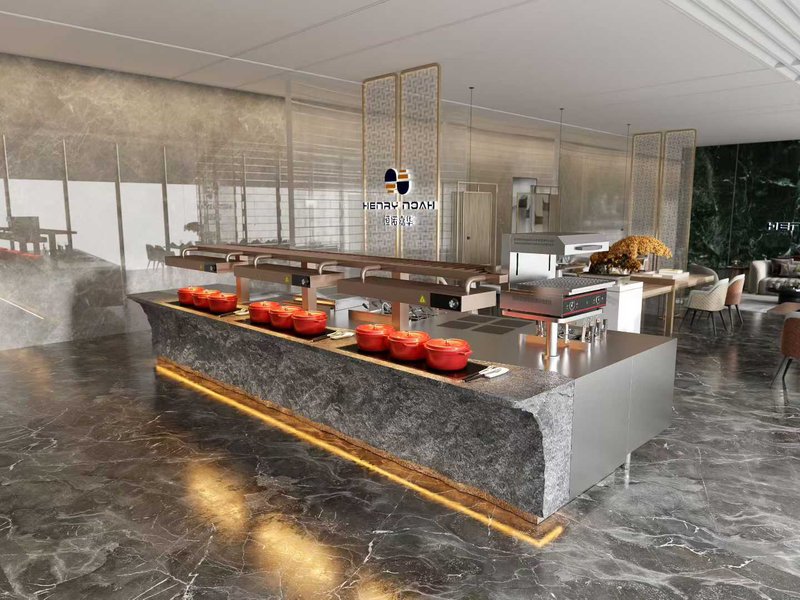
Buffet stoves are commercial-grade food warming units designed to maintain optimal serving temperatures for large quantities of food. Unlike traditional chafing dishes that rely on canned fuel, modern buffet stoves use electric or gas-powered heating elements with precise temperature controls. They come in various configurations—from single-pan units to multi-pan workstations—and are built to withstand the demands of high-traffic catering environments.
Top Pros of Using Buffet Stoves for Large Events
For events serving 200+ guests, buffet stoves offer several unmatched advantages:
- Consistent Temperature Control: Electric models feature digital thermostats that maintain food between 60-90°C, eliminating the temperature fluctuations common with canned fuel chafing dishes. This ensures every guest gets safely heated food, even during 4+ hour service windows.
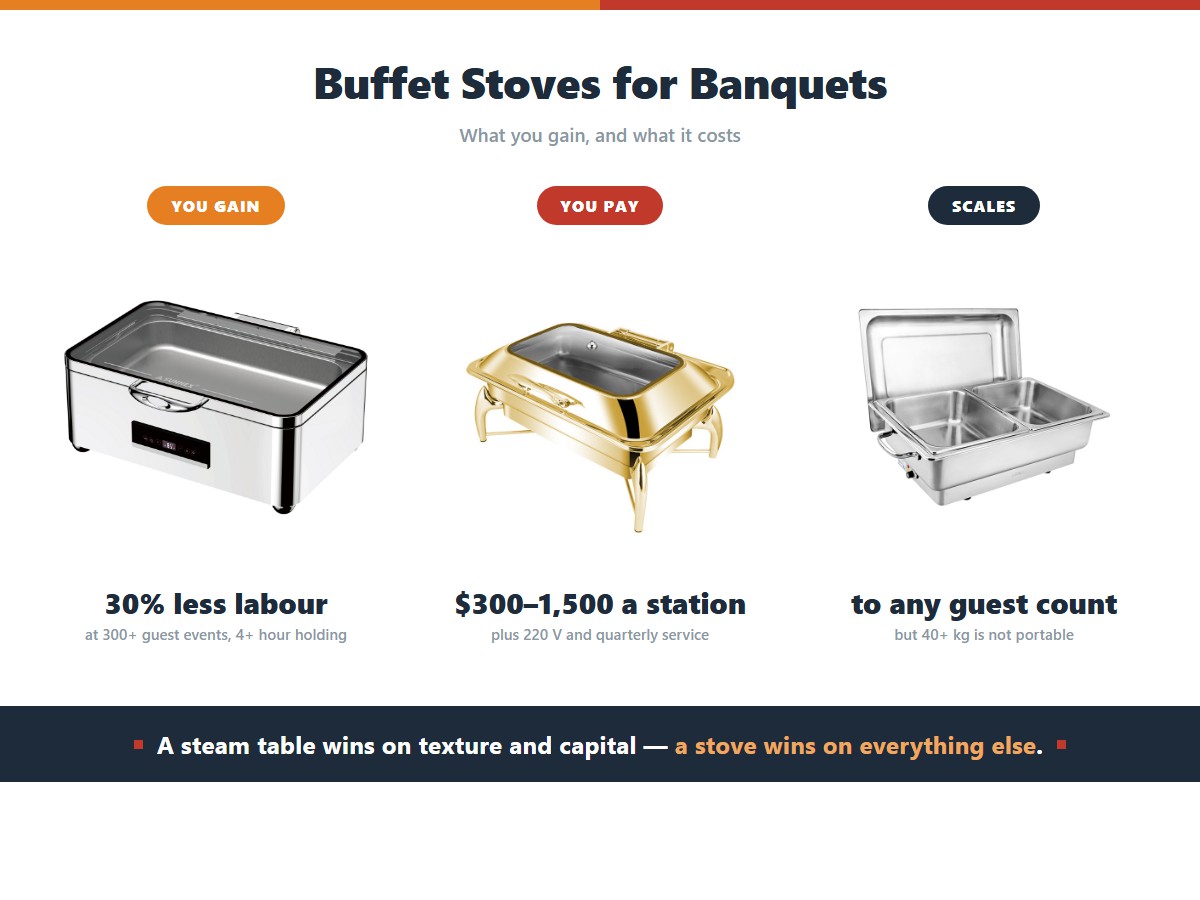
- Reduced Labor Costs: With automatic temperature maintenance, staff no longer need to monitor fuel levels or replace cans mid-event. One study found buffet stoves reduce catering labor requirements by 30% for events over 300 guests.
- Energy Efficiency: Modern units like the Electric Chafing Dish-W07 boast thermal efficiency ≥80%, cutting energy costs by up to 40% compared to traditional heating methods over a 6-month period.
- Scalability: Modular designs let you add pans as guest counts grow. A single 900W unit can handle 50 guests, while a 4-pan workstation can serve 300+ without additional equipment.
- Enhanced Food Safety: Built-in overheat protection, anti-dry burn alarms, and sealed heating elements reduce the risk of foodborne illness and kitchen accidents.
Key Considerations (Cons) for Large Event Use
While buffet stoves excel in many scenarios, they aren't without drawbacks for large-scale catering:
- High Upfront Cost: Commercial-grade units range from $300-$1500 per station, compared to $50-$100 for basic chafing dish sets. For small catering businesses, this can strain initial budgets.
- Venue Infrastructure Requirements: Electric models require dedicated 220V outlets, while gas units need proper ventilation and gas line access. Older event venues may lack these facilities, adding setup costs.
- Maintenance Needs: Heating elements, thermostats, and water tanks require quarterly professional cleaning to prevent mineral buildup and ensure consistent performance. Neglecting maintenance can lead to mid-event failures.
- Less Portability: A 4-pan electric workstation weighs 40+ kg, making it harder to transport than lightweight chafing dishes. This can increase logistics costs for off-site events.
- Learning Curve: Staff need training to operate digital temperature controls and safety features. Without proper training, there's a risk of overheating food or triggering safety alarms mid-service.
Pros vs Cons Comparison Table
| Pros of Buffet Stoves for Large Events | Cons of Buffet Stoves for Large Events |
|---|---|
| Consistent temperature maintenance for 4+ hour service | High initial investment ($300-$1500 per station) |
| Reduce labor costs by 30% for 300+ guest events | Require 220V outlets or gas line access |
| 80%+ thermal efficiency lowers long-term energy costs | Quarterly professional maintenance required |
| Scalable modular designs fit any guest count | 40+ kg weight reduces portability |
| Integrated safety features reduce accident risks | Staff training needed for digital controls |
| GN 1/1 pan compatibility works with standard buffet serveware | Replacement heating elements cost $100+ each |
Final Verdict: Are They Right for Your Event?
Buffet stoves are an excellent choice for large events if you're willing to invest in infrastructure and staff training. They shine for 200+ guest weddings, hotel banquets, and corporate galas where consistent food temperature and reduced labor are priorities. For smaller events (under 150 guests) or venues with limited utilities, traditional chafing dishes may still be a better fit.
When selecting a unit, prioritize models with adjustable thermostats, safety certifications (CE/ETL), and durable 304 stainless steel construction. Pair your stove with high-quality chafing dishes from BAVA's collection to create a seamless, professional buffet experience that impresses guests and streamlines your catering operations.
Browse the full chafing dish range for current models and configurations.
Where Buffet Stoves Stop Being the Answer
| Cover count | Wells needed | Equipment | Staff on line | Verdict |
|---|---|---|---|---|
| Under 50 | 1–2 | $240–400 | 1 | Comfortable |
| 50–100 | 3 | $420–700 | 1 | Comfortable |
| 100–200 | 4–6 | $480–900 | 2 | Correct answer |
| 200–300 | 7–9 | $900–1,400 | 3 | Borderline |
| 300–500 | 10–14 | $1,600–2,600 | 4–5 | Staffing problem |
| Over 500 | 15+ | $2,400+ | 6+ | Steam table or kitchen |
Pros and Cons, Weighted
| Factor | Buffet stoves | Steam table | Best at | Score for stoves |
|---|---|---|---|---|
| Heating cold food | Strong | Weak | Chilled delivery | 5/5 |
| Holding texture, starches | Weak | Strong | Rice, pasta | 2/5 |
| Setup speed | 10–15 min | 30–45 min | Short set-up windows | 5/5 |
| Guests per unit | 35–40 | 100–180 | Large covers | 2/5 |
| Running cost | Low | Medium | Frequent service | 4/5 |
| Portability | Moderate | Poor | Room changes | 4/5 |
| Cleaning burden | Low | High, descale | Hard water sites | 5/5 |
| Capital per guest | High | Low | Tight budgets | 2/5 |
The clearest honest limitation: buffet stoves scale badly on labour, not on hardware. Every extra three wells adds roughly one staff member, so past200 covers the equipment cost falls as a share of the total while the labour cost climbs. That is the point at which a steam table becomes cheaper overall, not better equipment.
Frequently Asked Questions
Are buffet stoves suitable for large banquets?
Up to about 200 covers, yes. Beyond that the constraint becomes staffing rather than capacity: every three extra wells needs another person on the line, and a steam table serves 100–180 covers from one unit.
What is the biggest disadvantage of buffet stoves at banquets?
Staffing. The equipment scales fine but the supervision does not, and past 200 covers you spend more on labour than the extra hardware ever saved.
Are buffet stoves or steam tables better for a 300-cover banquet?
Steam tables, on balance. Three units cover the volume with fewer staff and better texture on starches, at the cost of a 30–45 minute setup and weekly descaling.
How long does it take to set up buffet stoves for a banquet?
Ten to fifteen minutes of preheat per unit, all in parallel, so a four-well line is ready in about fifteen minutes. Add 20–25 minutes for loading pans if food is being portioned on site.
Can buffet stoves handle a banquet with no on-site kitchen?
Yes, that is the strongest argument for them. They reheat chilled delivered food on site without gas supply, extraction or a cooking permit, which a kitchen-based alternative would require.
Related reading
- Are Buffet Stoves Worth It? Payback by Event Volume
- 5 Benefits of Buffet Stoves for Catering Businesses
- Buffet Stoves and Menu Design: 4 Ways to Sell More Covers
- Energy-Efficient Buffet Stoves: What the Label Won't Tell You
- Buffet Equipment Maintenance Schedule: Don't Wait Until It Breaks
- Buffet Stoves in Restaurants: Pros and Cons, Unfiltered