




Holding 60°C All Service: What Buffet Stoves Must Do
Short answer: Holding above 60°C for a full service depends on three things: a calibrated thermostat that cuts out within 2°C of setpoint, a well sized so the mass does not overwhelm the element, and lids between batches. A 1,500 W well with 4 L of food reaches 70°C in 25–30 minutes and holds within ±3°C. Verify at the pan edge, not the centre. See buffet station equipment.
How Buffet Stoves Ensure Consistent Food Temperature Throughout Service
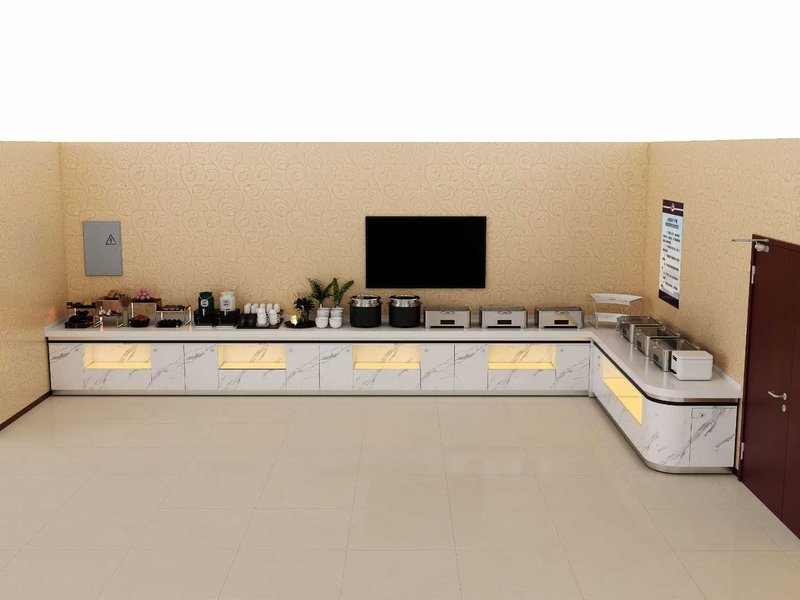
Maintaining consistent food temperature is a cornerstone of successful buffet operations, whether in high-end hotels, bustling restaurants, or large-scale catering events. Guests expect hot dishes to stay piping hot, cold dishes to remain chilled, and every serving to retain its intended flavor and texture from the first plate to the last. This is where commercial buffet stoves—specifically electric chafing dishes—play a pivotal role. Unlike improvised heating solutions or outdated equipment, modern buffet stoves are engineered with precision temperature control mechanisms that eliminate hot spots, prevent undercooking or overcooking, and comply with strict food safety regulations. In this guide, we'll explore the technology behind consistent heating in buffet stoves, key features to look for, and top product recommendations to elevate your food service.
The Science of Consistent Heating in Buffet Stoves
At the core of every reliable buffet stove is a thermal management system designed to distribute heat evenly across the entire food pan. Traditional heating methods, such as open flames or basic electric coils, often create uneven temperature zones—edges may burn while centers remain undercooked. Modern buffet stoves address this with three key innovations:
- Full-immersion water baths: Most commercial chafing dishes use a water chamber between the heating element and the food pan. Water has a high specific heat capacity, meaning it absorbs and distributes heat slowly and evenly, eliminating direct contact between the heating source and the food container.
- Digital temperature sensors: Advanced models integrate real-time thermostats that monitor water bath temperature continuously, adjusting power output to maintain a setpoint within ±1°C. This prevents temperature fluctuations caused by opening lids, adding cold food, or ambient room changes.
- Multi-zone heating elements: Premium units feature separate heating zones for different sections of the pan, ensuring that even when the pan is partially filled, all areas maintain the target temperature.
Key Features for Temperature Consistency
When selecting a buffet stove for your establishment, prioritize these features that directly impact temperature uniformity:
| Feature | Benefit for Temperature Control | Recommended Specification |
|---|---|---|
| Digital Thermostat | Maintains precise temperature (±1°C) automatically | Adjustable range 45–95°C with LED display |
| Water Bath Design | Even heat distribution, no direct contact with food pan | Stainless steel sealed water chamber |
| Rapid Heat-Up | Reaches operating temperature quickly after adding cold food | Under 15 minutes to 60°C |
| Dry-Burn Protection | Automatically shuts off if water level is low | Integrated sensor with alarm |
| Tempered Glass Lid | Retains heat while allowing visual monitoring | Hinged or roll-top with viewing window |
| Thermal Efficiency ≥80% | Minimizes energy waste while keeping food hot | High-efficiency heating element |
Best Practices for Maintaining Temperature Consistency
Even the best equipment requires proper operation to deliver consistent results. Follow these guidelines:
- Preheat thoroughly: Always allow the water bath to reach target temperature before adding food pans. This prevents initial temperature drops that can affect food quality.
- Monitor water levels: Check the water chamber regularly. Low water causes hot spots and can trigger dry-burn protection, interrupting service.
- Use appropriate lids: Keep lids closed as much as possible. Each opening loses heat and introduces humidity fluctuations.
- Avoid overloading: While these units handle high volume, crowding the food pan can create cold spots. Maintain proper food distribution.
- Regular calibration: Periodically verify thermostat accuracy with a separate food thermometer to ensure the displayed temperature matches actual conditions.
Energy Efficiency and Cost Savings
Consistent temperature control isn't just about food quality—it directly impacts your bottom line. Modern buffet stoves with high thermal efficiency (≥80%) reduce electricity consumption while maintaining performance. Consider that a 900W unit running for 8 hours consumes 7.2 kWh; at $0.12/kWh, that's about $0.86 per day. Compared to older models that may waste 30–40% of energy through poor insulation or inefficient heating elements, upgrading to a high-efficiency buffet stove can save hundreds of dollars annually for busy establishments.
Moreover, consistent temperatures reduce food waste. When food stays at the correct temperature, it maintains quality longer, reducing the need to discard items that have become overcooked or unsafe. This is particularly important for high-margin dishes like seafood, carved meats, and specialty sauces.
Integration with Your Existing Setup
Implementing new buffet stoves doesn't require a complete kitchen overhaul. Most commercial units are designed with standard GN pan compatibility, allowing seamless integration with existing food pans, serving utensils, and buffet lines. Consider the following when planning your setup:
- Space planning: Allow at least 5cm clearance around each unit for airflow and maintenance access.
- Power requirements: High-wattage models (900W–1100W) may require dedicated circuits. Consult an electrician if adding multiple units.
- Staff training: Ensure your team understands temperature controls, water refill procedures, and safety features to maximize equipment lifespan.
Conclusion
Consistent food temperature throughout service is achievable with the right buffet stove technology. By selecting units with digital temperature control, efficient water bath heating, and robust safety features, you protect food quality, enhance guest satisfaction, and maintain compliance with health regulations. The Full Size 11L Electric Chafer and Electric Chafing Dish W07 represent excellent choices for different operational needs—whether you prioritize rapid heat-up, intelligent controls, or high-capacity service. Invest in reliable temperature management today, and your guests will taste the difference in every serving.
Remember: in the buffet business, consistency isn't just a goal—it's the standard your customers expect and deserve.
Browse the full chafing dish range for current models and configurations.
Why Temperature Falls During Service
| Cause | Magnitude | Frequency | Fix | Cost |
|---|---|---|---|---|
| Pan edge cooling | 5–12°C below centre | Every service | Probe the edge, size the well | $0 |
| Well overloaded | 2–4°C, longer recovery | Peak service | Fill to two-thirds | $0 |
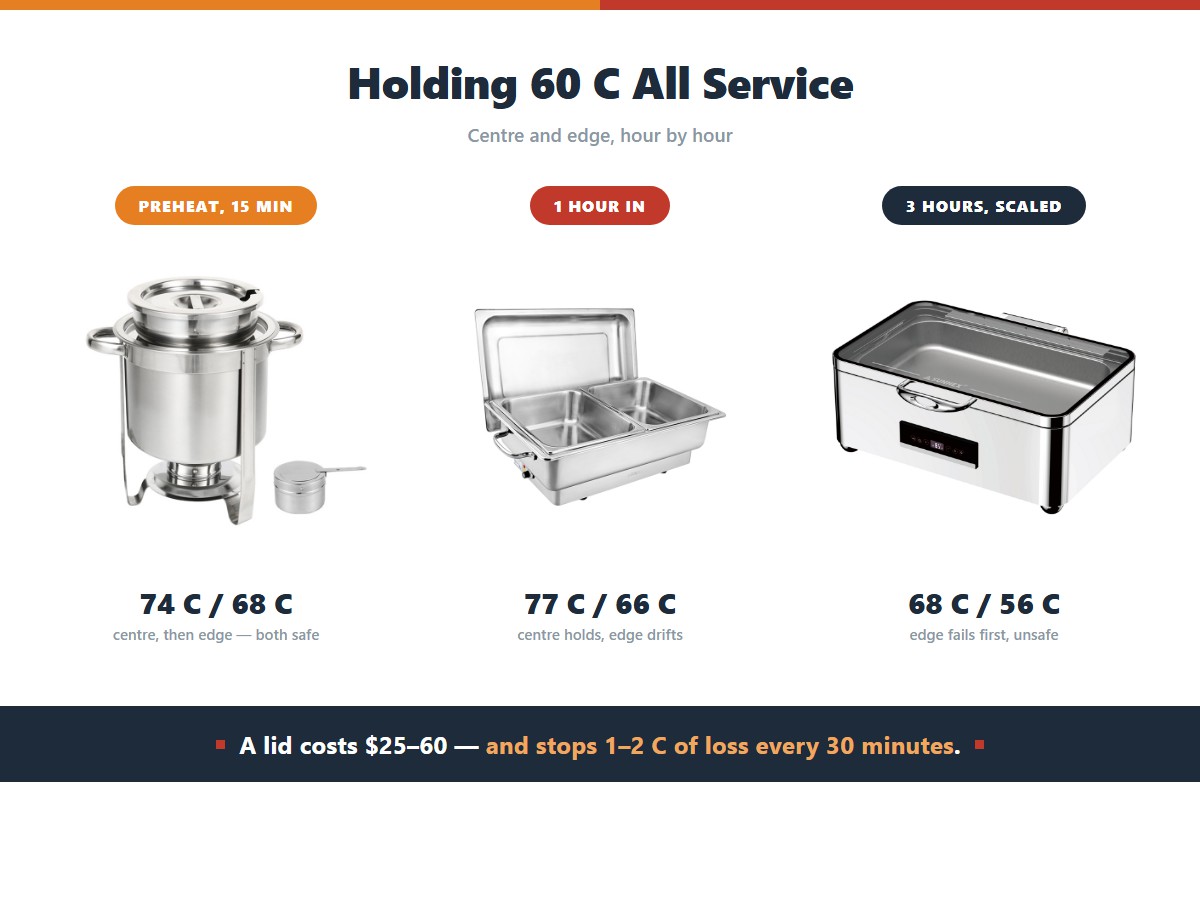
| Lid left open | 1–2°C per 30 min | Self-service lines | Close between batches | $25–60 per lid |
| Element scaled | 5–15°C shortfall | After 6–12 months | Weekly descale | $10–15 per month |
| Thermostat drift | 3–8°C | After 12–24 months | Annual calibration | $22–45 part |
| Circuit under load | 2–5°C | Peak only | Dedicated 20 A circuit | $180–420 |
Temperature Drift Over a Service
| Time | Setpoint | Centre reading | Edge reading | Safe |
|---|---|---|---|---|
| Preheat, 15 min | 75°C | 74°C | 68°C | Yes |
| Load at 85°C | 75°C | 85°C | 72°C | Yes |
| 30 min in | 75°C | 79°C | 69°C | Yes |
| 1 hour in | 75°C | 77°C | 66°C | Yes |
| 2 hours in, lid open | 75°C | 74°C | 61°C | Borderline |
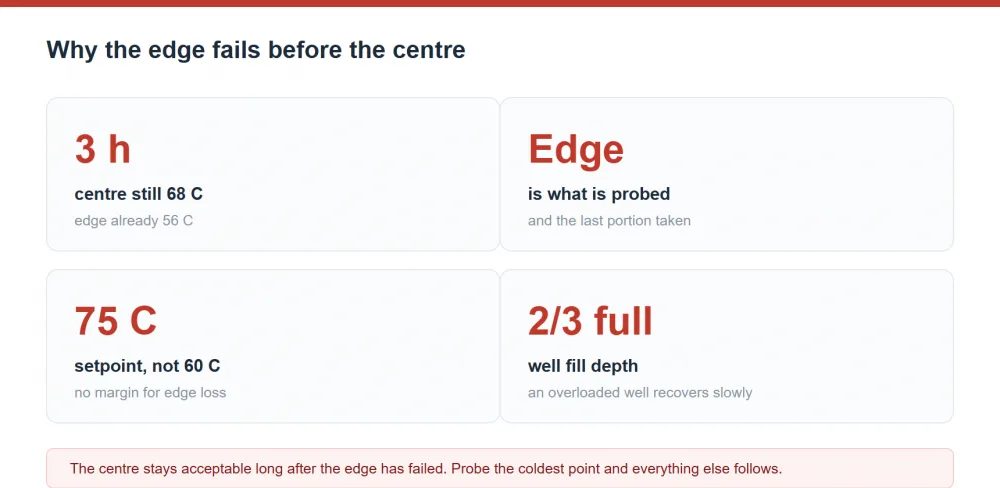
| 3 hours in, scaled element | 75°C | 68°C | 56°C | No |
The pattern matters more than any single number: the centre stays acceptable long after the edge has failed. An inspector probes the edge, and an unhappy guest takes the last portion from the edge. Probe the coldest point and everything else follows from that.
Frequently Asked Questions
How do I keep buffet food above 60°C for the whole service?
Hold at 70–75°C rather than 60, size wells so food fills no more than two-thirds, keep lids closed between batches, and verify at the pan edge. Setting the dial at exactly 60°C leaves no margin for edge cooling.
Should I probe the centre or the edge of the pan?
The edge, always. The centre can read 75°C while the edge reads 58°C, and that is both the point an inspector probes and the portion a guest takes last.
Why does my buffet stove not hold temperature?
Four usual causes: a scaled element reducing heat output by 5–15°C, a drifted thermostat, an overloaded well, or a circuit sharing load with other equipment. Test them in that order, cheapest first.
How often should I check buffet holding temperature?
First pan at fifteen minutes, then hourly, and always after a pan swap or a fuel change. Record the readings, because an unrecorded check does not count as a check during an inspection.
Does a lid really make a difference?
Yes, 1–2°C per 30 minutes, which is usually the difference between a safe and a borderline edge reading over a three-hour service. Lids cost $25–60 per well.
Related reading
- Can Buffet Stoves Cut Service Time? 5 Benefits
- Self-Service Buffets: Why Buffet Stoves Win
- Guest Satisfaction at Self-Service: What Buffet Stoves Change
- Fewer Waitstaff? What Buffet Stoves Really Replace
- School Cafeteria Buffet: HACCP Checklist That Passes Audit
- Electric or Fuel Chafer? A 60-Second Decision Test