


Commercial Chafing Dish: What Pros Actually Need
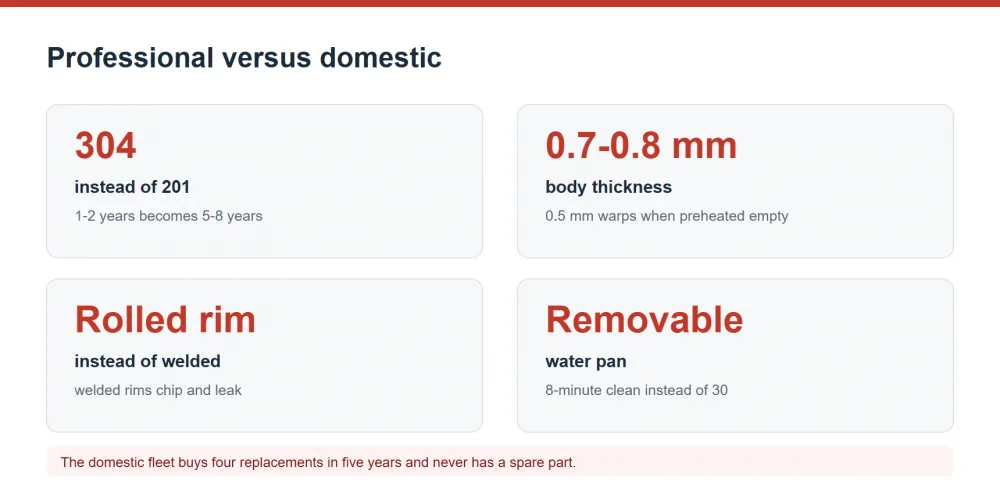
Short answer: A professional catering chafing dish differs from a domestic one in four measurable ways: 304 stainless at 0.7–0.8 mm instead of 201 at 0.5, a published spare-parts list, a water pan that is removable for cleaning, and a rolled rim rather than a welded seam. Expect $60–160 per unit rather than $25–45. See chafing dish ranges.
When it comes to professional catering, having the right equipment can make or break your service. Among all the essential tools in a caterer’s arsenal, the commercial chafing dish stands out as a non-negotiable item. Whether you’re running a hotel buffet, managing a busy restaurant, or catering large-scale events like weddings and corporate galas, a high-quality commercial chafing dish ensures your food stays warm, fresh, and safe for hours on end.

Unlike residential chafing dishes designed for small home parties, commercial-grade models are built to withstand the rigors of daily use in high-volume environments. They feature thicker stainless steel construction, more powerful heating elements (for electric models), and larger capacities to serve dozens or even hundreds of guests per event. For professional caterers, investing in the right commercial chafing dish isn’t just a purchase—it’s a long-term investment in your business’s reputation and efficiency.
One of the key advantages of commercial chafing dishes is their versatility. They can be used to keep a wide range of dishes warm, from breakfast buffet items like scrambled eggs and sausages to lunch and dinner staples like roasted meats, vegetables, and casseroles. Many models also come with adjustable temperature controls, allowing you to set the perfect heat level for different types of food to prevent overcooking or drying out.
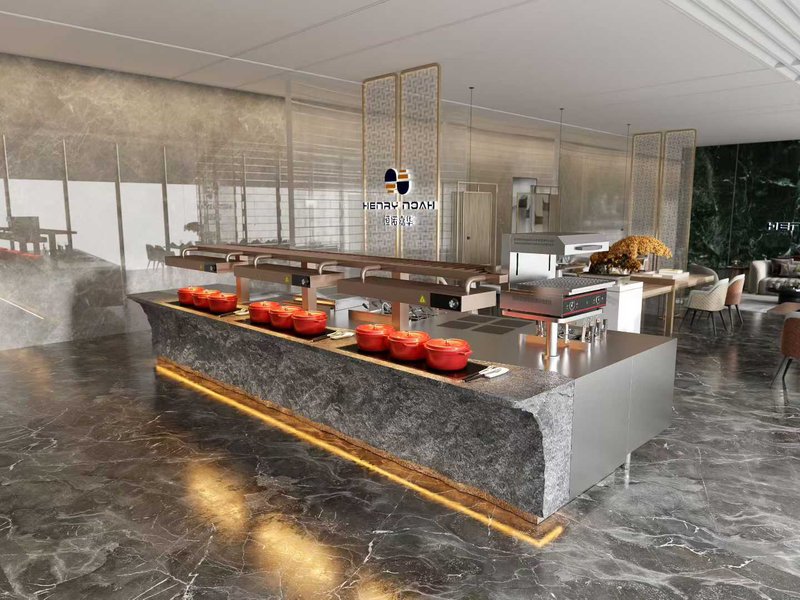
When choosing a commercial chafing dish for your catering business, there are several factors to consider. First and foremost is the material: 304 stainless steel is the gold standard for food-grade equipment, as it’s rust-resistant, easy to clean, and safe for direct contact with food. Avoid cheaper models made with lower-grade steel or aluminum, which can corrode over time and pose food safety risks.
Next, consider the heating type: electric vs. fuel-powered. Electric models are ideal for indoor use, as they provide consistent, adjustable heat without the need for open flames or fuel cans. They’re also more energy-efficient in the long run. Fuel-powered models (using alcohol gel or liquid fuel) are better suited for outdoor events or venues without easy access to power outlets, as they’re fully portable.
Capacity is another critical factor. Commercial chafing dishes typically range from 5L to 13.5L per pan. For small catering businesses serving 50-100 guests per event, a 5.5L-8L model may suffice. For larger events with 200+ guests, opt for 11L-13.5L full-size models or double-pan units that can hold twice as much food.
Top Commercial Chafing Dishes for Professional Caterers

Full Size 11L Electric Chafer
The BAVA Full Size 11L Electric Chafer from BAVA’s is a top choice for hotels and high-volume caterers. With 1100W of power, it heats up to optimal temperature in just 12 minutes, with a thermal efficiency rate of 80% or higher. It features a digital temperature display, smart mode for automatic heat adjustment, and polished stainless steel construction that’s both durable and easy to clean. The GN 1/1 size food pan (530x325mm) is compatible with standard commercial kitchen equipment, making it a seamless addition to any catering setup.

Electric Chafing Dish Food Warmer
This 400W commercial electric chafing dish is designed for hotels and catering businesses that need reliable, consistent heating. It features adjustable temperature control (60–93°C / 140–200°F) to suit different types of food, a 2.5L water tank for even heat distribution, and food-grade 304 stainless steel construction. It’s certified by CE, ETL, RoHS, and FDA, ensuring compliance with global food safety standards. The compact size (610×400×320mm) makes it ideal for smaller buffet stations or restaurants with limited space.
Maintenance Tips for Long-Lasting Use
To get the most out of your commercial chafing dish, regular maintenance is essential. After each use, empty any remaining food, wash the food pan and lid with warm soapy water, and dry thoroughly to prevent water spots or rust. For electric models, wipe down the exterior with a damp cloth and avoid submerging the heating element in water. For fuel-powered models, clean the burner area regularly to remove soot or fuel residue, and store fuel cans in a cool, dry place away from open flames.
Inspect your chafing dishes regularly for signs of wear, such as loose hinges, damaged power cords, or corroded surfaces. Replace any faulty parts immediately to avoid food safety risks or equipment failure during events. With proper care, a high-quality commercial chafing dish can last 5-10 years, even with daily use in busy catering environments.
Conclusion
Choosing the right commercial chafing dish for professional catering use is a decision that impacts your service quality, food safety, and operational efficiency. By prioritizing 304 stainless steel construction, appropriate heating type for your use case, and sufficient capacity for your event sizes, you can find a model that meets your business’s needs for years to come. Pair your chafing dish with reliable catering supplies from trusted brands like BAVA, and you’ll be well-equipped to deliver exceptional food service at every event.
Browse the full chafing dish range for current models and configurations.
Professional vs Domestic Chafing Dish
| Specification | Domestic | Professional catering | Why the difference matters |
|---|---|---|---|
| Steel grade | 201 | 304 | 201 pits with salt; 304 survives |
| Body thickness | 0.4–0.5 mm | 0.7–0.8 mm | Empty-pan heat warps thin steel |
| Rim construction | Welded seam | Rolled, seamless | Welded rims chip and leak |
| Water pan | Fixed | Removable | Cleaning and descaling |
| Fuel holders | 2 | 4, larger bore | Two hours per change becomes one |
| Spare parts list | Not published | Published with part numbers | Decides whether year 4 exists |
| Pan flatness tolerance | Not stated | ±1 mm | A warped pan leaks on the line |
| Price | $25–45 | $60–160 | 2–4× |
| Service life | 1–2 years | 5–8 years | 2–4× |
Five-Year Cost for a Six-Unit Fleet
| Purchase | Unit price | Six units | Replacements, 5 yr | Fuel, 600 services | Five-year total |
|---|---|---|---|---|---|
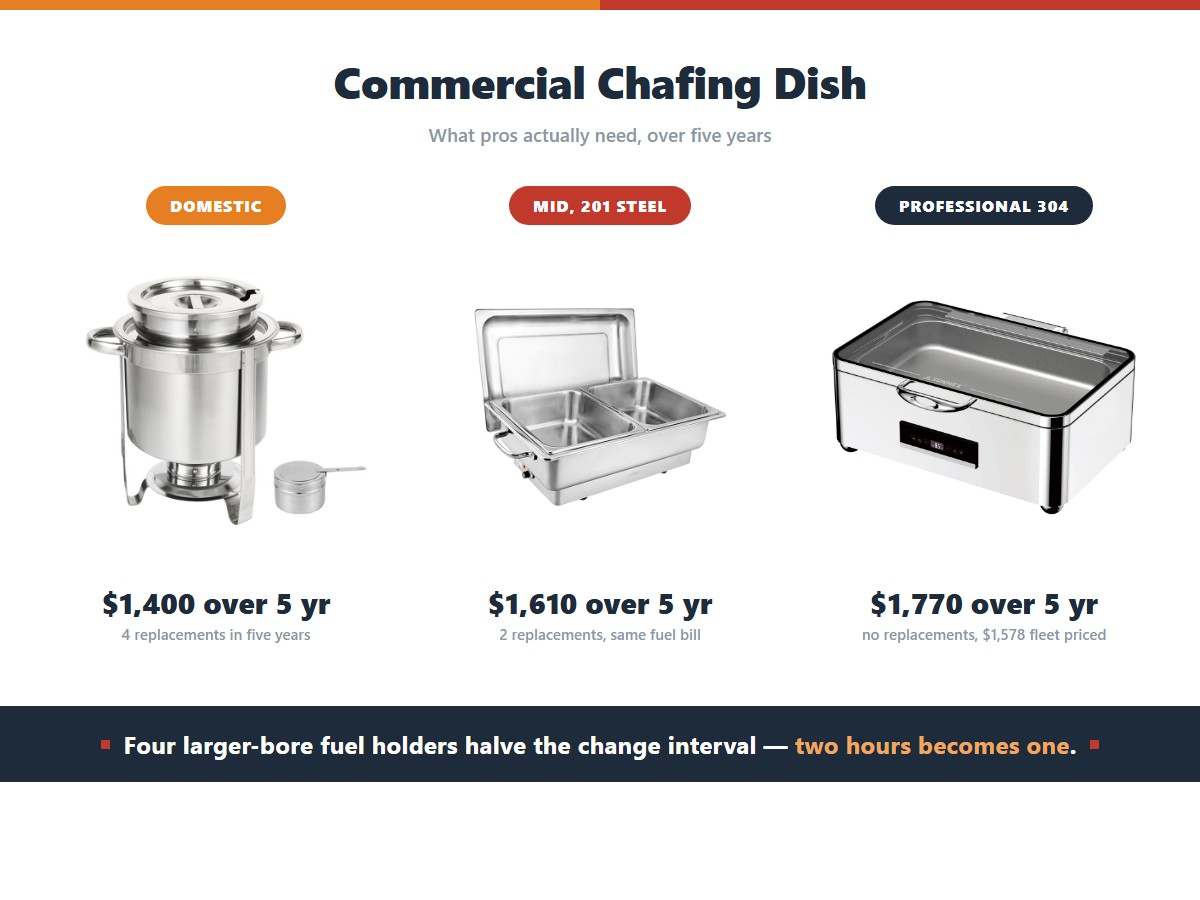
| Domestic | $35 | $210 | 4 units, $140 | $1,050 | $1,400 |
| Mid, 201 steel | $70 | $420 | 2 units, $140 | $1,050 | $1,610 |
| Professional 304 | $120 | $720 | 0 units, $0 | $1,050 | $1,770 |
| Professional 304, fleet priced | $88 | $528 | 0 units, $0 | $1,050 | $1,578 |
The interesting result is that the cheapest professional option is not the most expensive one over five years, and the domestic option is not the cheapest. The domestic fleet buys four replacements in five years and never has a spare part, which is the same arithmetic as the buffet stove element. Body weight only matters on a good unit.
Frequently Asked Questions
What makes a chafing dish professional grade?
Four measurable things: 304 stainless at 0.7–0.8 mm rather than 201 at 0.5, a rolled seamless rim rather than a welded seam, a removable water pan, and a published spare-parts list. Expect $60–160 per unit against $25–45 for a domestic one.
Is 304 stainless necessary for a catering chafing dish?
It is the difference between 1–2 years and 5–8 years of service. 201 stainless pits and rusts with salt and acidic food, and at 0.5 mm it also warps permanently when preheated empty. For professional use, 304 is not a premium feature, it is the specification.
Why does a removable water pan matter?
Because it is the difference between an 8-minute clean and a 30-minute one, and because a fixed water pan traps scale that eventually blocks heating. Over 600 services the cleaning time saved is 100+ hours across a six-unit fleet, which is far larger than the cost difference between the two designs.
How long does a professional chafing dish last?
Five to eight years with the fuel holders and wicks replaced on schedule, against one to two years for a domestic unit. The difference is the steel grade and the rim construction, and it shows up first as pitting around the fuel holders rather than as a crack.
Is a fleet price worth it for a catering business?
At six units or more, yes. Fleet pricing typically brings $120 units to about $88, which is the cheapest five-year cost in the table above because it avoids replacements. Below four units the discount rarely reaches the threshold and retail pricing is competitive again.
Related reading
- 2026 EU LFGB Compliance Updates for Imported Catering Equipment
- Buffet Warmer for Catering Events: Size and Power Guide
- Hidden Costs When Importing Catering Equipment
- Best Stainless Steel Chafing Dishes for Commercial Use
- Starting a Catering Business? Buy These 5 Things First
- Chafing Dish Fuel Gel: Long-Lasting Options for Catering