


Buffet Stove vs Traditional Warmers: Honest Comparison
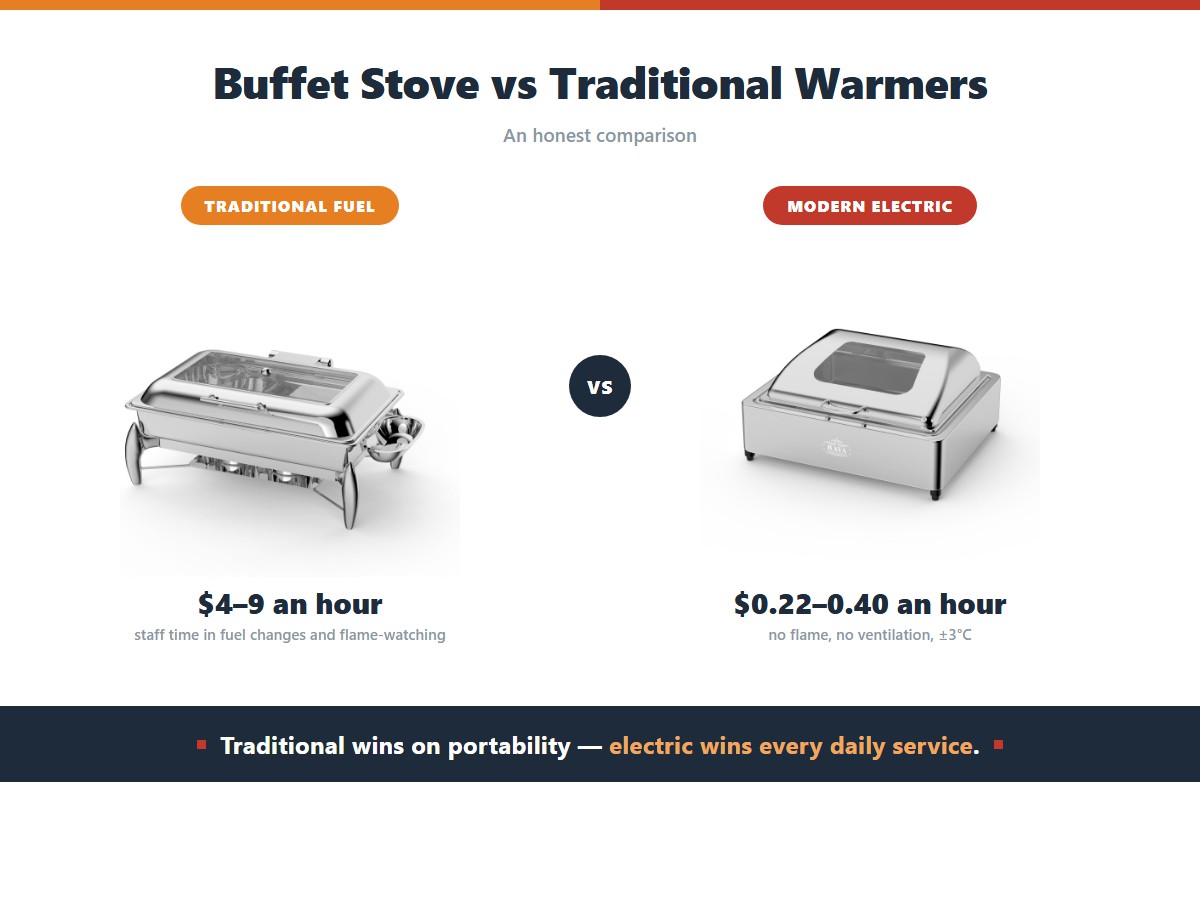
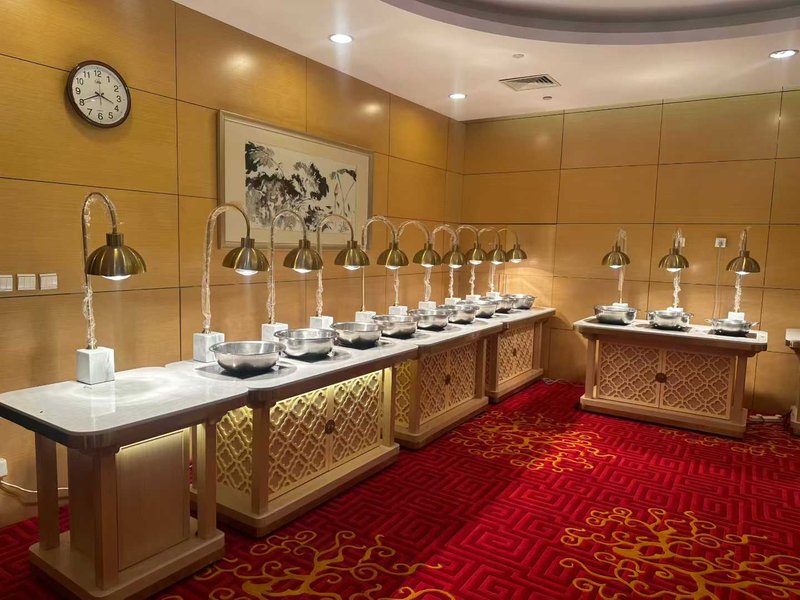
Short answer: Traditional warmers mean candles, Sterno cans and fuel lighters. A modern electric buffet stove delivers 1,500 W per well, holds within ±3°C, costs $0.22–0.40 an hour and needs no ventilation. The traditional option costs $4–9 an hour of staff time in fuel changes and monitoring. Same job, three to ten times the operating cost. See buffet station equipment.
The comparison is usually framed as old versus new, and that framing is what makes it dishonest. Traditional fuel warming and modern electric buffet stoves are not competing on the same axis, so the winner depends entirely on how many hours a month the equipment runs. A one-off event with no power supply is genuinely better served by a $110 fuel warmer than by a $320 stove plus a $900 generator. A hotel running a four-hour breakfast every morning is not close.
So the useful question is not which is better but where the crossover sits. It is around 20 service hours a month, and the reason is labour rather than fuel: below that threshold the capital saving is real and nobody is watching the flame, and above it the cost of fuel changes and flame monitoring overtakes everything else.
What “Traditional Warmer” Actually Means
The category covers more than one machine, and lumping them together is where most comparisons go wrong. Sterno-style fuel burners with a metal tray and a wick or a can of liquid fuel sit at one end. Chafing dishes with a Sterno can under a water pan sit in the middle and are the traditional hotel standard. Tea-light and candle warmers sit at the other end and hold food at around 40 °C, which is a different service altogether.
| Type | Typical price | Holding temperature | Control | Realistic use |
|---|---|---|---|---|
| Candle and tea-light warmer | $25–60 | 35–45°C | None | Ambient, not a hot holding device |
| Sterno chafing dish | $60–120 | 60–70°C | None, by burn rate | Hotel and banquet holding |
| Liquid fuel tray warmer | $95–220 | 60–75°C | Manual valve | Catering, long service |
| Propane buffet stove | $280–600 | 60–90°C | Manual valve | Mobile and outdoor catering |
| Electric buffet stove | $120–320 | 30–100°C | Thermostatic | Fixed commercial lines |
The candle warmer row is worth pausing on, because it is frequently sold as a food holding solution and it is not one. Holding at 40 °C for a long service puts food in the band that food safety rules treat as safe only for short periods, and it is the source of a great many temperature complaints that get blamed on the chef rather than on the equipment.
Where the Cost Difference Actually Sits
Vendors quote fuel cost because it is easy to quote and it flatters the fuel option less often than people expect. The honest comparison puts labour in the same column, because monitoring a flame for a three-hour service is staff time, and it is the item that flips the answer.
| Cost line | Electric, 1,500 W | Traditional fuel warmer | Difference |
|---|---|---|---|
| Capital cost per unit | $120–320 | $95–220 | Traditional cheaper |
| Energy or fuel per 4 h | $1.30 | $2.40–3.60 | Electric 2–3× cheaper |
| Staff attention per service | Occasional check | Fuel change every 2 h | 3–5× less labour |
| Labour at $22/h | $0.50–1.00 | $4.00–9.00 | 10–30× cheaper |
| Ventilation work | None | Required, carbon monoxide | Electric |
| Fire and burn risk | Low | Flame, spills, ash | Electric |
| Total cost, five years | $675–1,050 | Disposable by year four | Electric |
Two lines in that table deserve emphasis. The labour line is the reason the answer is not close for a permanent line, and it is almost never quoted by fuel suppliers, because a fuel change every two hours is invisible in an energy invoice. And the five-year line is where the capital comparison reverses entirely: a traditional tray warmer has no service life to plan around, because the burner and tray are consumed, so the apparent capital saving evaporates into replacement.
The Real Disadvantage of Electric That Nobody Mentions
The genuine argument against electric is the dependency it creates. A fixed line with electric stoves needs a dedicated 20–30 A circuit per four-well unit, which in an older building can mean a survey, a cable run and a load-bearing floor check before the first service. That cost is real, it is front-loaded, and it is invisible in any equipment comparison. Where it applies, a propane unit with a ventilated position can be the cheaper total answer even for a permanent line.
Safety and Compliance Are Not Close
Carbon monoxide from an open flame accumulates at floor level, which is why fuel equipment is specified for outdoor or well-ventilated service only. That is a code requirement and an insurance condition, not a preference. A venue with fuel equipment indoors is usually running a ventilation system that costs money to run and needs periodic testing, and that is a second cost line that never appears in the equipment comparison.
| Risk | Traditional fuel | Modern electric | Note |
|---|---|---|---|
| Carbon monoxide | Present indoors | None | Floor-level accumulation |
| Burns from handling | Likely, hot tray and flame | Low | Spilled fuel on clothing |
| Fire risk | Open flame, fuel storage on site | Overheat only | Fuel stock is a separate risk |
| Ventilation required | Yes | No | And tested periodically |
| Temperature control | ±10°C, by burn rate | ±3°C, thermostatic | Variance accumulates over 3 h |
On temperature, the ±10 °C figure is the one that matters over a long service. A manual valve burns the same way all evening, so a 10 °C error at the start is still a 10 °C error at the end, and across a three-hour service the far end of a pan drifts enough for the centre and the edge to be at genuinely different temperatures. That is the mechanism behind most “the food was cold” complaints at buffets.
Honest Cases Where Traditional Wins
There are situations where the traditional option is the right answer, and naming them is what makes the rest of the comparison credible.
| Situation | Why traditional is right | Modern alternative | Which to choose |
|---|---|---|---|
| One-off event, no power | Self-contained, nothing to install | Generator, $600–1,200 | Traditional |
| Marquee with no electrical supply | No wiring allowed | Temporary RCD supply | Traditional |
| Emergency overflow, 10 covers | Cheaper to own than to rent | Rent one, $80–150 per day | Traditional |
| Very low volume, 1 event a month | Capital beats operating cost | Nothing | Traditional |
| Any daily commercial service | — | — | Modern, decisively |
Every one of those rows sits below roughly 20 service hours a month, which is the crossover point mentioned at the start. It is worth being precise about why: the fuel option is not cheaper because the heat is free, it is cheaper because nobody is standing next to it checking the flame. That advantage disappears the moment the line is busy enough to need attention, and busy enough is what a daily service is.
Three Modern Units That Close the Gap
The gap between the categories narrowed mainly because modern units became cheaper, not because fuel got worse. Three electric models cover most of the demand that used to go to fuel equipment.

Full Size 11L Electric Chafer (1,100 W)
This 1,100 W full-size electric chafer replaces two traditional tray warmers in most hotel services, because a single 11 L well holds the volume and holds it within a few degrees rather than at the mercy of a burn rate. It reaches operating temperature in about 12 minutes, publishes a thermal efficiency of 80% or better, and the digital display with smart mode lets staff set a holding temperature and leave it there. The tempered glass window means food can be checked without opening the lid, which on a fuel unit means losing the flame adjustment you just made.

Electric Chafing Dish Food Warmer (400 W)
This 400 W unit is the direct replacement for the small Sterno dish, and it is the least disruptive swap in the category. The thermostat range of 60°C to 93°C holds at the same temperature a burning can would give, with no flame to monitor and no can to change every two hours. The 2.5 L tank is small enough to refill during service, the 304 stainless steel body is food-grade, and CE, ETL, RoHS and FDA certification is published rather than claimed, which matters for a venue that gets inspected.

Electric Chafing Dish W07 (900 W)
The 900 W W07 is the one that replaces a liquid fuel tray on a long banquet service, and the reason is recovery speed rather than capacity. It reaches 60°C in about 8 minutes, so a well can be refilled from the kitchen and be back in service before guests notice the gap, which is the practical objection to hot holding that fuel equipment has always struggled to answer. The 45°C to 89°C thermostat range handles several dishes at different settings, and the anti-dry alarm removes the single most common cause of both food damage and element failure.
The Decision in One Line
Count your service hours per month before you choose anything. Below about 20, the traditional fuel warmer is the cheaper purchase and will not cause you a problem. Above it, the labour of monitoring and refuelling makes the modern electric unit cheaper to own and safer to run, and the only question left is whether your electrical supply can carry it. If it cannot, the honest answer is a propane unit with a proper ventilated position, not a candle warmer pretending to be hot holding.
Modern Electric vs Traditional Fuel Warming
| Factor | Modern electric stove | Traditional fuel warmer | Difference |
|---|---|---|---|
| Temperature control | Thermostatic, ±3°C | Manual, ±10°C | Electric |
| Staff attention per hour | Occasional check | Fuel change every 2 h | 3–5× less labour |
| Labour cost per hour served | $0.25–0.50 | $4–9 | 10–30× cheaper |
| Energy or fuel cost per hour | $0.22–0.40 | $0.60–0.90 | 2–3× cheaper |
| Ventilation needed | None | Yes, carbon monoxide | Electric |
| Fire and burn risk | Low | Flame, spills, ash | Electric |
| Setup time | 12–15 min | 5 min, then supervise | Comparable |
| Capital cost | $240–450 | $95–220 | Traditional cheaper |
| Total cost, five years | $675–1,050 | Disposable by year four | Electric |
Honest Cases Where Traditional Wins
| Situation | Why traditional is right | Modern alternative | Which to choose |
|---|---|---|---|
| One-off event, no power | Self-contained, nothing to install | Generator, $600–1,200 | Traditional |
| Marquee with no electrical supply | No wiring allowed | Temporary RCD supply | Traditional |
| Emergency overflow, 10 covers | Cheaper to own than to rent | Rent one, $80–150 per day | Traditional |
| Very low volume, 1 event a month | Capital beats operating cost | Nothing | Traditional |
| Any daily commercial service | — | — | Modern, decisively |
The comparison is not as one-sided as vendor material suggests. A one-off event with no power genuinely is better served by a $110 fuel warmer than by a $320 stove plus a $900 generator. The point is narrower than marketing claims: below roughly 20 service hours a month, traditional fuel is fine, and above it the labour cost makes the decision obvious.
Frequently Asked Questions
Are traditional fuel warmers still worth using?
For one-off events with no power, and below about 20 service hours a month, yes. Above that the labour cost of fuel changes and monitoring makes them far more expensive than the equipment saving suggests.
How much does labour really cost with fuel warmers?
Roughly $4–9 an hour of served time, because someone checks the flame and changes cans every two hours. That is ten to thirty times the energy cost, and it is the number vendors never quote.
Are electric buffet stoves safer than fuel?
Materially safer indoors. No open flame, no carbon monoxide, no spill or ash risk. Outdoors with no power, fuel remains the safer choice because an alternative is usually a generator.
Do traditional warmers hold food safely?
Yes, above 60°C, but with manual valves they vary by about 10°C rather than 3. Over a three-hour service that variation is enough for the far end of a pan to drift into the danger band.
Which is cheaper over five years?
The modern electric unit, at $675–1,050 all in against a fuel warmer that is often consumed or disposed of within four years because the tray and burner have no service life.
Related reading
- Top Brands for Buffet Warmers in the Market – how to judge a brand before you buy
- Buffet Stove Price Breakdown: What Drives the Cost – where the money in a $320 unit goes
- High-Traffic Buffets: Why Cheap Warmers Fail – which parts decide failure at high duty
- Buffet Stove Maintenance: The Monthly Checklist – the ten minutes that protect the element
- 5 Buffet Stove Features That Matter (and 3 That Don’t) – where to spend and where not to
- Commercial buffet station equipment – the current range with published specifications