




Buffet Stove Maintenance: The Monthly Checklist
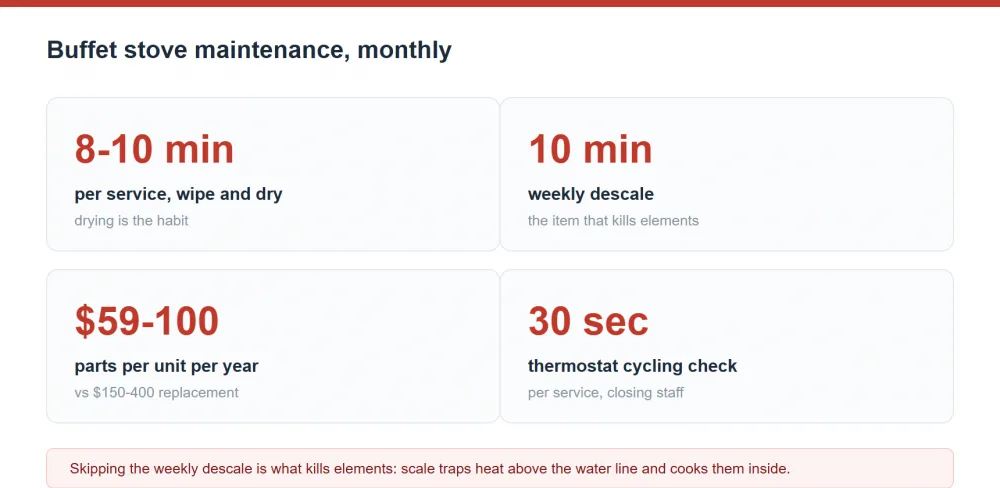
Short answer: A buffet stove needs 8–10 minutes of cleaning per service, a 10-minute weekly descale and one element inspection a month. Skipping the weekly descale is what kills elements, because scale traps heat above the water line and cooks them from the inside. Budget under $60 a year per unit in parts against $150–400 for a replacement. See buffet station equipment for maintenance guidance.
Commercial buffet stoves, also known as chafing dishes, are the backbone of any self-service restaurant, hotel buffet, or catering event. These hardworking appliances keep food at safe, consistent temperatures for hours on end, ensuring guests enjoy hot, fresh meals throughout service. However, like any piece of commercial kitchen equipment, buffet stoves require regular maintenance to perform optimally and last for years. Neglecting maintenance can lead to uneven heating, equipment failure, food safety risks, and costly replacements—issues no restaurant owner can afford. In this guide, we’ll walk you through proven maintenance strategies, common mistakes to avoid, and top-rated buffet stoves designed for longevity.

Why Regular Maintenance Matters
Buffet stoves operate in demanding environments: they’re exposed to food spills, moisture, fluctuating temperatures, and constant use during peak service. Over time, these factors can cause wear and tear on critical components like heating elements, temperature controls, and stainless steel surfaces. Regular maintenance delivers three key benefits:
- Extended equipment lifespan: Proper care can add 3-5 years to your buffet stove’s service life, delaying expensive replacements.
- Consistent food quality: Clean, well-maintained stoves maintain stable temperatures, preventing undercooked or overcooked food that frustrates guests.
- Lower operating costs: Preventative maintenance catches small issues before they become major repairs, reducing downtime and emergency service fees.
Daily Maintenance Routine
Daily cleaning is the single most important habit for extending buffet stove life. Follow these steps after every service:
- Turn off and unplug electric models, or let fuel-powered units cool completely before cleaning.
- Remove food pans and water pans, washing them with warm, soapy water to remove grease and food residue. Avoid abrasive scrubbers that can scratch stainless steel surfaces.
- Wipe down the exterior and interior of the stove with a damp microfiber cloth. For stubborn grease, use a mild commercial stainless steel cleaner—never bleach or harsh chemicals that can corrode metal.
- Check heating elements (for electric models) for signs of damage, such as discoloration or warping. If you spot issues, schedule a professional inspection immediately.

Weekly and Monthly Maintenance Checks
In addition to daily cleaning, perform these deeper checks on a weekly and monthly basis:
Weekly Tasks
- Inspect power cords and plugs for fraying or exposed wires—replace damaged components immediately to avoid electrical hazards.
- Test temperature controls by setting the stove to a specific temperature and using a food thermometer to verify accuracy. If readings are off by more than 5°F, recalibrate or replace the thermostat.
- Clean the water tank (for electric models) with a vinegar solution to remove mineral buildup that can reduce heating efficiency.
Monthly Tasks
- Check hinges and lids for smooth operation—lubricate with food-grade silicone spray if they become stiff or squeaky.
- Inspect fuel burners (for alcohol-powered models) for clogs, and clean them with a soft brush to ensure even flame distribution.
- Examine the stove’s base and feet for stability—tighten loose screws to prevent tipping during service.
Common Maintenance Mistakes to Avoid
Even well-intentioned staff can make mistakes that shorten buffet stove lifespan. Steer clear of these pitfalls:
- Using abrasive cleaners or steel wool: These scratch stainless steel, creating crevices where bacteria can grow and corrosion can set in.
- Overfilling water pans: Excess water can spill into electrical components, causing short circuits or rust.
- Ignoring small issues: A flickering heating element or slightly inaccurate temperature reading may seem minor, but these are early warning signs of larger failures.
- Skipping professional inspections: Even with diligent daily care, have a certified technician inspect your buffet stoves every 6 months to catch hidden issues.
Top Buffet Stoves Built for Longevity
Investing in high-quality, durable buffet stoves simplifies maintenance and extends equipment life. Here are three top-rated models from BAVA’s commercial lineup:

Electric Chafing Dish BA Series
Our commercial 304 stainless steel Chafing Dish offers 5.5L-13.5L capacities in rectangular/square/round shapes. With 400W electric heating, smart temp control, dry burn protection, glass viewing window and hydraulic hinges, it’s durable, easy to use—ideal for buffets, hotels and restaurants. The 304 stainless steel construction resists corrosion and scratches, making daily cleaning quick and hassle-free, while the dry burn protection prevents damage from accidental empty operation.

Electric Chafing Dish W07
900W Rapid Heating Chafing Dish with Intelligent Temperature Control System Multi-Safety Protection Anti-Dry Heat Flash Alarm 45-89°C Adjustable Temp for Buffet Restaurant. This model reaches 60°C in just 8 minutes, reducing pre-service setup time, and its overheat protection and auto shut-off features prevent damage from temperature spikes. The 304 stainless steel body withstands daily commercial use, and the intuitive controls make maintenance checks straightforward for staff.

Stainless Steel Electric Buffet Warmer
Stainless Steel Electric Buffet Warmer with Visible Window - Commercial Electric Chafing Dish for Catering, Weddings & Events. With 400W power, 220V/110V customizable voltage, and 45-90°C adjustable temperature range, this model is versatile for any kitchen setup. The tempered glass viewing window lets staff monitor food without lifting the lid, reducing heat loss and moisture buildup that can damage internal components. Its smooth stainless steel surfaces resist grease buildup, cutting daily cleaning time in half.
Conclusion
Buffet stove maintenance doesn’t have to be time-consuming or complicated. By establishing a daily cleaning routine, performing regular component checks, and investing in durable, well-designed equipment, you can extend your buffet stoves’ lifespan by years, reduce operating costs, and ensure consistent food quality for your guests. Remember: a little preventative care goes a long way in the demanding environment of a commercial kitchen. Pair your maintenance routine with high-quality BAVA buffet stoves, and you’ll have reliable, long-lasting equipment that supports your business for years to come.
Browse the full chafing dish range for current models and configurations.
The Monthly Checklist
| Interval | Task | Time | What you are looking for | Skip it and |
|---|---|---|---|---|
| Every service | Wipe top and well, dry | 8–10 min | No residue, no standing water | Acid etch and corrosion |
| Every service | Check thermostat response | 30 sec | Cycling within 2 min of setpoint | Element runs continuously |
| Weekly | Descale the well | 10 min | No white scale on the wall | Element fails at 3 years |
| Weekly | Clean the underside of the top | 3 min | No carbon crust | Heat transfer drops |
| Monthly | Test GFCI and cord | 5 min | Trips instantly, no damage | Shock risk, failed audit |
| Monthly | Inspect element terminals | 5 min | No discoloration, firm fit | Terminal burns out |
| Quarterly | Check calibration with probe | 10 min | Within 5°C of dial | Overcooking, food waste |
| Yearly | Service the thermostat | 30 min | Correct switching points | Element life halves |
Parts Cost, Annual
| Part | Cost | Life | Annual cost | Preventable |
|---|---|---|---|---|
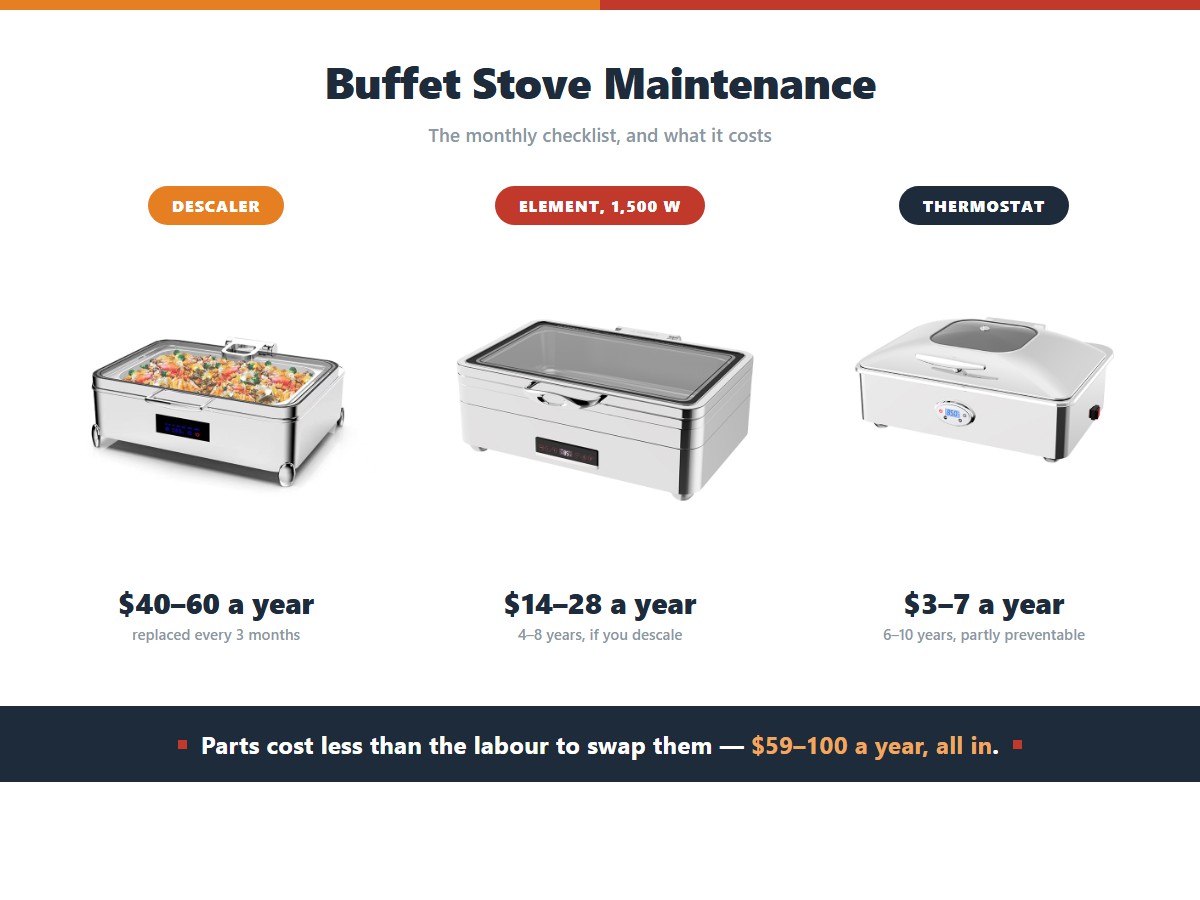
| Descaler and degreaser | $9–15 | 3 months | $40–60 | No |
| Element, 1,500 W | $45–110 | 4–8 years | $14–28 | Yes, by descaling |
| Thermostat | $22–45 | 6–10 years | $3–7 | Partly |
| Well seal | $12–28 | As needed | $2–5 | Yes, by drying |
| Total per unit per year | — | — | $59–100 | — |
The single highest-value habit is drying. A well put away damp will stain and pit within weeks, and a mineral build-up from dried water is exactly what turns into the scale that shortens element life. Dry it, and half the maintenance schedule becomes unnecessary.
Frequently Asked Questions
How often should a commercial buffet stove be cleaned?
Wiped and dried after every service, which takes 8–10 minutes. Descale the water well weekly and inspect the element terminals monthly. Daily service without a weekly descale is the combination that destroys elements.
What is the best way to descale a buffet stove well?
Fill with hot water, add commercial descaler or citric acid, leave 20–30 minutes, scrub with a non-abrasive pad and rinse twice. Never use steel wool or a chloride cleaner, both of which pit stainless steel permanently.
How do I know if the element is failing?
Three signs: the unit takes visibly longer to reach temperature, the thermostat cycles continuously without cutting out, or the top develops a hot spot on one side. Any of the three means replace the element rather than adjust it.
Do buffet stoves need annual servicing?
A thermostat service and an element check once a year is enough for most operations, more often in hard water. If you already descale weekly and verify calibration quarterly, an annual service mainly protects your warranty.
Can I use bleach on a stainless buffet stove?
Diluted bleach occasionally, yes, but it must be rinsed thoroughly because chloride residue pits stainless steel. A pH-neutral commercial degreaser is safer for daily use and will not cause the grey dulling that frequent bleach leaves behind.
Related reading
- Buffet Stove Setup for Catering: Field Checklist
- Opening a Buffet? The 2026 Equipment Checklist
- Buffet Stoves and Food Safety: What Inspectors Check
- Large Buffet Lines: How Many Stoves per 100 Guests?
- Buffet Equipment Maintenance Schedule: Don't Wait Until It Breaks
- Chafing Dish Maintenance: Extend the Life of Your Equipment
- Buffet Stove vs Chafing Dish: Same Job, Different Build