


Glass Lid vs Solid Lid Chafing Dish: Which Looks More Premium?
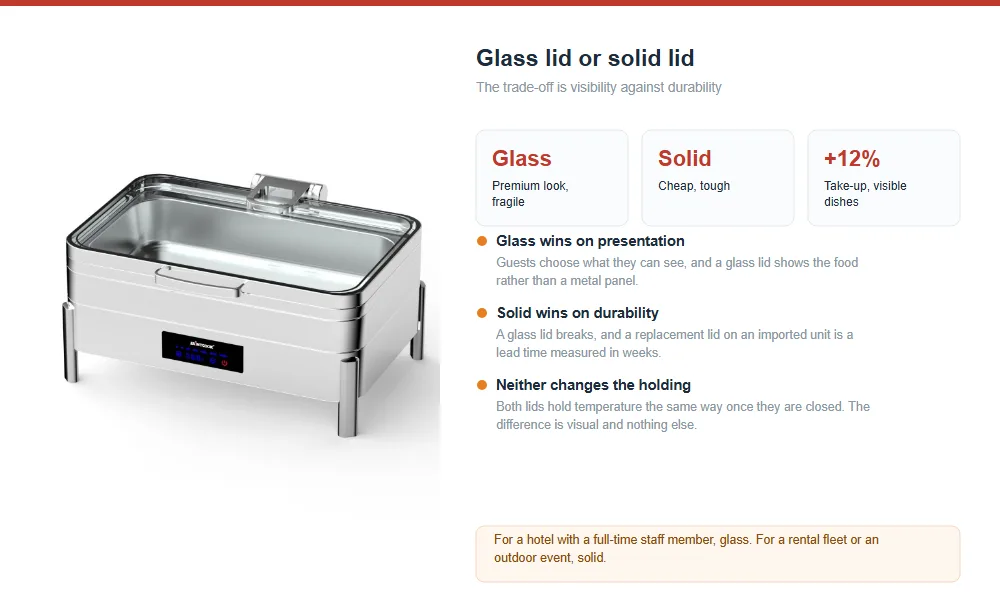
Short answer: a glass lid looks premium and lets guests see the food without lifting — worth it for display and self-service. A solid stainless lid holds heat better, survives transport and costs less. For banquet halls and catering vans, solid or roll-top wins; for front-of-house display, glass. See both in our chafing dish range.
You've seen them: fancy hotel buffets with glass dome lids. The food looks elegant. Guests see what they're eating. It looks premium.
But glass lids cost more. They can break. Are they worth it? Here's the comparison.
PRO TIP: Glass lids are tempered, not regular glass.
Commercial chafing dish lids use tempered glass - 5x stronger than regular glass. If it breaks, it shatters into small pieces (not sharp shards). Safer than you think.
KEY TAKEAWAY: Glass lid = premium look + see food + no heat loss.
Solid lid = cheaper + unbreakable + can't see food. For fine dining, glass wins. For rough catering, solid wins.
Glass vs Solid Lid
| Factor | Glass Lid | Solid Stainless Lid |
|---|---|---|
| See food without lifting | Yes | No |
| Premium look | Yes - elegant, hotel-style | Standard, utilitarian |
| Durability | Tempered glass, can break if dropped | Unbreakable, lightweight |
| Weight | Heavier | Light |
| Cost | Higher | Lower |
| Heat retention | Good (no lifting = no heat loss) | Need to lift to check = heat loss |
Which to Choose?
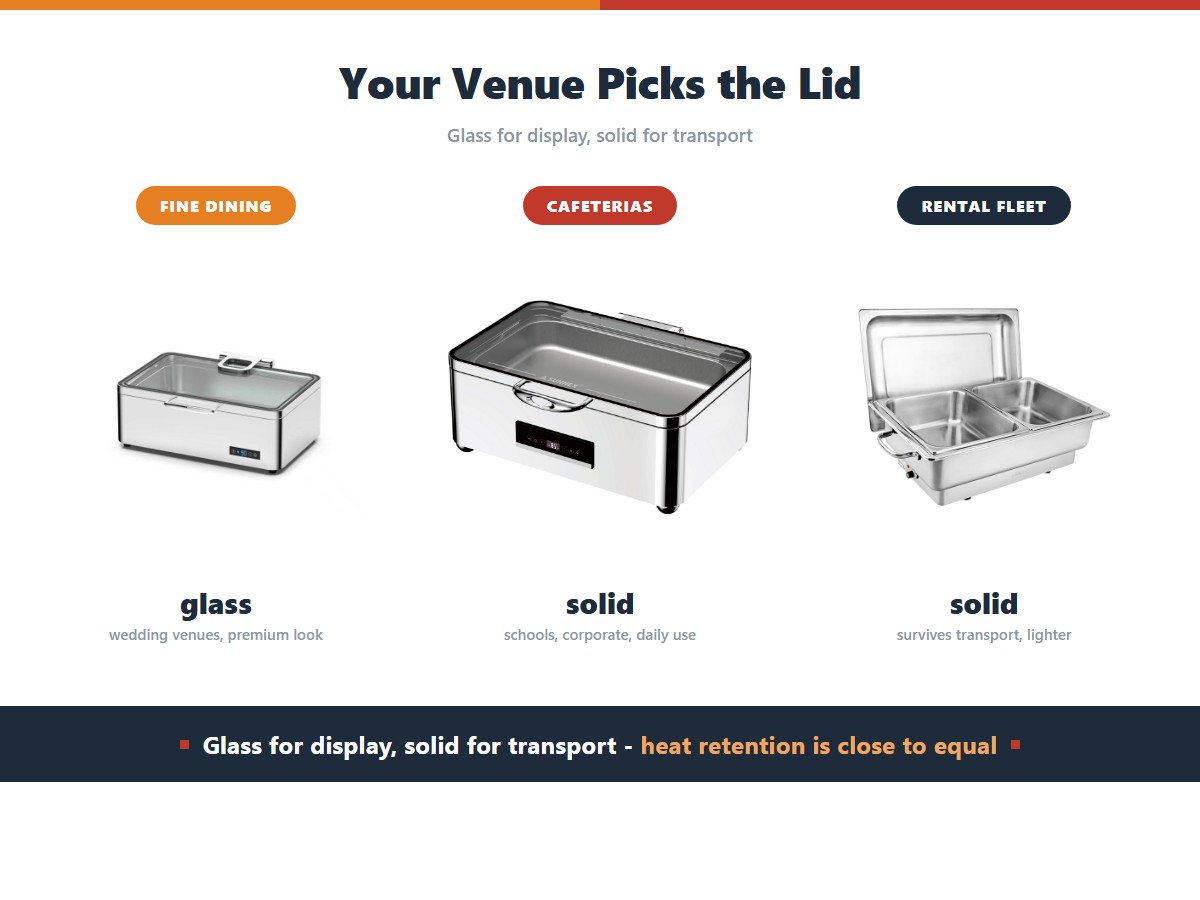
| Your Venue | Choose |
|---|---|
| Fine dining hotels, wedding venues | Glass lid |
| Corporate cafeterias, schools | Solid lid |
| Rental companies | Solid lid (survives transport) |
| Restaurants upgrading | Glass lid (premium look) |
See our view window guide for more.
Glass Lid Terms to Know
- glass lid chafing dish
- view window chafing dish
- roll top vs lift off
- tempered glass chafing dish cover
- gold vs stainless chafing dish
The Bottom Line
Glass lids look premium. Guests see the food. No lifting = no heat loss. But they cost more and can break if dropped. For fine dining and weddings, go glass. For rough catering and rentals, go solid stainless. Tempered glass is safer than you think, but handle with care.
Looking for Glass Lid Chafers?
BAVA manufactures tempered glass lid chafing dishes in stainless and gold finishes. All products CE/FDA certified, OEM/ODM available.
The trade, in practical terms
Glass conducts more heat than a double-wall steel lid, so the element or can works slightly harder to hold the same surface temperature. That difference is small compared with the effect of opening the lid: every lift costs 5–8°C at the surface, and a display station gets opened dozens of times per service. The glass pays for its heat loss by preventing most of those lifts.
The real cost is durability. Glass cracks in transit, chips at the rim and needs cleaning on both sides. If the unit travels weekly, a solid lid or a roll-top will outlive it. If it sits in a hotel dining room, glass is the better guest experience.
One practical test before you buy: put both lids on identical units, fill each with the same amount of hot water and check the surface temperature after 30 minutes. The difference is usually 3–6°C — smaller than the loss from lifting the lid twice, which is exactly why display stations do well with glass.
Which lid survives a season of catering
A solid stainless lid survives being stacked, dropped and shoved into a van. A glass lid survives being looked at. If the unit travels, budget for a padded lid bag and accept that one replacement per year is normal; if the unit stays in one dining room, neither issue applies. The hinge is the part that fails either way, so check whether it can be replaced with a screwdriver rather than replaced with a new lid.
Frequently Asked Questions
Which looks more premium?
Glass, in most settings. It shows the food and reads as a display piece rather than a catering box.
Does glass lose more heat?
Yes, a little, but less than the heat lost by repeatedly lifting a solid lid to check the food.
Is glass safe in transport?
Only with a padded lid bag and a frame that holds it flat. Loose glass lids crack at the rim within a few trips.
Can glass lids go in a dishwasher?
Most can, but hand washing keeps the seals and the edge intact longer.
What about roll-top lids?
Best for self-service: one-hand operation, no separate lid to store, and no glass to break.
Related reading
- Glass Top Chafing Dishes: Elegant Display for Buffet Food
- Dual Dry-Wet Heating Chafing Dish: One Dish, Two Modes
- 2026 Healthcare Catering Trends: Infection Control Gear
- 6QT Compact Chafing Dish for Small Catering Businesses
- Best Chafing Dish Brands in 2026: China, Turkey, Italy Compared
- Chafing Dish Lid Won't Stay Open: Hinge Problems and Fixes