


Glass Top Chafing Dishes: Elegant Display for Buffet Food
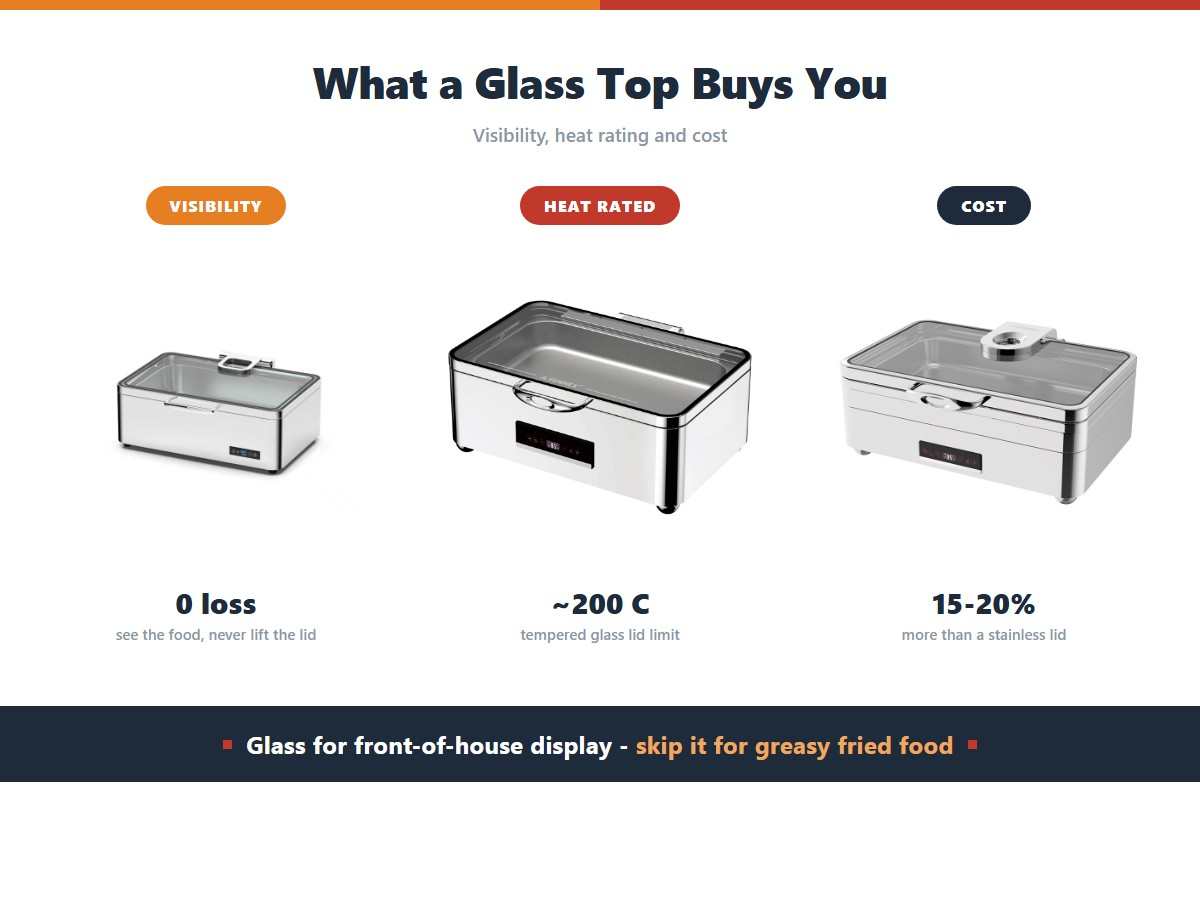
Short answer: A glass top chafing dish lets guests see the food without opening the lid, which cuts heat loss per serving to almost nothing. Tempered lids are rated to about 200°C and cost 15–20% more than stainless. Choose glass for front-of-house display and skip it for greasy fried food, where visibility disappears in one service. See formats in the chafing dish range.
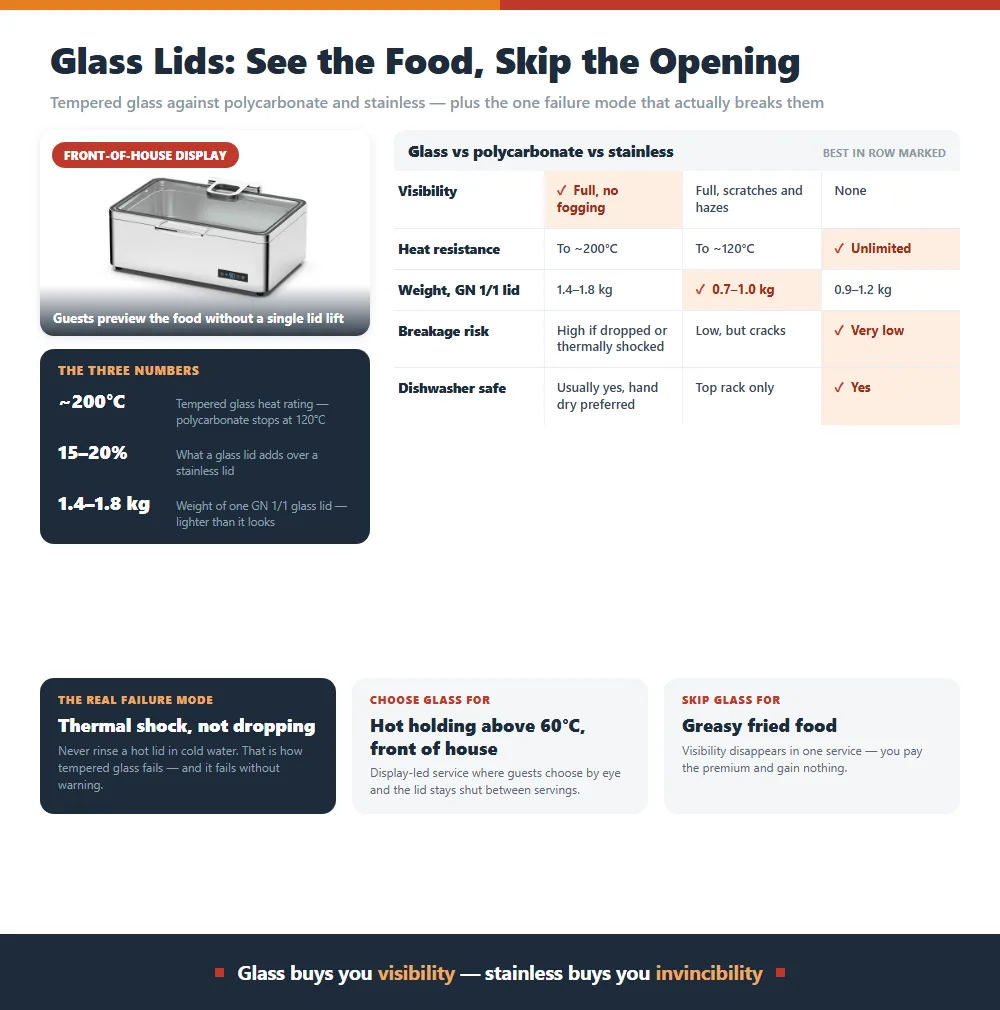
PRO TIP: Choose glass for hot holding above 60C and front-of-house display.
Thermal shock is the real failure mode - never rinse a hot lid in cold water. See our glass vs solid lid guide.
Glass top chafing dishes transform buffet service from purely functional into visually engaging experiences. The transparent lid allows guests to preview food selections before service, creating anticipation that enhances the dining experience while helping guests make informed choices about what to add to their plates. This presentation advantage makes glass top units increasingly preferred for events where visual appeal matters as much as food quality.
The Visual Appeal of Transparent Lids
Human beings eat with their eyes first, a reality that buffet service often underserves with traditional opaque lids. Glass top chafing dishes address this sensory dimension directly, allowing the colors, textures, and arrangements of food to communicate quality before guests even approach the serving line. This visual communication proves particularly valuable for unfamiliar dishes where preview images help guests assess unfamiliar cuisines.
Presentation quality influences perceived value significantly. The same food in a glass-lidded unit appears more carefully prepared and professionally presented than identical food in a traditional dome-lidded unit. For events where presentation directly affects client perception, this visual enhancement translates into tangible value that justifies glass lid investment.
Monitoring food levels without breaking the heat seal prevents service disruptions that occur when staff lift lids to check supplies. Guests can assess whether their desired portions remain available, reducing disappointment and waste from guests discovering empty pans after completing their plates.
Glass vs. Polycarbonate Lid Materials
Traditional glass lids offer superior clarity and scratch resistance compared to polycarbonate alternatives, maintaining their transparent appearance through extended use. However, glass fragility creates handling concerns that limit suitability for high-volume operations or events involving significant transportation or setup complexity.
Polycarbonate lids provide dramatically improved durability while sacrificing some optical clarity. Modern polycarbonate formulations approach glass-like transparency while offering impact resistance that glass cannot match. For operations prioritizing durability, polycarbonate represents the practical choice despite minor clarity trade-offs.
Tempered glass options provide intermediate durability improvements over standard annealed glass. The tempering process increases strength and changes breakage characteristics to minimize injury risk when failures occur. This safety improvement makes tempered glass particularly appropriate for events where guest proximity to equipment cannot be controlled.
Heat Retention Performance
Heat retention in glass-lidded units matches or exceeds traditional dome lid performance when properly constructed. The thermal mass of glass actually contributes to heat retention in some designs, though the effect varies by lid thickness and construction quality. Premium glass lids often provide superior thermal performance compared to economy metal alternatives.
Condensation on interior glass surfaces can reduce visibility during service, particularly when humid foods create steam that contacts the cooler lid interior. Some glass lid designs incorporate anti-condensation coatings that reduce this problem, maintaining clear visibility throughout extended service periods. Consider climate conditions when evaluating whether condensation management matters for your applications.
Event Applications for Glass Top Units
Wedding receptions and formal celebrations represent ideal applications where the elegant presentation that glass lids provide enhances the overall event atmosphere. The visual enhancement contributes to the photography and guest experience that wedding clients prioritize, making glass top units a differentiating service element.
Corporate events with executive attendance often require presentation standards that glass top units help achieve. Board luncheons, shareholder meetings, and investor presentations benefit from the professional appearance that transparent lids project. The visual polish contributes to the impression these events create.
Chef-attended stations where cooking occurs in view of guests pair naturally with glass-lidded units that maintain the visual continuity of the presentation. Watching food preparation while anticipating the finished dishes creates engagement that enhances the overall dining experience beyond what traditional service approaches provide.
Maintenance Considerations
Glass lid maintenance requires attention to both cleanliness and safety. Clean glass thoroughly after each use to prevent residue buildup that affects clarity and appearance. Use appropriate cleaning tools that avoid scratching, particularly for polycarbonate lids where scratches accumulate more readily than on glass.
Inspect for chips or cracks that compromise structural integrity during regular maintenance checks. Damaged lids should be replaced promptly both for safety reasons and because damaged appearance undermines the presentation advantage that glass lids provide.
Safe storage prevents the damage that careless stacking creates. Use protective padding between stacked lids, and consider padded storage containers for transport and long-term storage. The investment in proper storage protection preserves the clarity that glass lids provide throughout their service life.
Making Your Selection
Glass top chafing dishes serve applications where presentation quality justifies the investment premium and handling considerations these units require. Evaluate your specific event types, client expectations, and operational capabilities when determining whether glass lids belong in your equipment fleet.
The visual enhancement that glass lids provide creates genuine value for events where presentation matters and operational conditions allow appropriate handling. Balance the presentation advantages against durability trade-offs to determine whether glass top units match your specific operational requirements.
Browse the full chafing dish range for current models and configurations.
Glass vs Polycarbonate vs Stainless Lids
| Property | Tempered glass | Polycarbonate | Stainless steel |
|---|---|---|---|
| Visibility | Full, no fogging | Full, scratches and hazes | None |
| Heat resistance | To ~200°C | To ~120°C | Unlimited |
| Weight, GN 1/1 lid | 1.4–1.8 kg | 0.7–1.0 kg | 0.9–1.2 kg |
| Breakage risk | High if dropped or thermally shocked | Low, but cracks | Very low |
| Dishwasher safe | Usually yes, hand dry preferred | Top rack only | Yes |
Thermal shock is the real failure mode. A glass lid taken from a 70°C water bath straight into a cold sink cracks along the rim, which is why the wash procedure matters more than the drop risk.
Frequently Asked Questions
Are glass top chafing dishes safe for buffet service?
Yes, when the lid is tempered and used as intended. Tempered glass tolerates the 60–80°C of a water bath comfortably. It fails when it is thermally shocked, so never move a hot lid onto a cold surface or rinse it under cold water.
Does a glass lid keep food hotter than stainless?
Not by itself. Glass conducts heat slightly worse than steel, so the closed-lid performance is similar. The gain is indirect: guests can see the food, so the lid is opened less often, and each avoided opening saves roughly 5–8°C.
Should I choose glass or polycarbonate lids?
Glass for hot holding above 60°C and for anything where presentation sells the dish. Polycarbonate for cold display and for high-breakage environments, because it costs a third as much and survives a drop that would shatter glass.
Can glass lids go in a dishwasher?
Most commercial tempered lids are dishwasher safe, but repeated cycles cloud the rim gaskets and stress the fixings. Hand wash with a neutral detergent and dry immediately; that routine keeps clarity for years instead of months.
Do glass lids fit standard chafing dish pans?
They fit the pan size they are sold for, usually GN 1/1 or GN 1/2. Glass lids are less forgiving than steel about a warped pan rim, so check the pan sits flat before buying a set of glass lids for older equipment.
Related reading
- Glass Lid vs Solid Lid Chafing Dish: Which Looks More Premium?
- Dual Dry-Wet Heating Chafing Dish: One Dish, Two Modes
- 2026 Hotel Buffet Equipment Trends: Guest Experience & Efficiency
- Lift-Off Lid Chafing Dish for Quick Buffet Service
- Why Chefs Hate Roll-Top Chafing Dishes (And What They Use Instead)
- Cake Stand Materials Compared: Acrylic vs Stainless vs Glass