


5 Buffet Stove Buying Mistakes (and the Cheap Fix)
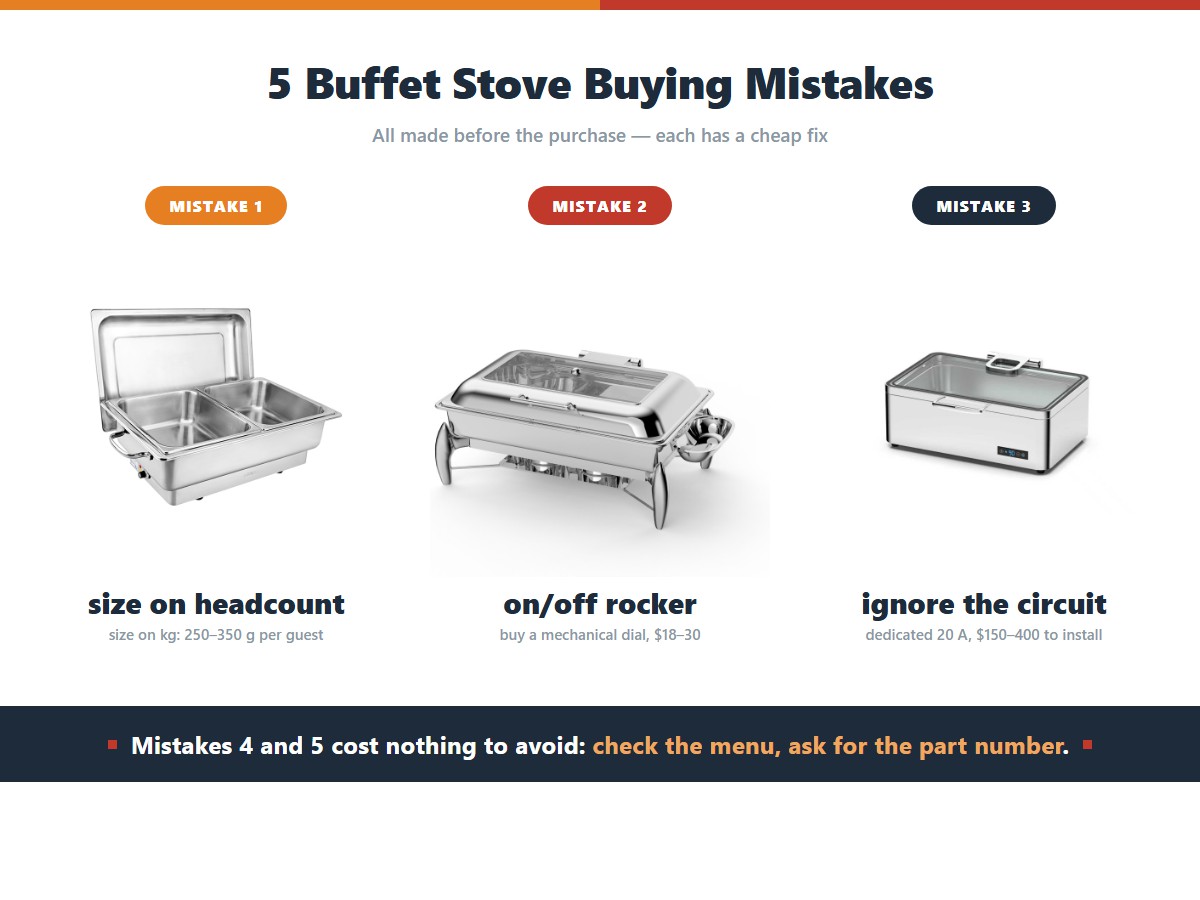
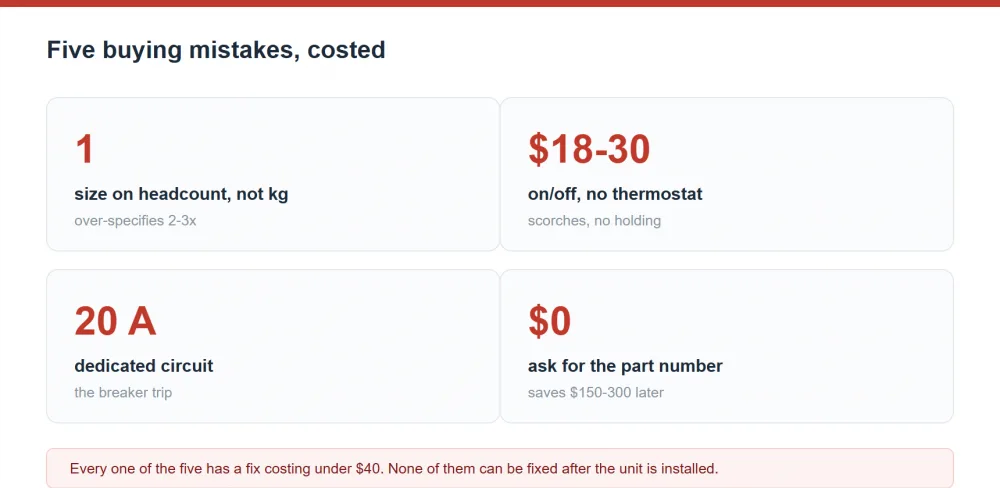
Short answer: The five most expensive buffet stove mistakes are all made before the purchase: sizing on headcount instead of food kilograms, buying an on/off rocker instead of a thermostat, ignoring the power circuit, skipping the water well you need, and buying an entry unit with no published parts. Each has a cheap fix worth under $40. Compare options in our buffet station equipment range.
Avoid These Common Mistakes When Choosing a Buffet Stove!
Choosing the right buffet stove is critical for your restaurant’s efficiency and profitability. However, many restaurant owners make costly mistakes during the selection process that lead to poor performance, high operating costs, and frequent equipment failures. To help you make a smart investment in 2026, here are the most common mistakes to avoid.
Mistake 1: Ignoring Your Actual Power and Capacity Needs
One of the biggest mistakes is choosing a stove with insufficient power or capacity for your volume. A small 400W stove may work for a cafe serving 50 guests daily, but it will struggle to keep up with a high-volume buffet serving 300+ guests. Always match the stove’s power (wattage) and capacity (liters) to your peak service demands to avoid slow heating and constant refills.
Mistake 2: Overlooking Temperature Control Features
Buffet stoves with fixed temperature settings can lead to overcooked or undercooked food. Avoid models with only "high/medium/low" settings—opt for adjustable temperature ranges (like 45–93°C) and digital displays instead. This lets you fine-tune temperatures for different dishes, from keeping soups warm to maintaining the perfect temperature for carved meats, reducing food waste and improving quality.

Mistake 3: Sacricing Safety for Low Price
Cheap, uncertified buffet stoves often lack basic safety features like overheat protection, anti-dry burn alarms, and auto shut-off. These oversights can lead to kitchen fires, equipment damage, and even customer injuries. Always choose models with CE, ETL, or FDA certifications and essential safety features—this small extra cost can save you thousands in potential damages and liabilities.
Mistake 4: Not Considering Energy Efficiency
Many buyers focus only on the upfront cost of a buffet stove, ignoring its long-term energy consumption. Models with thermal efficiency ≥80% use far less electricity, lowering your monthly utility bills. Over a 3–5 year lifespan, an energy-efficient model can save you hundreds of dollars—making it a much better value despite a slightly higher initial price.
Mistake 5: Forgetting About Maintenance and Durability
Buffet stoves in commercial kitchens take a lot of wear and tear. Avoid models with hard-to-clean crevices or low-quality materials that rust quickly. Opt for 304 stainless steel construction and removable parts for easy cleaning—this extends the lifespan of your equipment and reduces maintenance costs over time.
Top Buffet Stoves to Avoid These Mistakes
To help you choose a stove that checks all the right boxes, here are 3 top-rated models that avoid the common mistakes above:

Stainless Steel Electric Double Pan Chafing Dish
This double-pan model is perfect for high-volume restaurants, with 800W total power (400W per pan) to handle large quantities of food. It features adjustable temperature control for each pan, durable 304 stainless steel construction, and CE/ETL/RoHS certifications. Its easy-to-clean design reduces maintenance hassles, making it a smart long-term investment.

Stainless Steel Electric Buffet Warmer with Visible Window
This 400W model is ideal for small to medium-sized restaurants, with adjustable temperature range (45–90°C) and a visible glass window to monitor food without losing heat. It’s made from food-grade 304 stainless steel, has CE/ETL certifications, and its compact size fits easily into tight buffet setups. It delivers reliable performance without breaking the bank.

Stainless Steel Alcohol Chafing Dish
For businesses on a budget, this alcohol-fueled model is a cost-effective choice that doesn’t sacrifice safety. It features a durable 304 stainless steel body, CE/FDA certifications, and a design that allows for easy monitoring of fuel levels. While it lacks electric features, it delivers consistent performance at a fraction of the cost of electric models.
Comparison of Mistake-Free Buffet Stoves
| Model | Power/Capacity | Temperature Control | Safety Features | Energy Efficiency | Best For |
|---|---|---|---|---|---|
| Electric Double Pan Chafing Dish | 800W total (2×400W pans) | Adjustable per pan | CE/ETL/RoHS certified | Not specified | High-volume restaurants, large buffets |
| Electric Buffet Warmer with Visible Window | 400W, GN 1/1 size | 45–90°C adjustable | CE/ETL certified, overheat protection | Not specified | Small to medium restaurants, cafes |
| Stainless Steel Alcohol Chafing Dish | Alcohol fuel, GN 1/1 size | Fixed (fuel-controlled) | CE/FDA certified | N/A (fuel-powered) | Budget-conscious businesses, outdoor events |
Conclusion: Make a Smart, Mistake-Free Choice
Avoiding these common mistakes when choosing a buffet stove will save you time, money, and headaches in the long run. By matching the stove to your needs, prioritizing safety and efficiency, and choosing durable materials, you can find a model that boosts your restaurant’s performance for years to come. Use our recommendations above as a starting point, and always do your research before making a purchase.
Browse the full chafing dish range for current models and configurations.
The Five Mistakes, Costed
| Mistake | What it costs | Cheap fix | Fix cost | Prevented loss |
|---|---|---|---|---|
| Sizing on headcount | Two extra services re-cooking | Size wells on kg: 250–350 g per guest | $0 | $200–400 per service |
| On/off rocker, no thermostat | Scorched food, no holding | Buy a mechanical dial thermostat | $18–30 | Food waste and complaints |
| Ignoring the power circuit | Tripped breaker mid-service | Dedicated 20 A circuit, load calculated | $150–400 install | A whole service |
| No water well when needed | Extra unit bought later | Check the menu before buying | $0 | $120–220 |
| Entry unit, no parts list | Disposable at year three | Ask for the part number in writing | $0 | $150–300 replacement |
Guest Count vs Food Volume
| Guests | Food volume at 300 g | Wells needed at 4 L | Headcount sizing would give | Shortfall |
|---|---|---|---|---|
| 50 | 15 kg | 4 wells | 2 wells | 2 wells |
| 100 | 30 kg | 7–8 wells | 3 wells | 4–5 wells |
| 150 | 45 kg | 11–12 wells | 4 wells | 7–8 wells |
| 300 | 90 kg | 22–24 wells | 8 wells | 14–16 wells |
The table above looks alarming because it assumes every guest eats every dish. In practice you serve two or three mains for 100 guests, not eight, so the honest correction is to divide by the number of dishes. The mistake is still real: it is sizing by guest count without dividing by dish count.
Frequently Asked Questions
What is the most common buffet stove buying mistake?
Sizing on guest count alone. One guest eats roughly 250–350 g, but spread across two or three dishes, so a well count derived from raw headcount over-specifies the line by two to three times.
Is a mechanical dial thermostat good enough?
Yes, and it is preferable to a digital panel with no probe. A mechanical thermostat is one less thing to fail, and dial units are cheaper to repair. What you should avoid is an on/off rocker, which has no holding control at all.
How much power does a buffet stove line need?
About 1,500 W per well, so a four-well line needs a dedicated 20–30 A circuit. Sharing a circuit with dishwashers or coffee urns is the third most common mistake and the easiest to avoid.
Should I buy a buffet stove with a water well?
Only if you cook pasta, rice or sauces on site. For reheat-only operations it is dead weight you pay for in price and in lost countertop. Check the menu before deciding, not after delivery.
How do I avoid buying an unrepairable buffet stove?
Ask the supplier for the element part number in writing before you order. If they cannot produce it within a day, assume the unit will be disposed of when it fails, and price that into your decision.
Related reading
- Buffet Stove Buying Guide 2026: Efficiency First
- Buffet Stoves for Small Restaurants: What Actually Fits
- Buffet Stove Setup for Catering: Field Checklist
- Buffet Stoves and Food Waste: What Actually Helps
- Why Stainless Buffet Gear Gets Rust Spots (And Fixes)
- 10 Buffet Food Safety Mistakes (and How to Avoid Them)