


Consistent Food Quality Over a 4-Hour Service
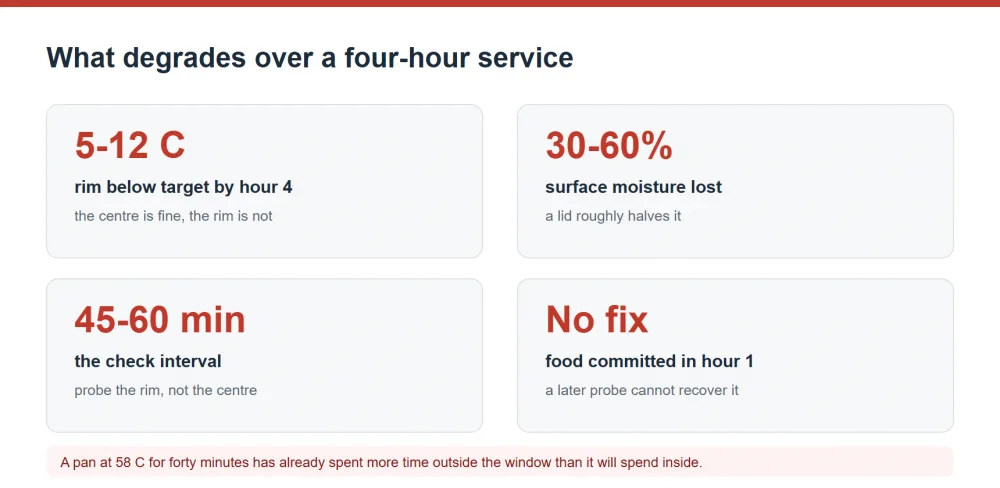
Short answer: Holding quality over four hours is decided by four variables: a thermostat at 70–75°C probed at the pan rim, a water pan at two thirds with a lid, a pan filled two thirds full, and a temperature check every 45–60 minutes. Without all four, the fourth-hour rim will read 5–12°C below target no matter how good the equipment is. See buffet station equipment.
Maintaining consistent food quality is the cornerstone of any successful buffet, hotel, or catering business. Guests expect every serving of their favorite dish to taste just as good at the end of the service as it did at the start—and that’s exactly where professional buffet stoves come into play. Unlike makeshift heating solutions or low-quality warmers, BAVA’s commercial-grade buffet stoves are engineered to preserve flavor, texture, and safety for hours on end, even during peak service periods.
Precise Temperature Control: The Foundation of Consistency
The single biggest factor in food quality degradation is fluctuating temperatures. When hot food falls below 60°C (140°F), bacterial growth accelerates, and texture starts to break down—soups become watery, meats dry out, and vegetables turn mushy. BAVA buffet stoves solve this with ±2°C temperature accuracy across the entire heating surface, thanks to advanced digital thermostats and even-heat distribution technology.
For example, the Full Size 11L Electric Chafer from BAVA’s maintains a steady 70°C for up to 8 hours without hot spots. Its 1100W rapid heating element reaches optimal temperature in just 12 minutes, and the smart mode automatically adjusts power output to compensate for frequent lid openings—common in busy buffet environments. This means your signature beef stew stays thick and flavorful, and your roasted vegetables retain their crisp-tender texture from the first guest to the last.

Full Size 11L Electric Chafer
Designed for high-volume hotels and catering businesses, this 11L electric chafer delivers 80% thermal efficiency with a digital temperature display and smart mode. Its polished stainless steel construction is durable enough for daily commercial use, while the tempered glass lid lets staff monitor food levels without losing heat. Perfect for maintaining consistency across large buffet spreads.
Humidity Retention: Preventing Dry, Unappetizing Food
One of the most common complaints about buffet food is dryness—especially for dishes like scrambled eggs, steamed rice, and braised meats. BAVA buffet stoves address this with integrated water bath heating systems that maintain optimal humidity levels around the food pan. Unlike dry heat lamps that suck moisture out of food, water bath technology creates a gentle, moist heat environment that keeps proteins juicy and starches fluffy for hours.
The Electric Chafing Dish Food Warmer (Model W07) takes this a step further with a 2.5L water tank that requires refilling only once every 4 hours of continuous use. Its adjustable temperature range of 45–89°C lets you customize settings for delicate dishes like poached fish (lower temp) or hearty stews (higher temp), ensuring every item on your buffet stays at peak quality.
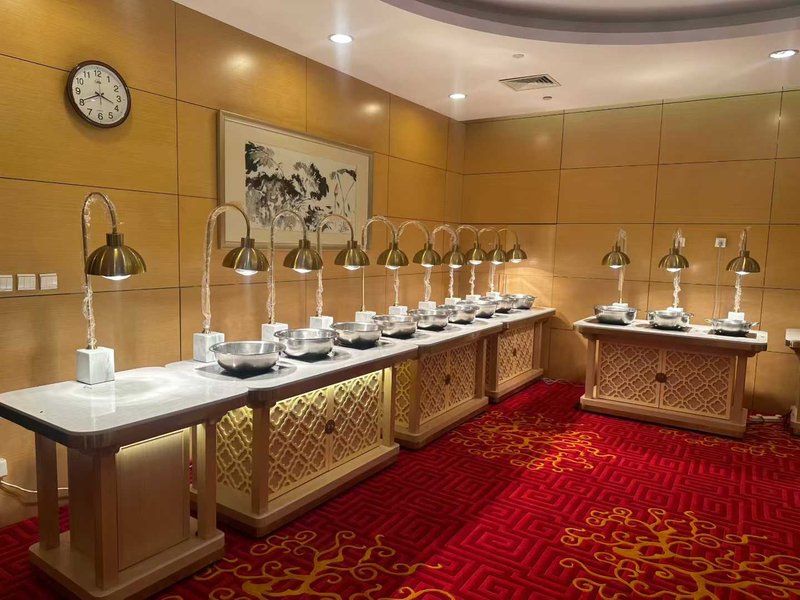

Electric Chafing Dish Food Warmer
This 400W commercial food warmer features digital temperature control and a 2.5L water tank for consistent humidity retention. Made from food-grade 304 stainless steel, it meets CE, ETL, RoHS, and FDA compliance standards, making it a safe choice for any food service business. It reaches 60°C in just 15 minutes, perfect for busy breakfast and lunch buffets.
Even Heating: Eliminating Cold Spots and Overcooked Edges
Cheap buffet warmers often have hot spots near the heating element and cold spots at the edges of the pan—leading to some portions being overcooked while others are underheated. BAVA’s commercial buffet stoves use 3-layer heating bases and premium heating elements to distribute heat evenly across the entire GN 1/1 size food pan (530x325mm). This means every serving from the pan is heated to the same safe, delicious temperature.
The Electric Chafing Dish W07 adds intelligent overheat protection and a dry-burn alarm to the mix—automatically shutting off power if water levels get too low, preventing damage to the unit and ensuring food never sits on a scorching hot dry element. Its OLED touchscreen lets staff adjust settings quickly without fumbling with manual dials, even during peak service rushes.

Electric Chafing Dish-W07
With 900W of power and adjustable temperature from 45–89°C, this model is built for high-volume catering. It heats to 60°C in just 8 minutes, and the intelligent temperature control system maintains consistency even when the lid is opened frequently. Its anti-dry heat flash alarm and auto shut-off features make it one of the safest options for unattended buffet stations.
Durability Meets Consistency: Long-Term Performance You Can Trust
Consistent food quality isn’t just about what happens during a single service—it’s about reliable performance day after day, year after year. BAVA buffet stoves are constructed from 304 stainless steel, which resists corrosion, scratches, and dents even in high-traffic commercial kitchens. All electrical components are certified to CE, ETL, and RoHS standards, and each unit undergoes a 20,000-cycle lid test and 168-hour damp heat test before leaving the factory.
For businesses that need to scale, BAVA offers low MOQ options starting from 30 units, and their 40-year mold library means you can customize colors, logos, and finishes to match your brand—without sacrificing the performance that keeps your food quality consistent. Whether you’re running a small café buffet or a 500-guest wedding banquet, BAVA has a solution that fits your needs.
Real-World Results: What Customers Are Saying
A 5-star hotel in Singapore has been using BAVA buffet stoves for 3 years across their breakfast and dinner buffets. Their executive chef notes: “We used to have complaints about cold eggs and dried-out rice by 10 AM, but with BAVA’s water bath models, everything stays perfect until we close at 11 AM. Our guest satisfaction scores for food quality have gone up 18% since switching.”
Similarly, a US fast-casual chain that operates 80 locations reported a 22% reduction in food waste after switching to BAVA electric chafers—because food stays at safe temperatures longer, they throw away far less uneaten product at the end of each day.
When it comes to maintaining consistent food quality over time, there’s no substitute for professional-grade equipment. BAVA buffet stoves combine precision engineering, durable construction, and user-friendly features to keep your food tasting great from the first serving to the last. Whether you’re upgrading your current buffet setup or opening a new catering business, investing in reliable heating equipment is one of the best decisions you can make for your brand’s reputation.
Browse the full chafing dish range for current models and configurations.
What Degrades Over Four Hours
| Factor | At 1 hour | At 4 hours | Cause | Control |
|---|---|---|---|---|
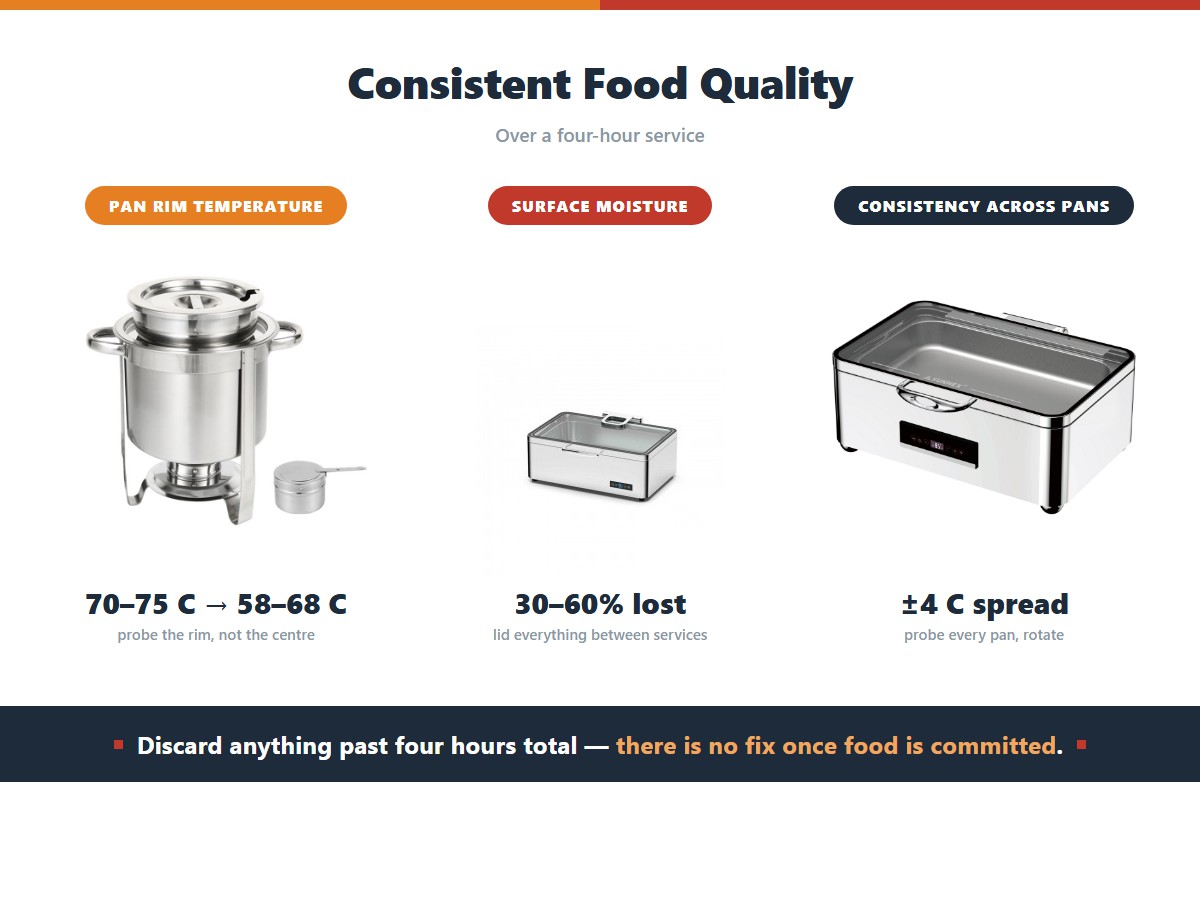
| Pan rim temperature | 70–75°C | 58–68°C | Heat loss through the rim | Probe the rim, not the centre |
| Surface moisture | Full | 30–60% lost | Evaporation, no lid | Lid between services |
| Surface crust | None | Forms at the edge | Water pan runs dry | Check water every 45 min |
| Colour, vegetables | Fresh | Drab | Oxidation at 70°C | Accept it, unavoidable |
| Texture, starches | Correct | Paste-like skin | Drying surface | Lid, lower setpoint |
| Food safety margin | Wide | None at the rim | Cumulative cooling | Check hourly, discard at 4 h |
| Consistency across pans | Good | ±4°C spread | Different loads | Probe every pan, rotate |
The Four-Hour Timeline
| Time | What is happening | Risk | Required action | Cost of skipping |
|---|---|---|---|---|
| −60 min | Preheat with water in the pan | Cold start | 8–18 min per unit | 25 min late service |
| −30 min | Hold food at 85°C | Food in the danger band | Probe before loading | Safety failure |
| −15 min | Load pans two thirds full | Cold mass | Level the surface | 20–25°C drop |
| 0–60 min | Stable hold, lid on | Minimal | Check once | — |
| 60–120 min | Rim starts falling | 2–5°C below target | Probe rim, rotate pans | Dry edges |
| 120–180 min | Visible surface drying | 5–12°C at rim | Lid everything, drop setpoint 3°C | Quality complaints |
| 180–240 min | Food committed | Below 60°C at rim | Probe, discard anything past 4 h total | Discard or reheat once |
The uncomfortable truth about a four-hour service is that the food committed in hour one cannot be rescued in hour four. A pan that sits at 58°C for forty minutes has already spent more time outside the safe window than it will spend inside it for the rest of the service. This is why the check interval matters more than the equipment: a thermostat holds the middle of the pan beautifully and does nothing for the rim, and the rim is where the food is actually failing.
Frequently Asked Questions
How do I keep buffet food consistent over four hours?
Four things: thermostat at 70–75°C, water pan at two thirds with a lid, food pan filled two thirds full, and a rim probe every 45–60 minutes. All four are needed, because a thermostat holds the centre of the pan and the rim is 5–12°C colder.
Why does buffet food dry out towards the end of a service?
Surface moisture loss, which reaches 30–60% over four hours. It accelerates once the water pan runs dry and the element starts heating the food pan directly. Lid every pan between services and check the water every 45 minutes, and the loss roughly halves.
How often should I check buffet food temperature?
Every 45 to 60 minutes, probing at the pan rim rather than the centre. The centre often reads acceptable for an hour or two after the rim has already dropped below 60°C, which is exactly the gap that produces complaints.
Does a lid really make a measurable difference?
Yes, on moisture. A lid slows surface evaporation and saves 8–18% of the energy needed to hold the same temperature. It makes almost no difference on temperature, which is why a lid should never be presented as a temperature control.
Is four hours the maximum safe hold time?
Above 60°C it is the common practical limit for a single service, and 70–75°C is the working target. After four hours total, including any time in a hot cabinet, discard rather than reheat, because quality has usually gone and the safety margin has not.
Related reading
- Guest Satisfaction at Self-Service: What Buffet Stoves Change
- Holding 60°C All Service: What Buffet Stoves Must Do
- Rectangular vs Round Chafing Dish: Which Shape Fits Your Service?
- Lift-Off Lid Chafing Dish for Quick Buffet Service
- Food Heat Lamps for Hotels: Buffet & Room Service Essentials
- Food Heat Lamps for Catering Events: Perfect for Buffet Service